
By: Fatou Krubally
The growing relationship between Africa and China should be driven not only by economic agreements but also by research, academic cooperation and balanced media narratives, speakers at a seminar held at the University of The Gambia have said.
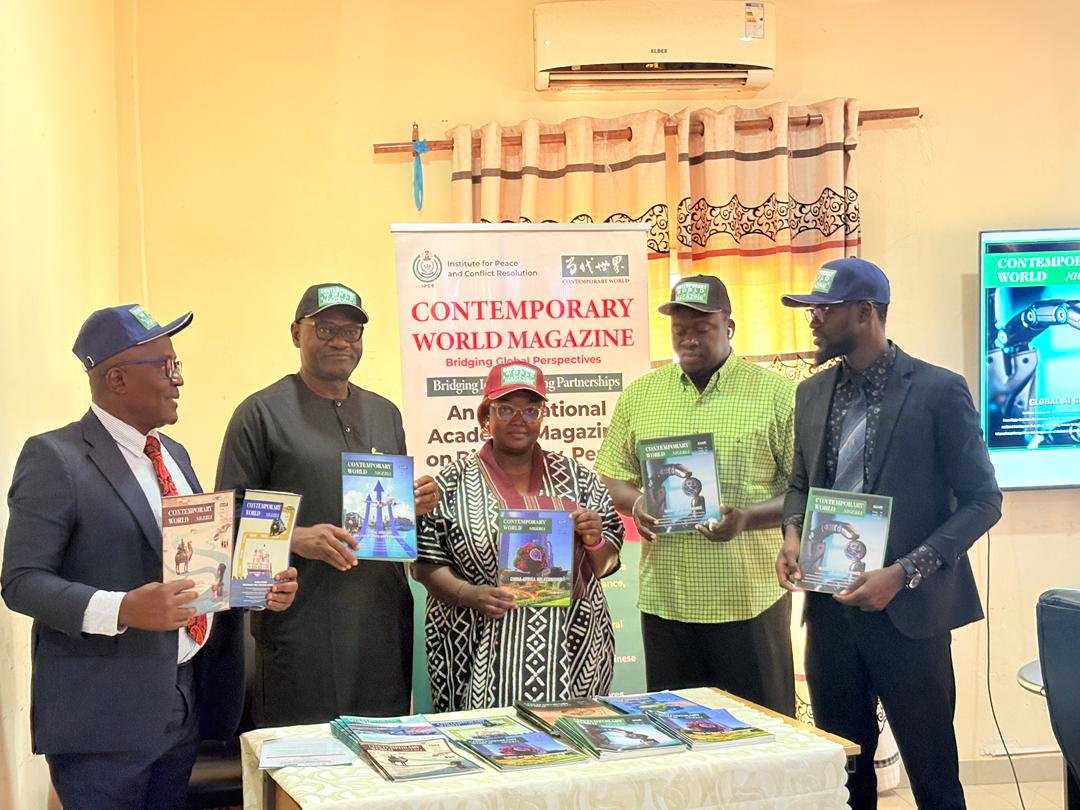
The seminar, organised by the Institute for Peace and Conflict Resolution (IPCR) under Nigeria’s Ministry of Foreign Affairs in partnership with Contemporary World China, brought together academics, journalists, students and policy experts at the University’s Kanifing Campus on Tuesday.
Delivering the welcome remarks, Dr. Joseph Ochogwu, Director General of the Institute for Peace and Conflict Resolution, says the initiative seeks to bridge the knowledge gap between Africa and China through objective scholarship and intellectual exchange.
He noted that while African governments continue to strengthen diplomatic and economic ties with China, there remains a need for researchers, academics and the media to critically examine how those partnerships translate into real benefits for citizens.
“The relationship between Africa and China is one of the most consequential of the 21st century,” he said, adding that sustainable cooperation requires mutual understanding, informed dialogue and stronger people-to-people engagement.
Dr. Ochogwu further explained that the seminar forms part of a continental campaign promoting the Contemporary World magazine, a quarterly publication focusing on international affairs, governance, peace-building, climate change and Africa-China relations.
An overview of the magazine and guidelines for contribution were presented by Dr. Okalekan Babatunde, coordinator of the editorial team. He says the publication provides a platform for scholars, diplomats and policymakers to publish research and analysis on issues affecting Africa and the wider global community.
The keynote lecture was delivered by Prof. Melchizedek James Onobe, who spoke on “Bridging Africa-China Dialogue Through Scholarly Exchange.” He argued that Africa-China relations are often narrowly discussed in terms of loans, trade and infrastructure while overlooking intellectual and cultural cooperation.
Prof. Onobe traced the historical roots of Africa-China relations to the 1955 Bandung Conference and stressed the importance of African countries developing independent research frameworks and stronger academic institutions.
Special remarks were also delivered by participant representative Michaella Faith Wright, who challenged organisers to ensure that such engagements produce tangible benefits for ordinary Gambians.
“We have seen many organisations come and go with seminars and statements, but at the end of the day nothing changes,” she said.
The seminar in Banjul follows similar engagements held in several Nigerian cities and Ghana, with organisers indicating that Tanzania is expected to host the next dialogue later this year.