

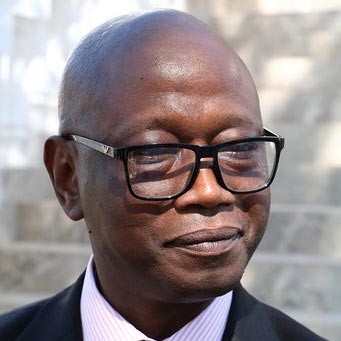
By Baba Galleh Jallow, former Executive Secretary, TRRC
Ending a dictatorship, however difficult, is the easy part of transitioning from mindless authoritarianism to democratic practice. Much more difficult is erasing the legacies of dictatorship. It is one thing to vote a dictator out, or remove him from power by other means. It is quite another to recognize and effectively deal with the unhealthy political habits and practices he leaves behind, which manifest as notably ugly and damaging pathologies in transitioning societies.
One such pathology we inherited from the Jammeh dictatorship is the political chameleon. In Gambian cultures, if a person is called a chameleon, the implication is that he is a hypocrite, is inconsistent in his dealings with others, could be expected to cozy up to and become like whoever he is close to at any particular moment. In all cases, the key motivation is self-preservation and self-aggrandizement. The designation is never applied to positive associations and affiliations of the person called chameleon. Its connotations are negative and associated with vices such as unreliability, dishonesty and lack of integrity. When the village whispers that so-and-so is a chameleon, so-and-so becomes a very unpopular character, contrary to what he may choose to believe.
But we must admit that the political chameleon is a legacy of the Jammeh dictatorship only be default. Under dictatorships, there are no half measures in political loyalty. Those with the dictator had to take on his color. Any of those with him suspected of taking on other colors are promptly eliminated one way or the other. The political chameleon in a dictatorship only pretends to take on other people’s colors for the sole purpose of snitching to put them in trouble. In any case, the absolute loyalty to dictators teaches a nefarious lesson: that if a leader is exceedingly power hungry, getting close to him and showing him unconditional loyalty brings a measure of affluence and prestige, however hollow. It also means living in constant fear of losing the leader’s color, falling out of favor, and being dropped back into the sea of ordinary humanity which the political chameleon seeks to escape. So it happens that while the erstwhile dictator is gone, the benefits of taking on the color of a power-hungry leader remain real, and is easily reachable for those willing to sacrifice their integrity and a good measure of their human decency.
While critics of a brutal dictator may not live to tell the story, critics of power-hungry leaders may, if they are political chameleons, safely creep back, regret their past words and actions, and get easily co-opted into the circle of power on condition that they now unconditionally and loudly praise and glorify the leader and everything they ever criticized for the sole purpose of maintaining the leader in power. Luckily for the political chameleon, power-hungry leaders have an uncanny stomach for swallowing their pride and tolerating former critics in exchange for blind loyalty.
Thus, people who all but insulted them in the past are readily co-opted and entrusted with the ignoble and inherently dehumanizing task of praising the very things they blamed yesterday, supporting the very agendas they opposed yesterday, and vigorously rooting for the very things they condemned yesterday.
If they called for certain reforms yesterday, today they will decree that the absence of those reforms is not debatable. If they decried certain unhealthy practices yesterday, today they will declare that the nation’s health and its very survival depend on the continuation of those same unhealthy practices. Power-hungry leaders know that those willing to embrace what they rejected yesterday out of a hankering after comfort and a seat at the proverbial table will easily succumb to the incentives of power. And once they so succumb, they become willing, almost automated instruments of an ongoing power-grab which they have no choice but to support, having now denied their previous “principled” positions.
Power-hungry leaders believe that politics is all about winning power, keeping power, enjoying the perks and privileges of power for as long as they are alive. They believe that you can say anything in pursuit of power, and that what matters is not what people said about them yesterday, but what people are saying about them today to keep them in power. Power-hungry leaders operate at the level of self-inflicted amorality. They suppress any serious thoughts of conscience or questions of moral right or wrong. They embrace convenient truths and lay claim to manufactured illusions of grandeur, of divine grace, and blessedness that allow them to do whatever they may to stay in power.
And so, for power-hungry leaders, it does not matter that some people called them ugly names and damned their intentions and activities yesterday as long as they are willing to recant, submit and support their fanatical pursuit of power. Under these leaders, political chameleons are handsomely rewarded, with the tacit understanding that they could also be unceremoniously dumped any time. Power-hungry leaders know that political chameleons are all too aware that they could be dumped into obscurity at any time, and that they would do and say anything to stay in favor.
Fierce critics who automatically become fierce loyalists overnight teach us that their objections of yesterday were not anchored in any principles or virtues like patriotism or love for the truth. Rather, their criticisms were disjointed and labored pretenses that were never part of the person’s real personality. They were performances in pursuit of relevance or privilege. So when criticisms prove incapable of bringing about the desired relevance or privilege, they are easily discarded in favor of the blind support and loyalty that could fetch the desired results. The political chameleon reasons that if critique cannot kill the cat, praise-singing can. And so the proverbial cats begin to die in large numbers as the political chameleon’s discourses on power and politics depart from all pretenses of principle into mindless expediency.
The political chameleon would have been a laughable phenomenon were it not so extremely ugly and damaging to our political culture and social mores. As a pathology of democratic transitions, political chameleons erode public trust and feed the idea that politics is dirty. By proving that dishonesty pays, they diminish faith in the workability or even desirability of democracy. They breed an inevitable cynicism about the possibility of genuine concern and advocacy. Inevitably, people may say of any critic that they are only criticizing because they are not eating and that if they were to start eating, they would start praise-singing. Ultimately, the political chameleon teaches the unhealthy lesson, especially to young, impressionable minds, that political positions are inherently mutable and that personal integrity is a negotiable commodity that may be sold to the highest bidder!
As a purchased chest-pounding warrior of the status quo, the political chameleon fights tooth, nail and claw to legitimize everything he sought to delegitimize yesterday, while delegitimizing everything he sought to legitimize yesterday. He now considers criticism and scrutiny of power as manifestations of jealousy, cruelty and lack of patriotism and loudly insists that Napoleon is always right and critics are always wrong. Obsessed with pleasing his patron and staying at the proverbial table of delights, the political chameleon pushes for the introduction of measures that are inimical to the wellbeing of the society while spoon-feeding the power-hungry leader dangerous potions of the myth of Yowrek, the indispensable leader; the mighty leader whose achievements are top of the world, whose actions are beyond reproach, and who enjoys the God-given mandate to stay in power as long as he wishes. In reality, the political chameleon is always inspired by and guarding his own selfish interests, which are now inextricably linked to the fortunes of the power-hungry leader, or his whims and caprices.
Needless to say, every society, especially societies in transition from dictatorship need to recognize the political chameleon as an aberration, to address him head on, to advocate for a political culture in which truth and consistency are demanded, and to insist on enjoying the right to genuinely criticize power where it goes wrong in the interest of the greater good.
About the Author