By: Haruna Kuyateh
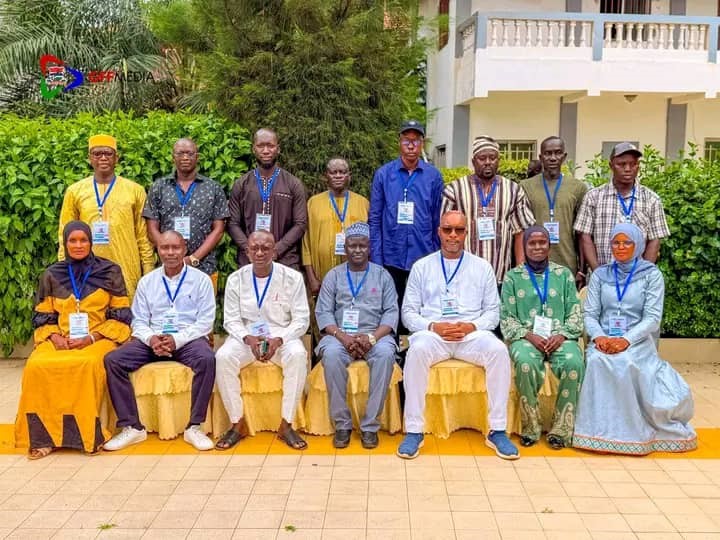
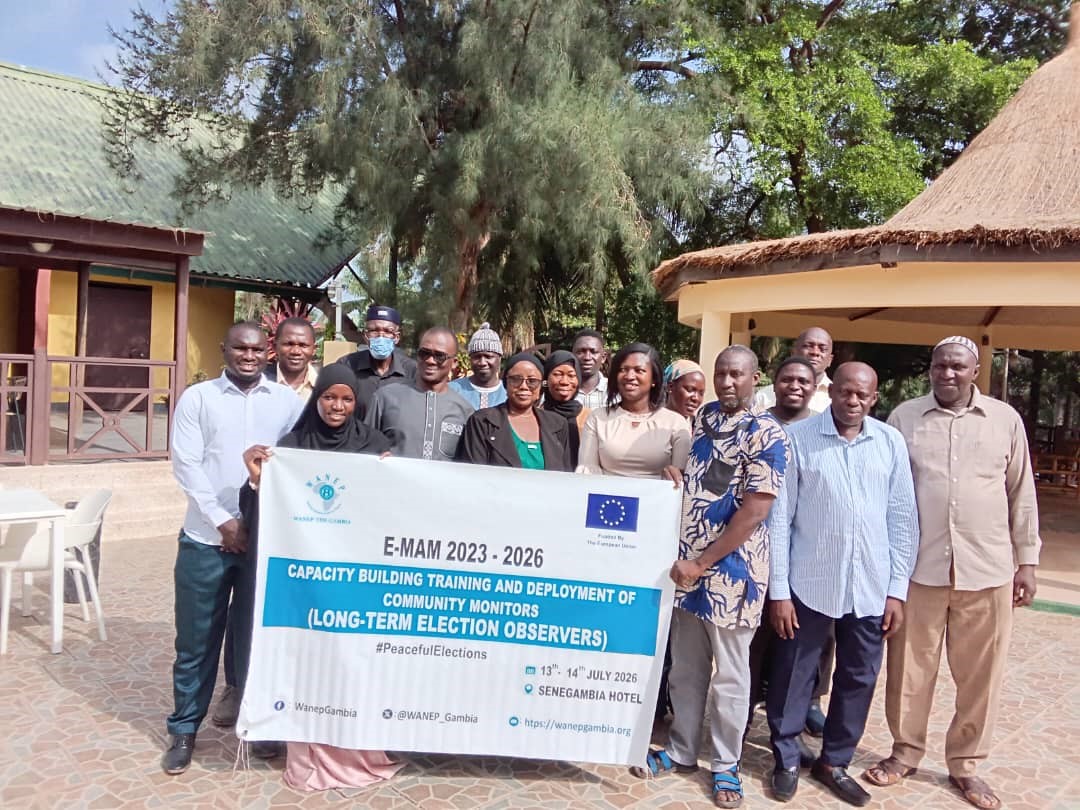
The West Africa Network for Peacebuilding (WANEP)-The Gambia has organized a two-day training workshop for community monitors and data reporters aimed at strengthening early warning monitoring and reporting ahead of the 2026 Presidential Election.
The training, held at a local hotel in Senegambia, formed part of the European Union-funded Electoral Violence Monitoring, Analysis and Mitigation (E-MAM) project, implemented by WANEP across 12 West African countries.
The E-MAM project seeks to strengthen regional and national capacities to promote peaceful electoral processes and political stability in countries holding elections between 2023 and 2026.
The participating countries include The Gambia, Benin, Burkina Faso, Côte d’Ivoire, Ghana, Guinea, Guinea-Bissau, Liberia, Mali, Niger, Senegal and Togo.
As The Gambia prepares for the 2026 Presidential Election, WANEP says the electoral environment requires close monitoring due to emerging risks, including political polarization, governance-related tensions, public protests and the use of divisive rhetoric, including ethnic narratives.
Salama Njie, National Network Coordinator of WANEP-The Gambia, said the capacity-building programme would contribute to efforts to prevent and mitigate electoral violence through timely reporting and response mechanisms.
She explains that the training aims to enhance the ability of community monitors and data reporters to understand and apply validated electoral violence indicators for the 2026 election.
“The objective is to contribute to timely interventions by stakeholders to ensure credible and peaceful electoral cycles,” Njie said.
Dr Malang S. Bojang, WANEP National Early Warning System (NEWS) Manager, presented key indicators for monitoring electoral risks, including physical violence and destruction of property.
He says WANEP has developed a comprehensive framework comprising electoral violence monitoring indicators, hotspot maps and stakeholder analyses to support systematic tracking of risks throughout the electoral cycle.
According to Dr Bojang, 33 out of 53 identified electoral areas have been classified as hotspots requiring heightened attention ahead of the 2026 elections.
He said the tools would serve as the foundation for an early warning mechanism designed to support evidence-based reporting and timely preventive action.
WANEP Regional Coordinator for Early Warning, Edward Jombla, also made presentations on the E-MAM project and the role of early warning systems in supporting peaceful political transitions in West Africa.
He said the training would introduce participants to the collection, verification and processing of real-time data on electoral violence risk indicators.
Jombla added that participants would also be equipped with skills to use the GAMBIAELECTS online reporting platform and conduct regular monitoring of threats to peaceful elections across the country’s seven administrative regions.
The workshop covered key areas including early warning systems and peaceful political transitions, electoral risk indicators, early warning data collection, practical data collection exercises and risk management processes.
WANEP-The Gambia said the training has equipped 15 community monitors and one election reporter with the knowledge and practical skills required to monitor, document and report electoral threats using the GAMBIAELECTS platform.
The organization says the initiative forms part of ongoing efforts to strengthen national preparedness for peaceful, transparent and credible elections.
About The Author