
By Binta Jaiteh
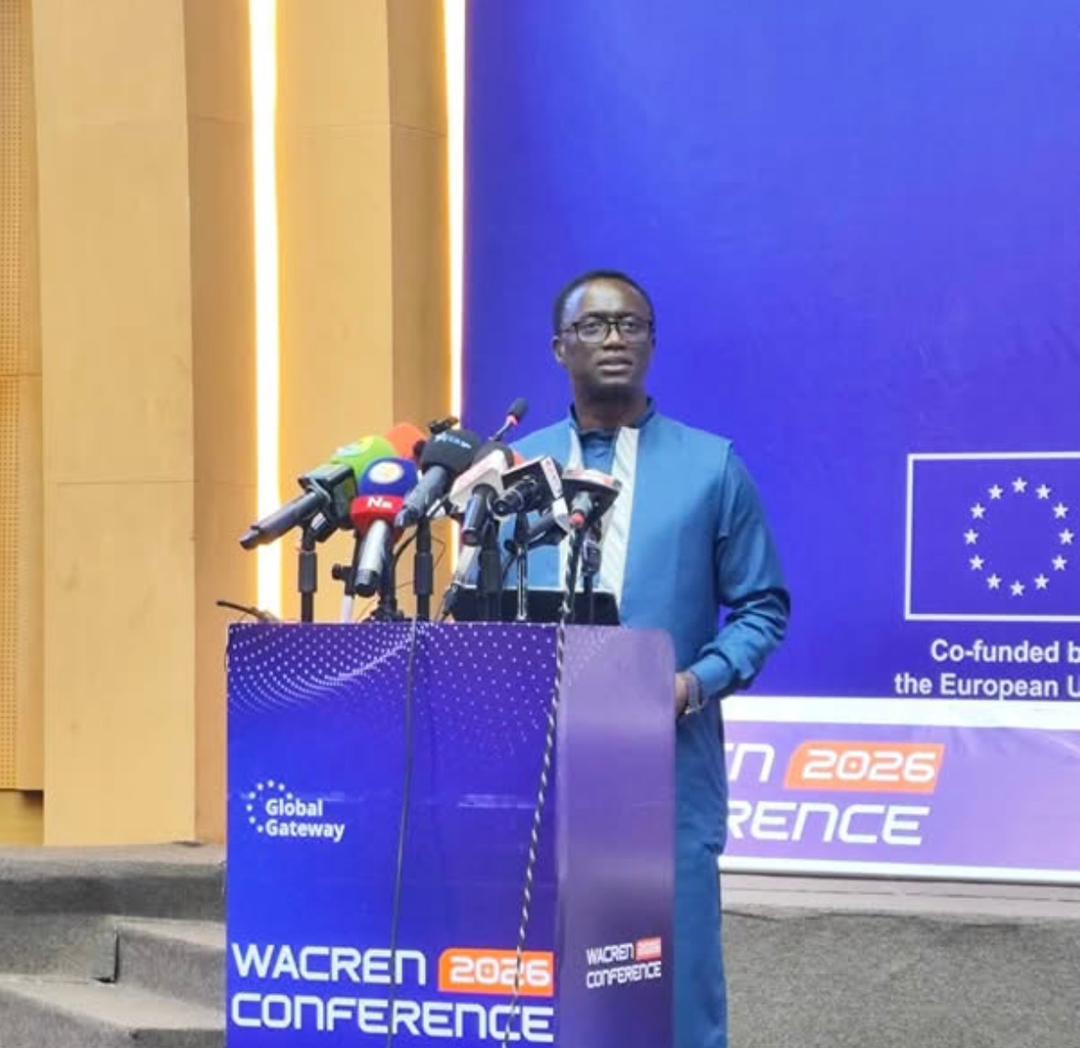
The Ministry of Higher Education, Research, Science and Technology (MoHERST) on Thursday hosted the West and Central African Research and Education Network (WACREN) annual conference at the Sir Dawda Kairaba Jawara International Conference Centre in Banjul.
The event brought together policymakers, researchers, and higher education leaders from across Africa to discuss digital infrastructure, open science, and innovation under the theme “Connected Futures: Advancing Africa’s Digital Sovereignty Through Open Collaboration.” The conference also marked the launch of the Gambia Research and Education Network (GAMREN), aimed at strengthening connectivity among universities and research institutions in the country.
Speaking at the opening ceremony, Minister of Higher Education, Research, Science and Technology, Professor Pierre Gomez, said Africa stands at a decisive inflection point, where the continent’s future will be increasingly determined by the knowledge it generates, the data it governs, and the digital systems it controls.
“Digital sovereignty is no longer an abstract aspiration but an urgent imperative,” he said. “It is about ensuring that African institutions actively design, own, and govern digital technologies, that African data serves African priorities, and that resilient, inclusive, and secure digital ecosystems empower our universities, researchers, and innovators.”
Professor Gomez highlighted WACREN’s role in laying the digital backbone for collaboration and innovation across West and Central Africa. He described the 2026 conference as a milestone affirming The Gambia’s commitment to placing higher education, research, science, and technology at the center of national development.
Representing the President, the Minister of Public Service, Administrative Reform, Policy Coordination and Delivery, Abdoulie Boye, commended participants for their dedication to shaping Africa’s digital future. He underscored that digital sovereignty ensures African institutions own, govern, and benefit from their digital infrastructure while safeguarding knowledge assets and innovations.
“The conference is a strategic step in aligning national ambitions with continental progress,” Minister Boye said, urging emphasis on capacity building in cybersecurity, artificial intelligence, and federated climate data systems. He called for collaboration across borders to address shared challenges in education, climate change, public health, and food security.
The establishment of GAMREN, he added, creates a strong national network connected to a vibrant regional ecosystem that can empower universities, enhance research collaboration, and open new opportunities for young scholars.
European Union representative Imma Roca I Cortés described the conference as a milestone for The Gambia’s higher education and research system. She announced the launch of AfricaConnect 4, a €40 million initiative to expand high-speed connectivity and services to African universities and research institutions.
“The EU is proud to support research and education networks on the African continent,” she said, noting that previous phases of AfricaConnect have connected over 3,000 institutions and nine million users.
The conference is expected to enhance The Gambia’s research and policy capacities while reinforcing the country’s integration into the regional and global research ecosystem.