
By Haddy Touray
More than 80 people, including a baby, are feared dead after a migrant boat believed to have departed The Gambia drifted in the Atlantic Ocean for 27 days before being located off the Canary Islands, Spanish authorities said.
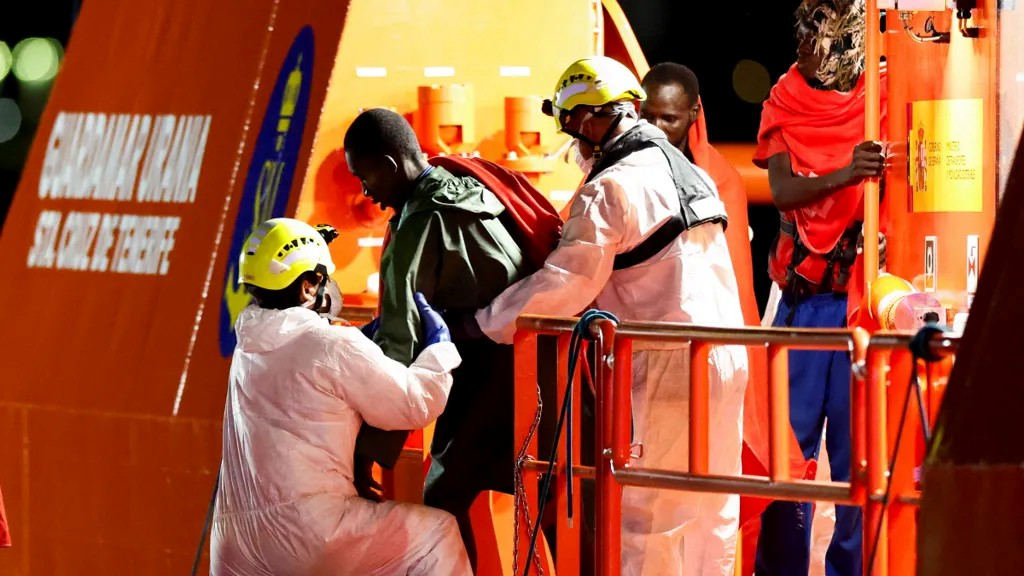
Spanish Maritime Rescue services located the vessel on Wednesday about 65 nautical miles southwest of Arguineguín, on the island of Gran Canaria, and rescued 44 survivors.
Five bodies were also found aboard the vessel but could not be recovered because of adverse sea conditions, according to Maritime Rescue.
The boat is believed to have left The Gambia in early August carrying about 127 people.
However, Maritime Rescue said it was unable to independently verify the number of people who had originally been aboard the vessel.
Human rights activist Helena Maleno Garzón, founder of Spanish Organisation Caminando Fronteras, said 83 people had died during the journey.
The 44 survivors are men from sub-Saharan Africa, Maritime Rescue said.
“Once the rescue was complete, adverse weather conditions in the area – featuring 20-knot winds and 2.5-metre waves – made it impossible to recover the five bodies found on board the vessel,” the service said in a statement.
Three of the survivors were airlifted to hospital in critical condition, while the others were transported by sea to Gran Canaria, where they arrived early Thursday.
Fernando Clavijo, President of the Canary Islands Government, expressed concern over the incident and called for urgent action to prevent further loss of life along the Atlantic migration route.
“It is intolerable that lives continue to be lost. The Canaries cannot get used to or accept as normal the fact that the Atlantic continues to be a death trap,” he said in a post on X.
The Atlantic migration route linking West Africa to the Canary Islands is considered one of the world’s most dangerous migration routes.
Thousands of migrants attempt the crossing each year in search of safety and opportunities in Spanish territory, despite the risks posed by rough seas, strong currents and the long distance involved.
About The Author