By Musa S. Sheriff
As The Gambia prepares for the crucial Dec. 5, 2026 presidential election, the ruling National People’s Party (NPP) is presenting itself as a party focused on continuity, grassroots organisation and digital transformation.
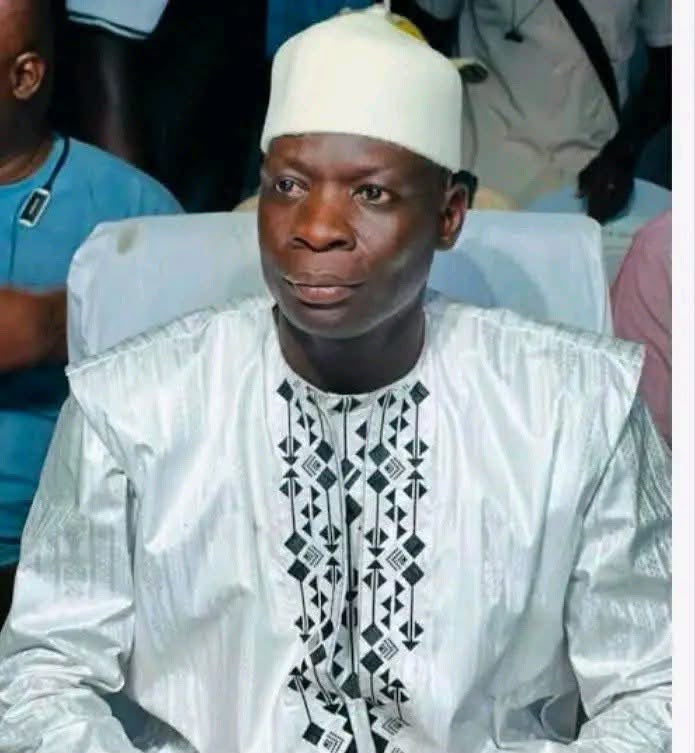
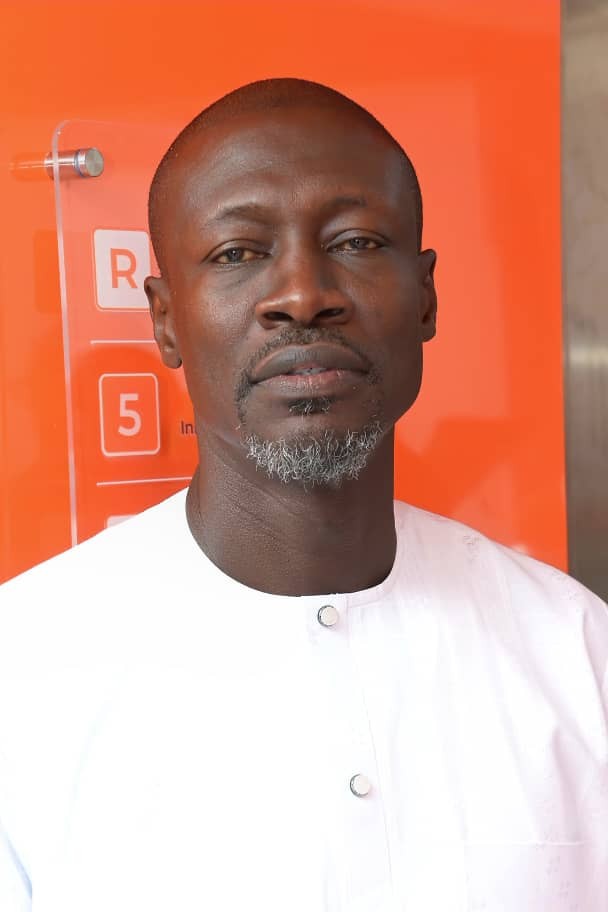
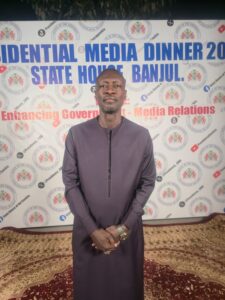
On a visit to London, The Voice Editor-in-Chief Musa S. Sheriff has an online interface on Thursday with Seedy Sheriff Ceesay, Administrative Secretary of the National People’s Party. It was an extensive interview covering his three years in office, President Adama Barrow’s record, youth and women’s empowerment, the NPP-led alliance with the Gambia Democratic Congress (GDC), and the increasingly competitive electoral landscape.
Ceesay argues that the NPP has evolved from an election-driven organisation into a year-round political movement with stronger regional structures, modern digital engagement and a greater emphasis on policy. While acknowledging challenges such as the rising cost of living, unemployment and institutional reform, he maintains that President Barrow’s development record provides the strongest basis for seeking another mandate.
Q: Looking back since your appointment as Administrative Secretary in June 2023, what do you consider your most significant achievements?
When I assumed office, my first priority was to strengthen the National People’s Party from the grassroots level. A political party should never exist only during election campaigns. It must remain connected to its members, communities and supporters every day, whether elections are near or not.
Over the past three years, that has been our guiding philosophy. We have invested considerable effort in strengthening our regional, constituency and ward structures while improving coordination between those structures and the national secretariat. A stronger organisation allows us to respond more effectively to the concerns of ordinary Gambians and ensures that the party remains active throughout the country.
One of the areas I am particularly proud of is the increased participation of young people and women. The future of Gambian politics depends on creating opportunities for the next generation to lead, not simply asking them to attend rallies or campaign during elections.
We recognised early that politics is changing rapidly. Today’s generation consumes information differently, communicates differently and expects greater accessibility from political leaders. That is why the NPP has invested in digital innovation through our website, mobile application, digital membership system and initiatives such as AskBarrowAI. These platforms allow supporters and citizens to engage with information about the party and government in more modern ways.
But technology alone is not enough. We have also introduced programmes that directly benefit young Gambians. The Digital Ambassadors Programme equips young people with communication and leadership skills while encouraging responsible participation in public debate. Alongside that, our scholarship programme provides educational opportunities because we believe supporting youth must extend beyond politics into education and personal development.
Women’s empowerment has also become a major pillar of our work. Through the Success Women Enterprise initiative, we are supporting women entrepreneurs and promoting greater financial independence. Women have always been central to our communities, and their contribution deserves recognition not only in political leadership but also in economic development.
Another important achievement has been improving how we communicate ideas. The launch of Politico Magazine gives us a platform to discuss policies, document party activities and engage Gambians in meaningful national conversations. At the same time, our Manifesto 2027–2031 and the Nine-Point Plan demonstrate our commitment to issue-based politics where citizens can judge us by clear commitments and measurable goals.
Looking back, I see progress in organisation, communication, youth empowerment, women’s inclusion and political education. We have certainly not finished the journey, but I believe we have built a stronger and more modern political party.
Q: Inclusivity, transparency, youth leadership and citizen participation have become important democratic values. How is the NPP putting these principles into practice?
This is an important question because democracy continues to evolve. During the African Political Parties Forum in Accra in 2025, I said that people are no longer satisfied with politics as usual. Citizens want to participate, and young people especially want their voices to influence decision-making rather than simply providing numbers during campaigns.
That belief continues to shape our work within the NPP.
Young people today occupy important positions in our communications department, digital mobilisation teams, community outreach and organisational structures. The Digital Ambassadors Programme is one practical example of creating leadership opportunities rather than symbolic participation.
We have also tried to make political communication more inclusive by expanding the use of Gambian languages. Inclusion cannot be genuine if important political information is accessible only to English speakers. Our objective is to ensure that ordinary Gambians, regardless of educational background, can understand our policies, our manifesto and our national vision.
Digital platforms have also improved access to information. Citizens can now obtain information about President Barrow’s programmes, government achievements and party policies much more easily than before.
Having said that, I do not believe any political party can honestly claim perfection. We still need to improve internal accountability, strengthen participation mechanisms and create even greater opportunities for women and young leaders. The important thing is recognising those gaps and working consistently to address them.
Democracy is not a destination. It is a continuous process of improvement.
Q: Many Gambians are asking whether President Adama Barrow is still listening, adapting and delivering. What is your assessment?
Yes, I believe he is, and I think the strongest evidence is visible across the country rather than in political speeches.
Infrastructure development is perhaps the clearest example. Communities that waited for decades are finally being connected through new roads. The recently completed 12-kilometre Njau Road and the launch of the 52-kilometre Ngayen–Sanjal Road illustrate the government’s commitment to expanding connectivity beyond urban centres.
For many rural communities, a road is much more than concrete or asphalt. It determines whether farmers can transport produce to markets, whether pregnant women can reach hospitals quickly and whether children can attend school more safely. Development becomes meaningful when it changes everyday life.
Electricity is another area where substantial progress has been made. The expansion of national electricity access is transforming businesses, health facilities, schools and households. The government’s objective of achieving universal electricity access reflects a broader commitment to reducing inequalities between urban and rural Gambia.
Beyond roads and electricity, there have been investments in agriculture, education, healthcare, water supply and communications infrastructure. President Barrow has consistently emphasised that national development should not remain concentrated within the Greater Banjul Area. Rural communities deserve equal attention and equal opportunity.
However, acknowledging progress does not mean ignoring legitimate concerns.
The rising cost of living remains one of the biggest challenges facing Gambian families. Youth unemployment continues to demand urgent attention, and we need stronger private-sector growth alongside increased investment in agriculture and entrepreneurship. Public institutions must become more efficient, and corruption must continue to be confronted wherever it exists.
So yes, there is unfinished work. But when I compare today’s Gambia with where we were several years ago, I believe the country has moved forward significantly under President Barrow’s leadership.
Q: The Gambia Democratic Congress led by Mama Kandeh has joined the NPP-led alliance. What do you expect that partnership to contribute?
The decision by Hon. Mama Kandeh and the GDC to join our alliance represents an important moment in Gambian politics.
The GDC is a nationally recognised political party with established structures and loyal supporters across the country. Mama Kandeh himself has remained a significant political figure for many years, and we welcome both his experience and the organisational strength his party brings.
But I think the broader significance goes beyond electoral arithmetic.
President Barrow and Mama Kandeh have contested elections against one another before. They have disagreed politically, yet they have demonstrated that political differences do not prevent constructive cooperation when national interests overlap. That is an encouraging example of democratic maturity.
An alliance does not require political parties to surrender their identities. Each partner retains its philosophy and membership while cooperating around shared national objectives. For us, those objectives include preserving peace and stability, expanding economic opportunities and continuing national development.
We expect the GDC to participate fully in mobilisation, campaigning and policy discussions. Their supporters, ideas and organisational capacity strengthen the alliance, and together we believe we can present a broader national platform to Gambian voters.
Ultimately, however, alliances do not decide elections. The Gambian people do.
Q: The opposition appears divided after unsuccessful coalition negotiations. Does that reduce the challenge facing the NPP?
We respect every political party and every candidate who chooses to contest the election. Democracy becomes stronger when citizens have genuine choices.
Of course, everyone has followed the coalition discussions and the disagreements that emerged among opposition parties. Some parties withdrew from negotiations, while others chose different political arrangements. Those decisions belong to them, and we respect their democratic right to organise as they wish.
Our strategy, however, cannot depend on whether the opposition is united or divided.
Our responsibility is to defend President Barrow’s record, explain our manifesto, strengthen our alliance and engage directly with voters. That requires hard work regardless of what our opponents are doing.
People often ask me which opposition leader represents the greatest threat. I honestly prefer not to approach politics that way. Every candidate deserves respect, and every constituency deserves serious campaigning. We are not taking any voter for granted.
Our confidence comes from what we have accomplished, from the strength of our structures and from the positive reception we continue to receive during engagements across the country. We believe Gambians will judge parties primarily on performance rather than political calculations.
We respect our opponents, but we fear none of them.
Q: Critics argue that development projects alone cannot solve concerns about governance, accountability and economic hardship. How does the NPP respond?
Those concerns deserve serious attention because democracy requires governments to listen as much as they speak.
We understand that many families continue to struggle with food prices, transport costs and limited employment opportunities. These are genuine realities, and pretending otherwise would disconnect politics from people’s daily lives.
Our response is that development must continue alongside economic reforms. Infrastructure creates the foundation for growth, but growth must generate jobs. That is why increasing agricultural productivity, supporting small businesses, attracting investment and expanding vocational education remain important priorities within our long-term agenda.
Accountability is equally important. Public institutions must deliver services efficiently, and citizens should expect transparency from government. As a ruling party, we accept that people will scrutinise our performance, and they have every right to do so.
We do not claim every problem has been solved. What we are saying is that the country has made measurable progress while recognising that significant challenges remain.
That balance is important because honest politics requires acknowledging both achievements and shortcomings.
Q: Finally, what message do you have for Gambians as the December 5 presidential election approaches?
My message is simple but important: after December 5, we will all still be Gambians.
Elections should never destroy our national unity. Political competition is healthy, but it should not create permanent enemies. Whether someone supports the NPP, the UDP, the GDC or any other political party, they remain our fellow citizens and deserve respect.
To NPP supporters, I encourage disciplined and respectful campaigning. Defend our record, explain our policies and persuade voters through facts rather than insults. Democracy is strongest when ideas compete peacefully.
To the opposition, I say continue challenging us. Criticise our record where you believe we have failed, propose alternatives and allow Gambians to compare different visions for the country. That is the essence of democratic politics.
What we must reject together is tribal politics, misinformation, hate speech and any attempt to divide our people for political gain. The issues that truly matter are the cost of living, employment, agriculture, education, healthcare, electricity, roads, opportunities for young people and women’s economic empowerment.
For us in the NPP-led alliance, we believe we have a credible record to present to the electorate. We are not arguing that every challenge has disappeared, but we are saying substantial progress has been made and that President Barrow deserves the opportunity to continue that work.
We will seek every vote respectfully and democratically. Elections are won at the ballot box, not through assumptions or complacency. I have confidence in the strength of our party structures, the growing alliance and the positive response we continue to receive from communities across the country.
I believe Gambians understand what is at stake. On December 5, they will make their decision, and I am confident they will renew President Adama Barrow’s mandate to continue the nation’s development journey.
Editor’s Note: This interview has been edited for clarity and length while preserving the substance of Mr. Seedy Sheriff Ceesay’s responses.
About The Author