
By Fatou Krubally
The National Environment Agency (NEA), in collaboration with the West Africa Coastal Areas (WACA) Project, has intensified efforts to address waste accumulation along the Kotu Stream, warning that continued dumping threatens the ecosystem and surrounding communities.
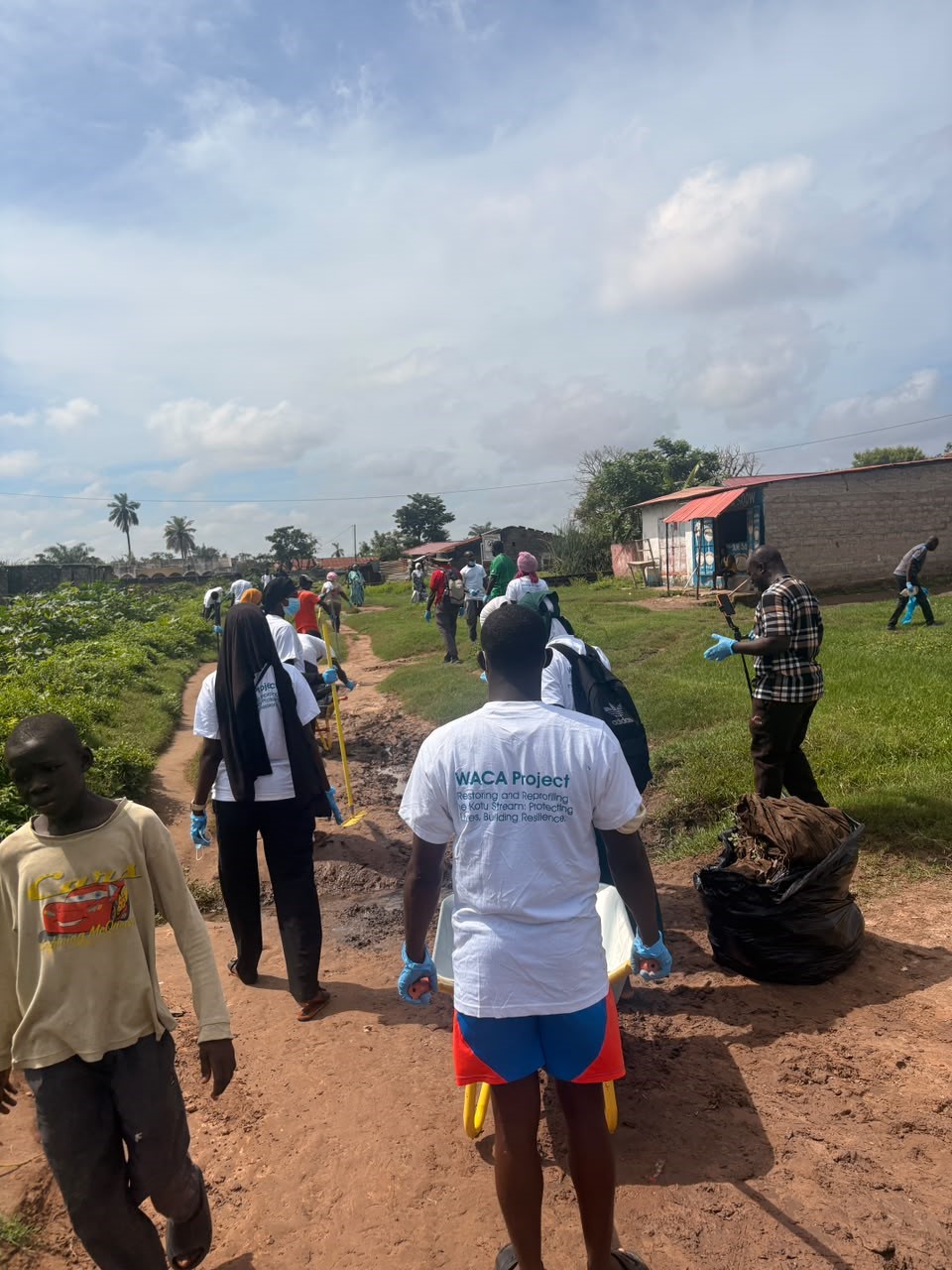
The warning was issued on Saturday, September 26, during a community cleanup organised to mark International Coastal Cleanup Day 2026.
Unlike previous activities focused on the coastline, the exercise targeted the banks of the Kotu Stream as part of efforts to promote community-led environmental protection.
Lamin Komma, Programme Manager for Coastal and Marine Environment Programmes at the NEA, described the Kotu Stream as a sensitive ecosystem that plays an important role in biodiversity, tourism, climate resilience and environmental management.
He said the stream runs from Nyamakunku towards Kotu, where it connects to the Atlantic Ocean, making waste discharged into the waterway a broader environmental concern.
Komma said solid and liquid waste generated by surrounding communities can enter the stream and eventually reach the marine environment.
He also linked waste accumulation along the waterway to flooding, particularly during the rainy season, when blocked drainage and obstructed water flow can increase the vulnerability of communities living near the stream.
The cleanup brought together community members, ward councillors and other stakeholders from areas covered by the WACA Project.
Haruna Cham, Social Development Specialist with the WACA Project, said the initiative is being implemented with the NEA, local councils and ward structures to ensure that environmental interventions are sustained beyond the project period.
He said the WACA Project had provided waste-management equipment, including trucks, compactors, wheelbarrows, bins and tricycles, to support councils in improving waste collection, particularly in areas that are difficult for heavy-duty vehicles to access.
Cham said greater community responsibility would also be required to keep the areas surrounding the stream clean, adding that regular cleanup activities are being considered as part of the project’s sustainability strategy.
Nuha Jammeh, Senior Wildlife Management Officer at the Department of Parks and Wildlife Management, described the Kotu Stream as an ecologically sensitive area that supports birds and fish.
He warned that accumulated waste could obstruct water flow and contribute to flooding in surrounding communities.
Jammeh called for stronger community engagement, saying residents should be properly consulted and sensitised to encourage sustained participation in environmental protection initiatives.
The NEA said the cleanup was intended to promote responsible waste management and strengthen community ownership of the Kotu Stream.
The agency stressed, however, that regular cleanup exercises alone would not resolve the problem, noting that effective enforcement, public awareness and sustained community participation are needed to prevent waste from returning to the waterway.
About The Author