By Fatou Krubally
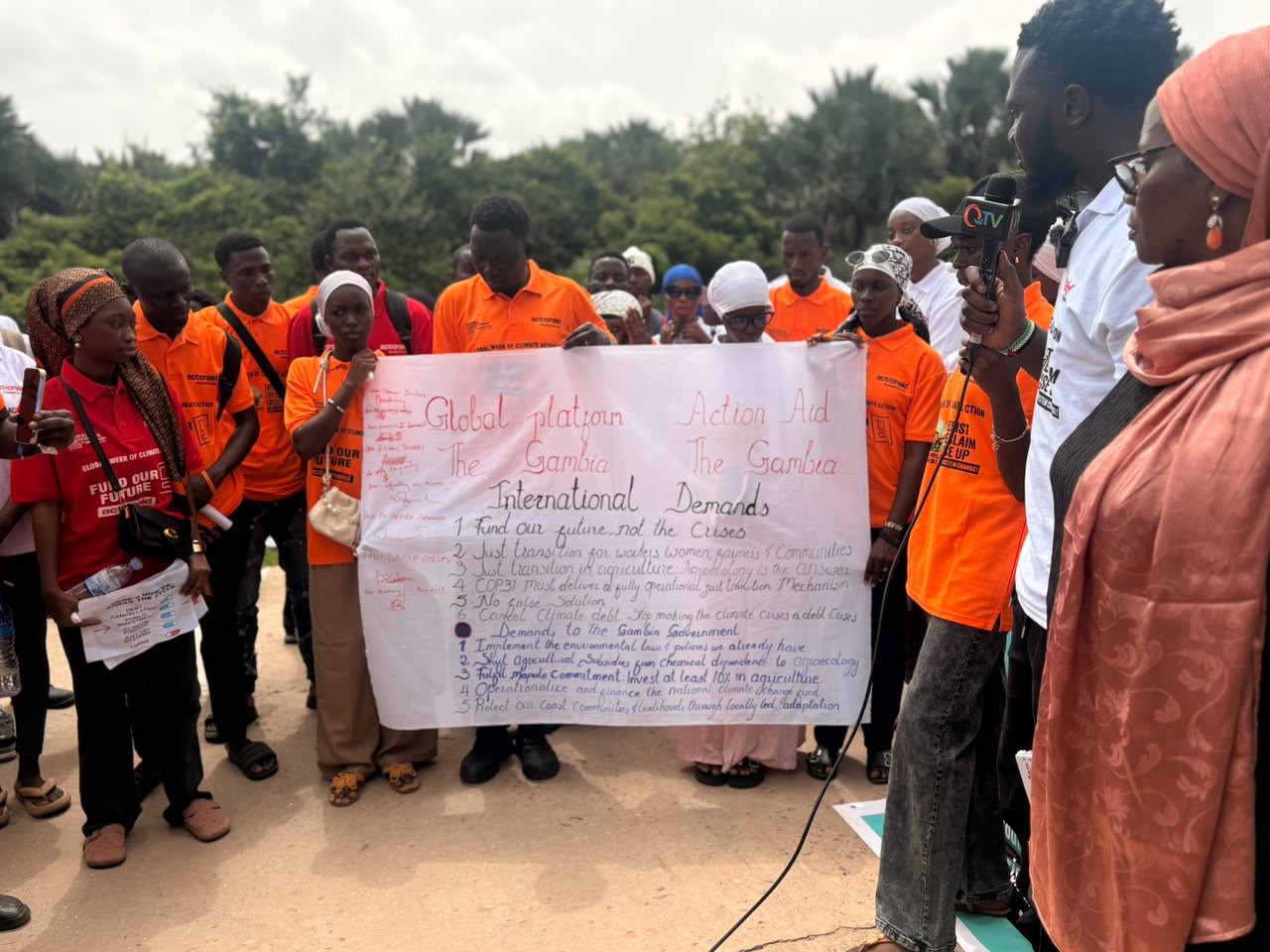
Climate activists and civil society organisations on Saturday marched to the Ministry of Environment, Climate Change and Natural Resources (MECCNAR) in Abuko, where they presented a series of demands calling for stronger action on climate justice, climate finance and the protection of vulnerable communities.
The march was organised by Global Platform The Gambia as part of the Global Week of Climate Action, with support from ActionAid International The Gambia.
It brought together young people, civil society representatives, development partners and climate activists who called for increased action to address the effects of climate change.
Among the demands were calls for development funding rather than crisis response, a just transition for workers, women and communities, the establishment of a fully operational just transition mechanism at COP31 and the implementation of existing environmental laws and policies.
Speaking at the event, Ousman Baldeh, Programme Manager of Global Platform The Gambia, said the campaign was aimed at ensuring that the voices of communities affected by climate change were heard.
He said The Gambia contributed less than one percent of global greenhouse gas emissions but continued to experience the effects of climate change, particularly in rural communities where farmers face changing rainfall patterns and declining agricultural production.
Baldeh called for greater climate justice, arguing that countries and communities that contribute the least to climate change should not bear a disproportionate share of its consequences.
Saikou Darboe, National President of Global Platform The Gambia, said the organisation was calling for concrete action rather than assistance alone.
He cited the impact of climate change on energy, agriculture and farming costs, while advocating greater support for organic agriculture and environmentally sustainable farming practices.
Ousman Bah of ActionAid International The Gambia said the organisation was supporting the campaign and would continue working with partners on climate justice and agroecology.
He said the demands presented to the ministry were developed through consultations involving civil society organisations, young people and other stakeholders.
Receiving the demands on behalf of the ministry, Deputy Permanent Secretary Bintou Gassama said the government recognised the concerns raised by the activists.
She said climate change was affecting communities, agriculture, natural resources and livelihoods, adding that the ministry remained committed to working with young people, civil society organisations and other stakeholders.
Gassama said the ministry would study the demands within the country’s relevant policy, legal and institutional frameworks.
She also assured the activists that their demands would be presented at COP31, saying The Gambia would continue to advocate internationally for climate justice and greater access to climate finance.
The deputy permanent secretary welcomed the call for a transition from chemical to organic fertilisers, saying such a shift could benefit farmers, the environment and the wider economy.
The march ended with calls for continued cooperation among the government, civil society, young people and development partners in addressing The Gambia’s climate challenges.
About The Author