By Haruna Kuyateh
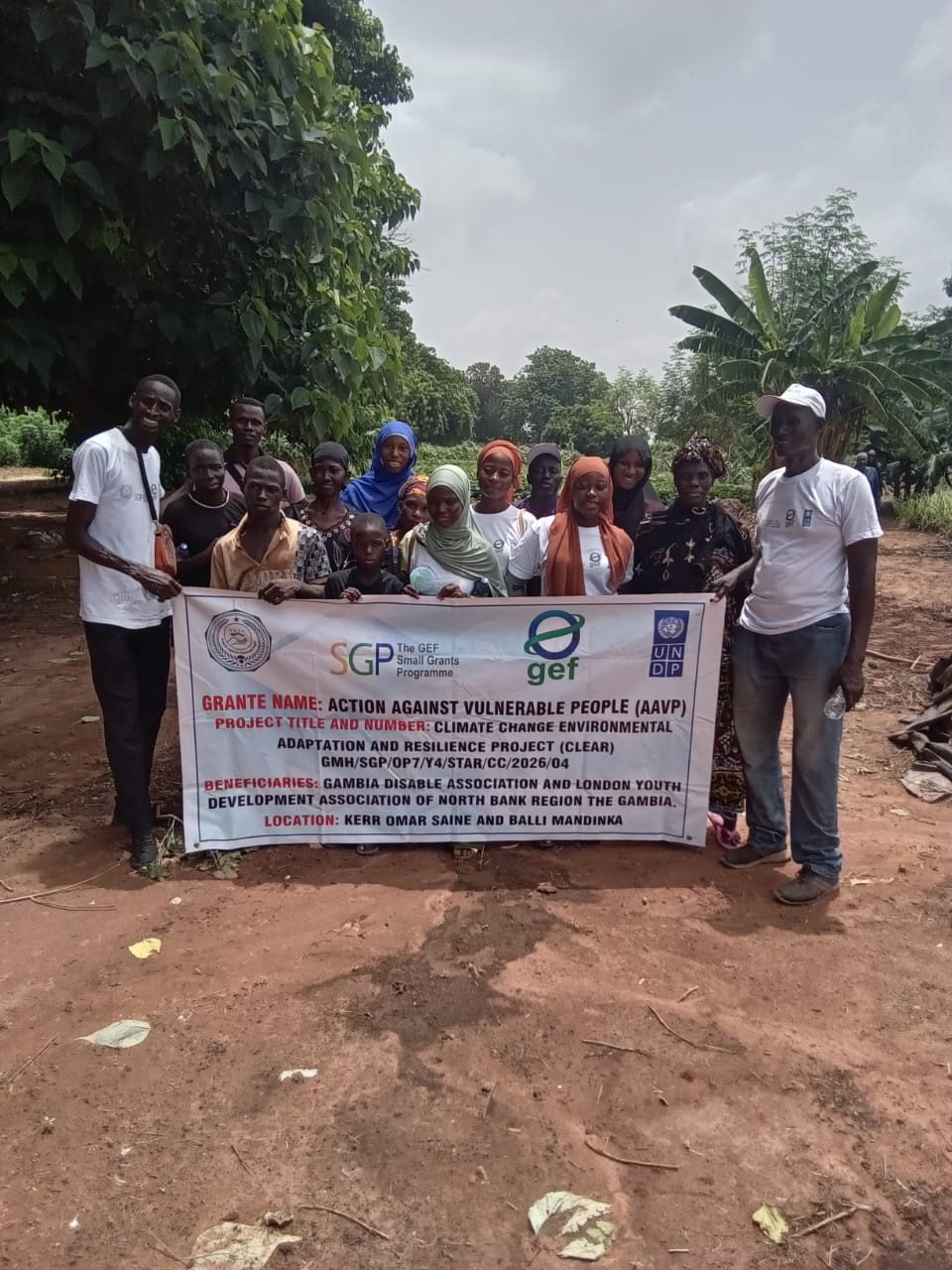
Action Against the Vulnerability of People (AAVP), a community-based organization has trained 14 farmers within North Bank Region (NBR) in climate-smart agriculture and agroecological practices as part of efforts to strengthen farmers’ resilience to the effects of climate change.
The two-day capacity-building training which ended Saturday, was held at the SOLICITA Marketing Federation headquarters in Kerewan, North Bank Region.
The training brought together farmers from the London Youth Association of Kerr Omar Saine and the Persons with Disabilities (PWD) Orchard at Balli Mandinka in Jokadou.
The initiative was funded under the United Nations Development Programme (UNDP) Small Grants Programme through the Global Environment Facility (GEF).
According to AAVP, the training was designed to equip farmers with knowledge and skills to adopt climate-smart agricultural practices, improve food production and promote healthier farming systems.
As part of the program, participants also undertook a one-day farmer exchange visit to a master farmer’s garden in Toroba, Lower Badibou, and the Gambia Songhai Initiative Agricultural Centre in Chamen.
The exchange visits were intended to expose farmers to climate-smart agricultural practices and enable them to learn about approaches aimed at improving productivity and resilience.
AAVP Project Manager, Momodou Wuri Jallow said the capacity-building program was aimed at improving agricultural productivity, strengthening resilience to climate change and reducing greenhouse gas emissions.
He says AAVP, established in December 2023, focuses on climate change mitigation, adaptation and resilience, environmental and natural resources management, and agriculture and food security.
Jallow said the organization’s work was centered on community empowerment through capacity building, advocacy, resource mobilisation and service delivery.
He noted that climate change, erratic rainfall and rising temperatures were creating challenges for farmers, making exposure to climate-smart agricultural practices essential for adapting to climate-related shocks.
The training covered agroforestry, the importance of cover crops, heat-tolerant and adaptive tree species, water management, mulching and drip irrigation, among other topics.
Master Farmer at Toroba, Modou Loum, thanked AAVP for organizing the exchange visits, saying they provided farmers with an opportunity to share knowledge and learn practical approaches to climate-smart agriculture.
He said the initiative could contribute to strengthening household food security and incomes, while promoting the restoration of depleted forest cover through agroforestry and sustainable livelihood practices.
Loum also encouraged farmers and persons with disabilities to remain committed to organic farming practices.
Salifu Bayayogo, President of the North Bank Disabled Association, described the visits to the Gambia Songhai Initiative Agricultural Centre and the master farmer’s garden as insightful.
He said the exposure had enabled farmers to learn innovative approaches to climate-smart agriculture and would strengthen their capacity to adopt improved agronomic practices.
Bayayogo reaffirmed the commitment of persons with disabilities to skills development and economic empowerment, saying the support provided by AAVP would help beneficiaries pursue greater economic independence.
Mustapha Jassey, President of the Kerr Omar Saine London Youth Association was among the people who made statement during the training program.
About The Author