By: Fatou Krubally
The Independent Electoral Commission (IEC) has added three electoral offices ahead of the 2026 elections, increasing the number of its electoral offices from seven to ten.
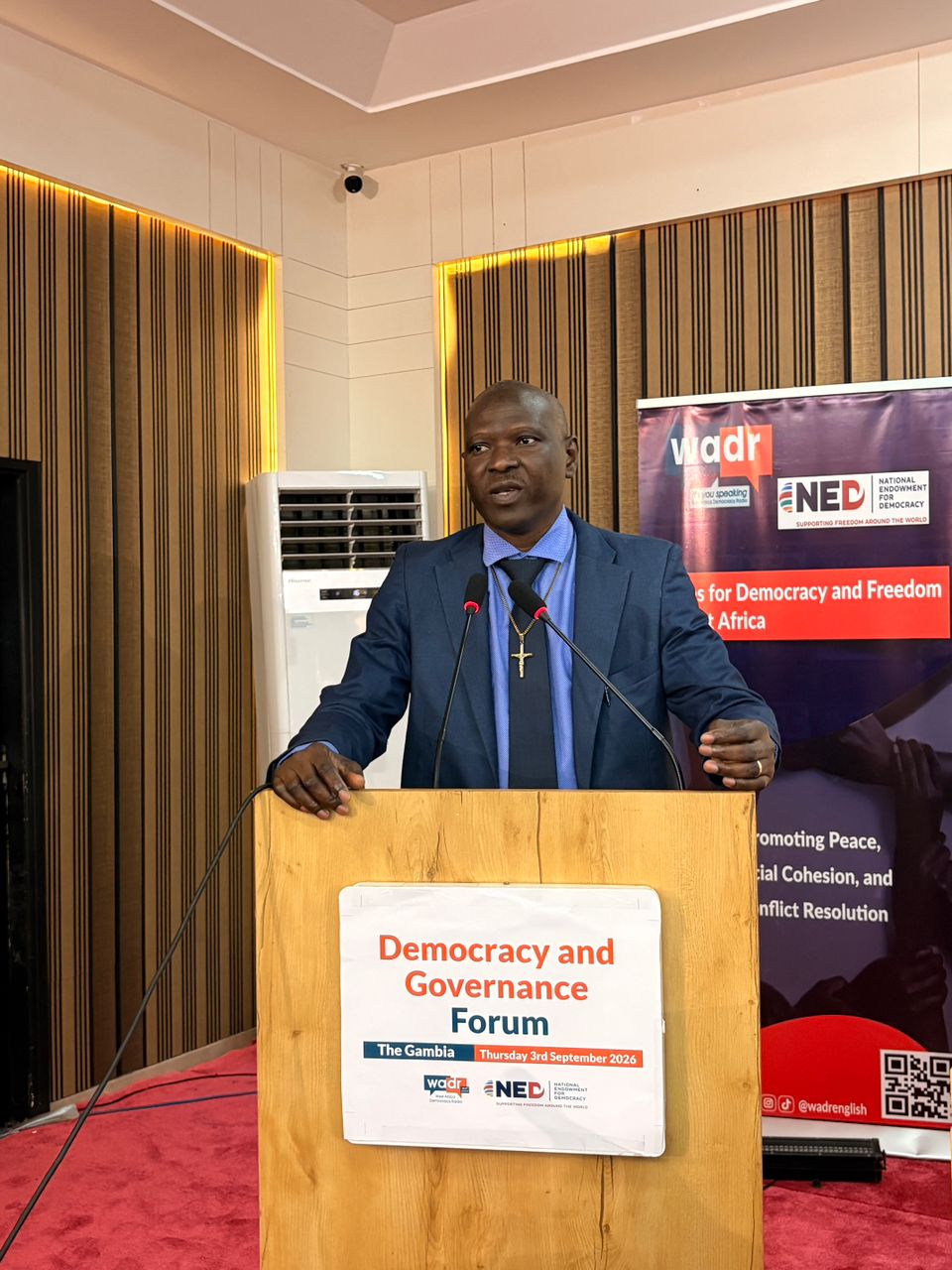
IEC Chairperson Joseph Colley disclosed this on Thursday, September 3, 2026, while speaking at the WADR Democracy and Governance Forum held at the Bakadagi Hotel in Banjul.
The forum was held under the theme, “The Gambia’s Political, Judicial and Security Reforms: Progress, Challenges and Recommendations.”
Colley said the expansion of the electoral offices followed challenges encountered with results management during the last two electoral cycles.
He explained that the move forms part of the Commission’s preparations for the upcoming elections and its efforts to strengthen electoral operations.
According to Colley, the IEC is implementing its Strategic Plan 2025–2029 and its election strategy, with activities covering the period before, during and after election day.
He emphasized that elections should be viewed as a process rather than an event, with preparations and post-election activities forming part of the electoral process.
Colley also highlighted other preparations underway at the commission, including the procurement of election materials, the development of polling manuals and training for electoral stakeholders.
He said the Commission has established a legal unit and is also working on strengthening mechanisms for resolving electoral disputes.
On voter registration, Colley said 1,694 persons had objected during the revising courts, which became operational on August 31.
He added that the Commission has been holding stakeholder forums to provide updates, receive feedback and discuss preparations for the elections. Another stakeholder forum is scheduled for September 10.
Colley also raised concerns about the campaign period ahead of the 2026 elections. He said Section 36 of the Electoral Act 2025 provides that the campaign period will not exceed 18 weeks, leaving the Commission with a limited timeframe to complete the necessary electoral activities.
He said the Commission would continue consultations with stakeholders on the challenges surrounding the electoral process.
Addressing questions about political actors conducting parallel tabulations or declaring election results, Colley stressed the importance of compliance with the law. “Nobody is above the law. So if the law says do this, do this,” he said.
Colley assured stakeholders that the IEC was prepared to deliver elections that were free, fair, transparent, credible and inclusive.
About The Author