By Binta Jaiteh
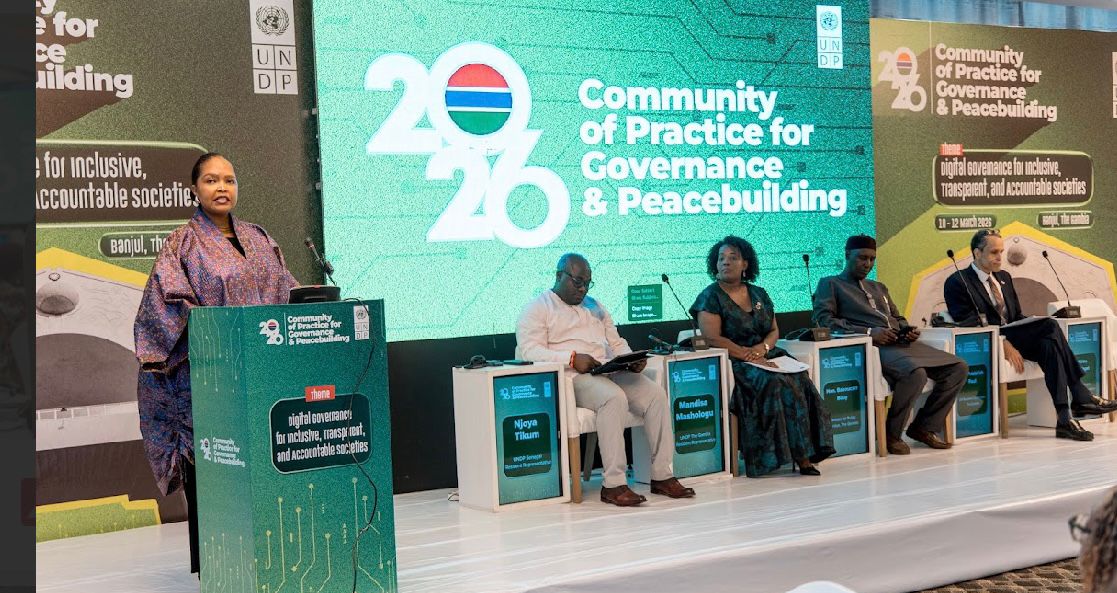
The United Nations Development Programme (UNDP) has launched a forum on governance and peace-building community practice, aimed at promoting knowledge exchange, innovation, and partnerships to modernize governance and deliver more transparent, efficient, and citizen-centered public services.
The forum, held on Tuesday, brought together policymakers, governance practitioners, and development partners to advance sustainable peace-building and accountability worldwide.
Ms. Abiola Idowu Ojo, representative of the African Commission on Human and Peoples’ Rights, welcomed the forum, describing it as “critical for advancing peace-building and accountability.” She noted that governance and peace-building are urgent global imperatives, pointing to conflicts and interconnected challenges, including demographic shifts, socio-economic inequalities, and climate-related pressures, particularly in Africa.
“The challenges we face require renewed commitment and collective innovative action,” she said.
The United Nations Resident Representative, Karl Frederick Paul, highlighted that the forum occurs amid rapid political, demographic, and technological shifts in West and Central Africa, presenting both opportunities and governance challenges.
“The UN is committed to helping governments and societies navigate these transitions, reinforce stability, uphold human rights, and broaden inclusion, particularly for African youth,” he said. “This event is timely for the African governance landscape. It will pave the way for justice accessibility. Our commitment is not only to support digital innovation but also to anchor digital governance in the principles of human rights.”
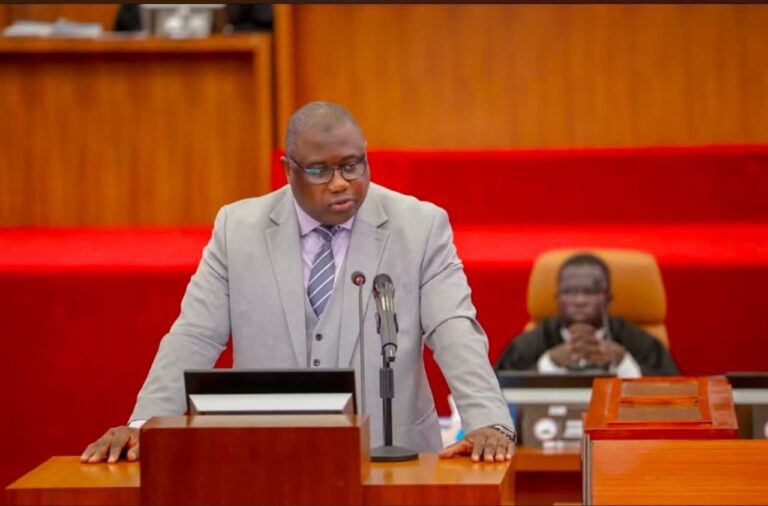
Baboucarr Boye, Minister of Public Service and Administration Reforms, said digital technology is reshaping the relationship between citizens and the state, expanding opportunities for transparent service delivery, strengthening civic participation, and improving accountability.
“At the same time, these rapid changes bring governance challenges that require collective understanding and responsible management,” he added. Minister Boye linked the discussions to The Gambia’s Recovery-Focused National Development Plan 2023–2027 and the Green Recovery Focus Plan, which emphasizes seven transformative themes: governance and public sector reform; economic transformation and job creation; human capital development; environmental sustainability and climate resilience; infrastructure and digital economy; peace, security and human rights; and decentralization and local governance.
He stressed that inclusive development requires strong institutions, respect for the rule of law, and a social contract built on trust, fairness, and participation.
Recalling recent regional dialogues, including the Sahel Governance Forum, Minister Boye said: “Across the region, the social contract between states and citizens is under strain when institutions are perceived as distant, unresponsive, or unable to deliver justice and opportunity.” He emphasized that governance reforms must be people-centered, inclusive, accountable, and protective of rights, particularly for women and youth.
He also commended the government’s progress in transitional justice, noting that it has accepted 263 of 265 recommendations from the Truth, Reconciliation, and Reparations Commission (TRRC) and has begun implementing steps to confront the past and build a future grounded in justice, accountability, and reconciliation.
Minister Boye added that the forum aims to strengthen transparency, accessibility, and digital service delivery through a centralized, user-friendly platform that allows citizens, residents, and visitors to access official government information and services.
Participants are expected to develop actionable recommendations, document emerging digital governance practices, and strengthen regional collaboration to advance democratic resilience and sustainable development across Africa.
About The Author