
By: Yunus S Saliu
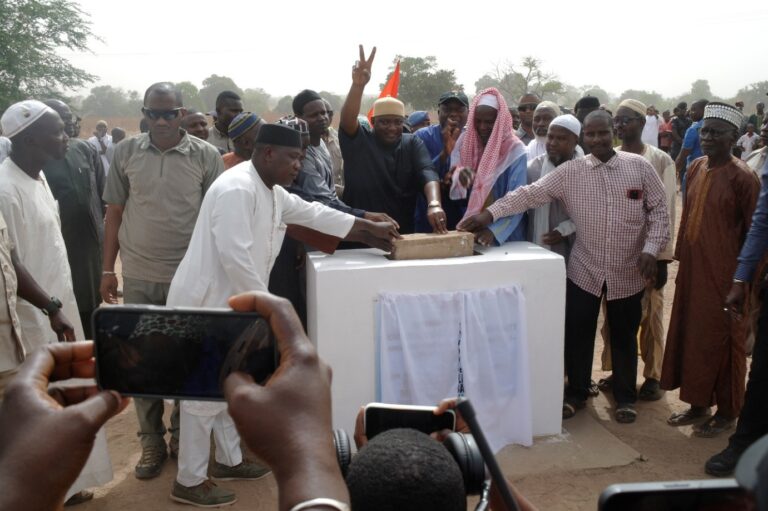
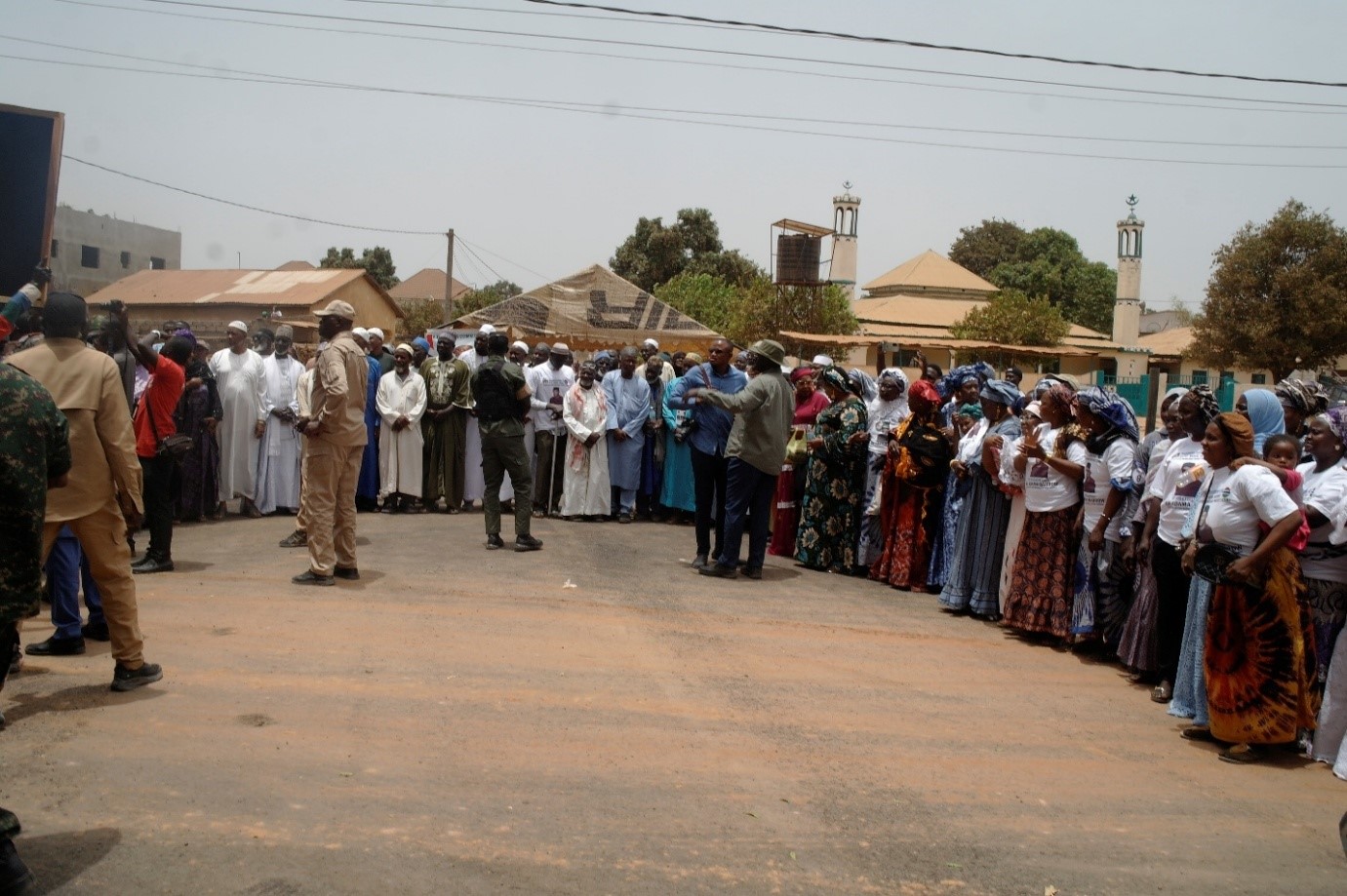
There was jubilation across communities in the Upper River Region (URR) and Central River Region (CRR) on Sunday and Monday as President Adama Barrow continued the laying of foundation stones for major road projects under the Connect Gambia Initiative.
For many residents, the visits marked a historic moment as several remote communities witnessed the presence of a sitting Gambian President after decades of limited infrastructure and isolation.
The new road projects are expected to connect dozens of communities across the two regions, improve mobility, enhance agricultural productivity, and create opportunities for improved healthcare, education, electrification, and trade.
On Sunday, President Barrow launched several road projects in Wuli East, Wuli West, and Sandu Districts in the Upper River Region.
Among the projects launched was Lot 8, a 22.3-kilometre road linking Darisilameh, Kwonko Ba, Sare Yeroky, Sare Demba, Wellingara Bakary, Sare Pateh Lo, and Ndaudeh.
Another section under Lot 8 covers the 3.3-kilometre Yerobawol–Jagular Road, while Lot 7 links Wellingara Yareh, Makamasireh, Musakunda, Darboe Kunda, Sare Koli Kunda, and Foday Kunda through a 22-kilometre stretch.
The foundation stone laying ceremonies continued on Monday in the Central River Region, where the President launched additional road projects under Lots 2 and 3.
The Lot 3 project at Jarumeh Koto links Manna, Salikeneh, Jarumeh Kuta, and Kayai through a 12-kilometre road, while another Lot 3 project at Wassu Junction connects Kuntaur, Jakaba, Niani Sukuta, and Barajally Tenda over 16.4 kilometres.
Under Lot 2, the projects include the 10.8-kilometre Nyagabantang–Bakadaji Road and another 10-kilometre stretch linking Wassu, Kataba Omar Ndow, and Kataba Seringe.
Addressing a joint community meeting in Foday Kunda, President Barrow recalled an emotional encounter with residents during one of his previous “Meet the People” tours when heavy rains prevented him from reaching the village due to poor road conditions.
The President narrated that after attending a meeting in Baja Kunda, torrential rains rendered the road to Foday Kunda impassable, making it impossible for vehicles to proceed.
“We sent messengers to inform the people that we could not make it to the meeting, but the people of Foday Kunda were disappointed and insisted they wanted me to come even if it meant walking,” President Barrow recalled.
According to him, the community later rejected money sent as compensation for the cancelled meeting, insisting that what they truly wanted was his presence.
“Seeing their affection and feelings, I realized this was a debt I needed to repay,” he said.
President Barrow disclosed that he later personally sponsored a major meeting in the village after asking residents to prepare a budget for the event.
Reflecting on the gathering, he described it as one of the most memorable meetings he had attended, noting that development issues affecting Wuli and The Gambia were extensively discussed.
The President also acknowledged the presence of prominent political figures, including Mai Ahmad Fatty and Sedia Jatta, at the meeting.
Addressing supporters in Wassu on Monday, President Barrow praised the people of Niani for what he described as their longstanding political support and loyalty.
“I am very happy because the people of Niani stood by me politically,” he said.
The President defended his government’s infrastructure achievements, arguing that the roads and development projects implemented under his administration are visible across the country.
“Whatever they say will not happen, Allah helps me to make it happen,” he remarked while responding to opposition criticism.
President Barrow promised that his government would continue extending development to underserved communities, including road construction and rural electrification.
“I will reach every corner of this country,” he assured residents.
About the Author