
By Cecilia E.L. Mendy
The Community Court of the Economic Community of West African States (ECOWAS) will soon have the first Gambian judge appointed, says top official of the regional court.
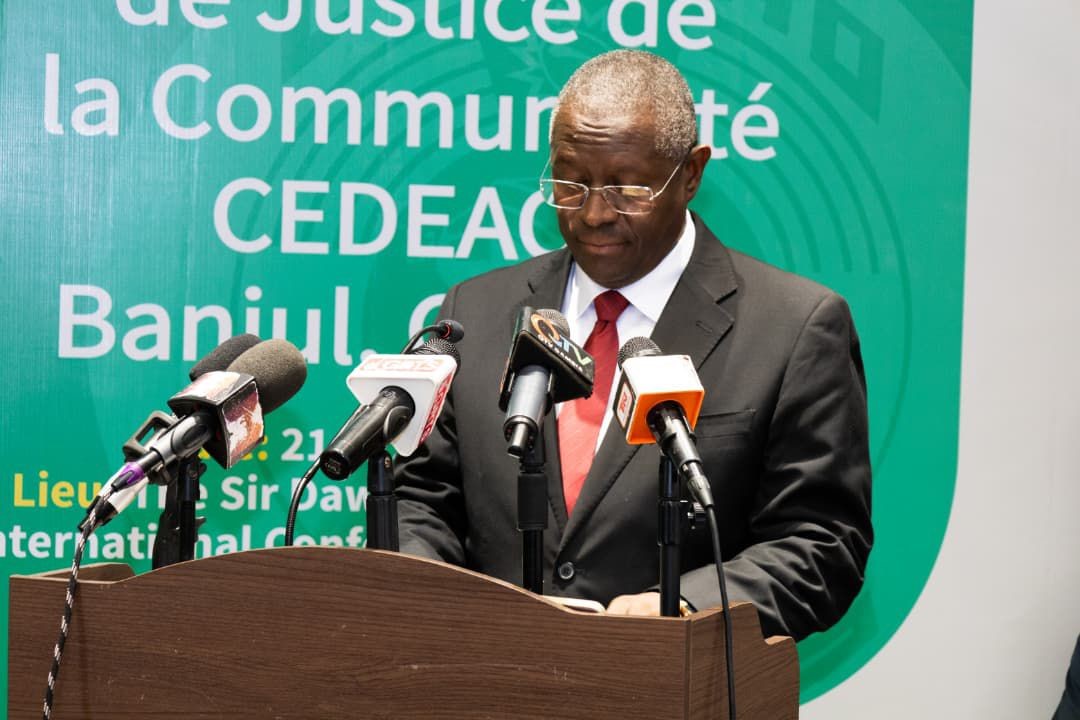
The President of the ECOWAS Court of Justice, Justice Ricardo Claudio Monteiro Gonçalves, made the disclosure on Friday, 24 April 2026, during a sensitisation event held at the Sir Dawda Kairaba Conference Centre.
He described the development as a significant milestone, noting that it signals a new phase of mutual understanding, strengthened cooperation, and closer institutional ties between the ECOWAS Court and The Gambia’s judiciary.
“The presence of a Gambian judge at the ECOWAS Court will undoubtedly deepen understanding of the respective roles of both levels of jurisdiction, strengthen institutional trust, and ensure that The Gambia’s legal experience contributes directly to the development of community jurisprudence,” Justice Gonçalves said.
He stressed that the ECOWAS Court and national courts should not be seen as competing institutions, but as complementary partners within a unified legal framework.
“The ECOWAS Court and national courts are not rivals. They are partners. They complement one another. Together, they form two levels of a single legal system whose legitimacy derives from the will of Member States and the trust of their citizens,” he added.
Speaking on behalf of the Chief Justice of The Gambia, Supreme Court Justice Awa Bah highlighted the importance of stronger collaboration between national courts and the regional judicial body. She says the Gambian judiciary views the ECOWAS Court not as a distant institution, but as a key partner in promoting justice, accountability, and the protection of fundamental human rights.
Justice Bah urged members of the judiciary to take advantage of the opportunity by fostering continuous dialogue and exchange between the two courts.
She also underscored the importance of sensitisation initiatives, noting that such engagements help bridge the gap between judicial institutions and the public.
“Let us be guided by a shared vision; a West Africa where justice is accessible, where rights are protected, and where courts, both national and regional, work in harmony to uphold the rule of law,” she said.
About the Author