By Musa S. Sheriff
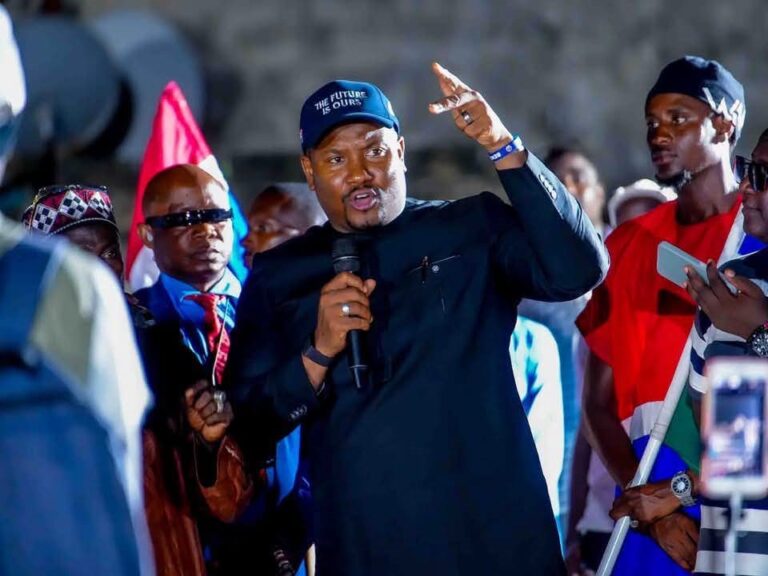
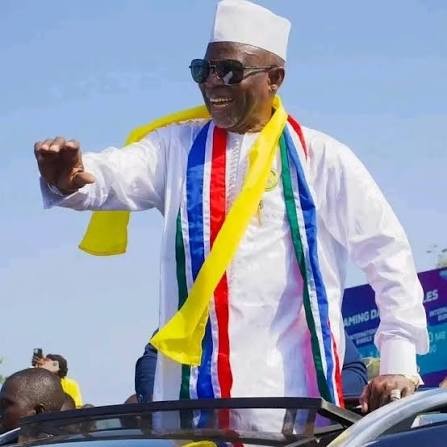
For nearly three decades, Ousainou Darboe has been the undisputed face of opposition politics in The Gambia. Admired by supporters as a steadfast democrat and respected across Africa for his role in resisting former president Yahya Jammeh’s authoritarian rule, the veteran politician has built a legacy few Gambian politicians can rival.
Yet, as the country heads towards the 2026 presidential election, Darboe finds himself confronting perhaps the greatest political test of his long career—not from the ruling National People’s Party (NPP), but from changing political realities within the opposition itself.
The withdrawal of the United Democratic Party (UDP) from ongoing coalition talks has reignited debate over whether Gambian opposition politics remains too centred on personalities rather than strategy. While UDP officials maintain the party remains committed to democratic change, critics argue that the latest development has further weakened prospects for a united opposition capable of mounting a serious challenge against incumbent President Adama Barrow.
The political landscape confronting Darboe today differs markedly from that of previous elections.
For years, the UDP enjoyed overwhelming dominance within opposition politics. It emerged as the country’s largest political movement following the end of Jammeh’s 22-year rule in 2017 and has consistently performed strongly in parliamentary and local government elections.
However, political dominance alone no longer guarantees electoral victory.
Since assuming office, President Barrow has gradually consolidated his own political base through the NPP while attracting several former opposition figures and smaller political parties into his governing alliance. The ruling party now controls significant state resources and enjoys broad administrative structures nationwide.
This changing balance has complicated Darboe’s long-held belief that electoral change can primarily be achieved through the UDP’s organisational strength.
Political observers note that coalition politics has become increasingly important in fragmented democracies across Africa.
In Senegal, opposition parties united behind a single candidate before winning power in 2024. Similar coalition strategies have also proved decisive in several other African democracies where opposition votes risk being split among multiple candidates.
For many Gambians hoping to see an alternation of power, opposition unity therefore appeared the most realistic pathway.
The coalition negotiations involving several opposition parties were intended to identify such common ground.
Instead, disagreements over candidate selection, leadership arrangements and coalition structures exposed deep divisions that eventually culminated in the UDP’s withdrawal.
Although the party insists its decision reflects principled differences over the coalition process rather than opposition to cooperation itself, the outcome has fuelled concerns that personal ambitions may once again overshadow broader national interests.
Darboe’s supporters reject suggestions that he bears responsibility for the collapse of coalition talks.
They argue that the UDP, as the country’s largest opposition party, cannot reasonably be expected to surrender its political strength or accept arrangements that undermine its electoral prospects.
Many also point to Darboe’s decades of sacrifice, including imprisonment during Jammeh’s rule, as evidence of his unwavering commitment to democratic governance.
Indeed, few Gambian politicians possess Darboe’s political credentials.
Called to the Bar in the 1970s, he spent much of his career defending human rights before entering frontline politics.
He founded the UDP in 1996 during one of the country’s most politically restrictive periods and remained the principal opposition leader despite repeated arrests, intimidation and electoral defeats.
His imprisonment in 2016 following peaceful protests became a defining moment in The Gambia’s democratic struggle, attracting widespread international condemnation and strengthening calls for political reform.
Those events ultimately contributed to the unprecedented opposition coalition that defeated Jammeh later that year.
Ironically, the success of that coalition now serves as a reminder of what opposition unity once achieved.
Many analysts argue that the coalition victory demonstrated that no single opposition party could defeat an entrenched incumbent without broad-based cooperation.
Today’s fragmented opposition raises questions about whether similar lessons are being overlooked.
Another challenge confronting Darboe is generational change.
A growing number of younger Gambians have little direct memory of the political struggles that shaped the UDP’s rise. Instead, many are more concerned with unemployment, rising living costs, education, migration and economic opportunities.
For these voters, historical credentials alone may carry less electoral weight than concrete policy proposals addressing everyday challenges.
The opposition therefore faces increasing pressure to present compelling alternatives on economic management, governance reforms, youth employment and public service delivery rather than relying primarily on anti-incumbency sentiment.
Whether Darboe and the UDP can successfully adapt to these evolving political expectations may significantly influence their electoral fortunes.
Meanwhile, President Barrow continues to campaign on infrastructure development, expanding electricity access, road construction and macroeconomic stability despite persistent public concerns over inflation and the depreciating dalasi.
The ruling party is expected to frame the election around continuity and stability, while portraying opposition divisions as evidence of limited governing readiness.
That narrative could resonate with undecided voters if opposition parties remain unable to project a united front.
Nevertheless, writing off Darboe would be politically premature.
His extensive grassroots networks, loyal support base and reputation as one of The Gambia’s foremost democratic figures continue to make him a formidable political actor.
Few opposition leaders possess comparable organisational capacity or nationwide recognition.
Yet politics ultimately rewards adaptation as much as endurance.
As the electoral calendar advances, Darboe faces a defining question: can he transform decades of political experience into a strategy capable of uniting an increasingly fragmented opposition, or will history remember him as the leader who came closest to power without ever reaching it?
The answer may not only shape his political legacy but could also determine the future direction of Gambian opposition politics for years to come.
About The Author