By: Dawda M. Jallow
The Minister of Agriculture, Demba Sabally has underscored the importance of accurate agricultural data in strengthening food security and supporting evidence-based policymaking.
Sabally, the Minister of Agriculture Livestock and Food Security, described the ‘National Agriculture Census’ as a key instrument for national development.
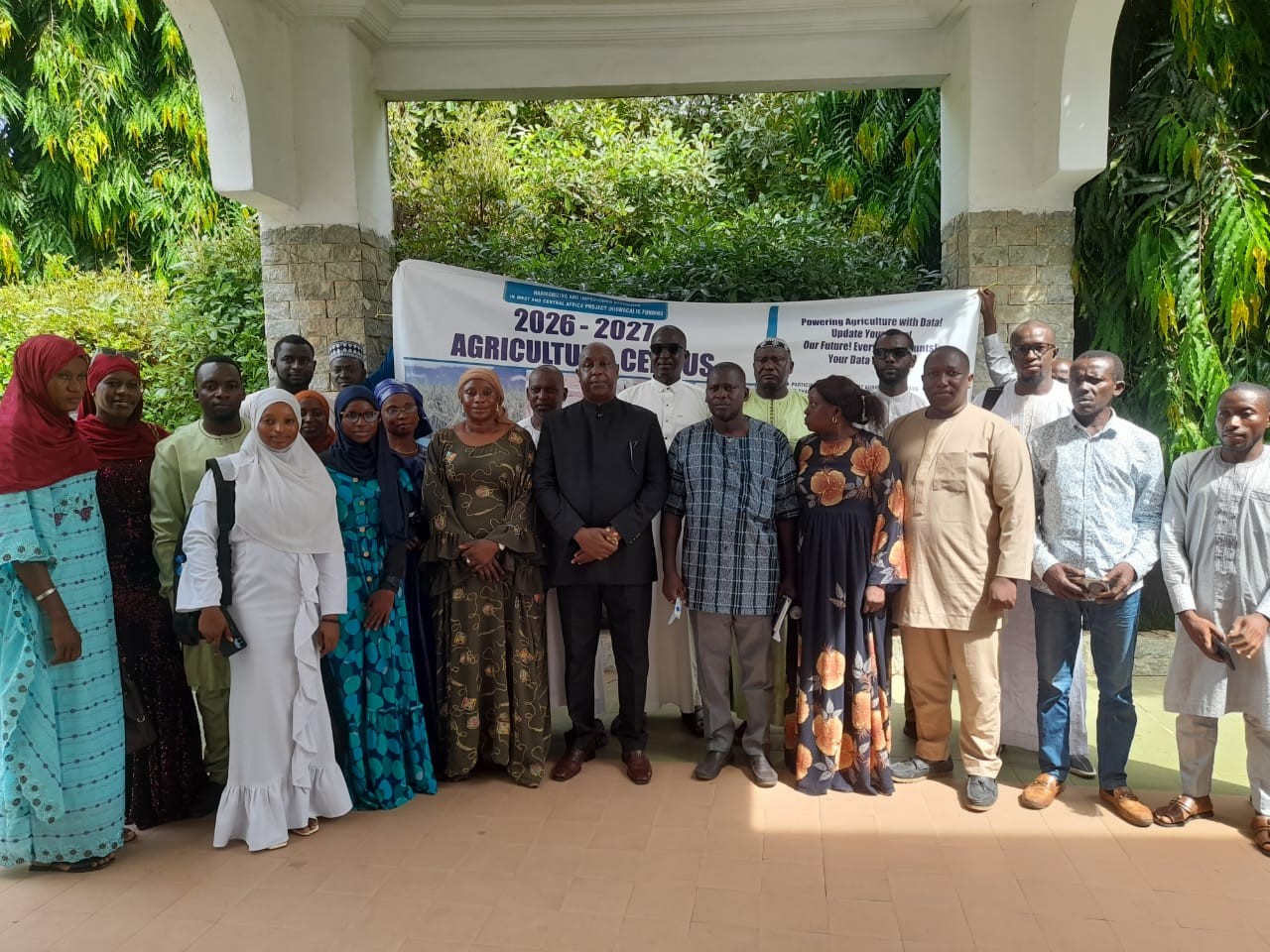
Speaking at the closing of a two-week training program for agricultural census enumerators held from 13 to 24 July, Sabally said the census would provide critical information to guide agricultural planning and investment.
He commended the trainers, facilitators and development partners, including the Gambia Bureau of Statistics (GBoS), the Food and Agriculture Organization (FAO) and the World Bank, for supporting the exercise, while praising the enumerators for their commitment.
“The National Agriculture Census is not just a statistical exercise. It is the backbone of our agricultural planning and policymaking,” the minister remarked.
Sabally said the census would generate comprehensive data on crop production, livestock, fisheries, horticulture and household livelihoods to support informed decision-making.
He noted that although The Gambia produced about 124,372 tonnes of cereals in 2024, representing a 19 percent increase above the five-year average, many people continued to face food insecurity.
According to the minister, the situation highlights the need for reliable data to enable government to design effective policies, reduce dependence on food imports and strengthen resilience to climate-related shocks.
He said the census would also help assess the impact of agricultural development projects and guide future interventions aimed at improving farmers’ incomes, empowering women and young people, and strengthening rural livelihoods.
Sabally urged enumerators to carry out their duties with professionalism, honesty and respect for confidentiality to ensure the credibility of the exercise.
Also speaking at the ceremony, HISWACA Project Coordinator Mohammed L. Janneh said the project was supporting the census to improve the availability of reliable agricultural statistics for planning and decision-making.
Janneh said the census would be conducted digitally to enhance efficiency, data quality and field supervision, and called on enumerators to collect accurate and complete information.
About The Author