
By Fatou Krubally
Commissioner General of the Gambia Revenue Authority (GRA), Yankuba Darboe, has called for tobacco taxation to be assessed not only by the revenue it generates but also by its impact on tobacco consumption and public health.
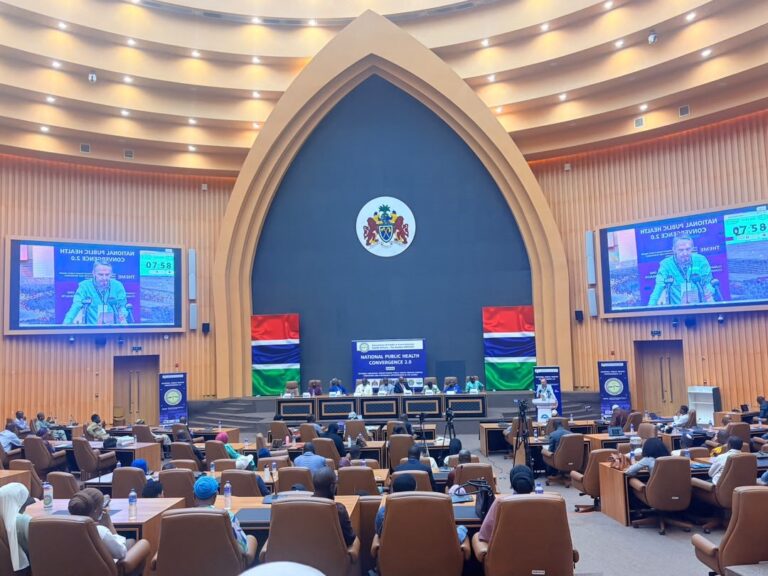
Speaking Wednesday at the second National Public Health Convergence organised by the Association of Public and Environmental Health Officers of The Gambia (APEHOG), Darboe said tobacco taxation presented a particular policy challenge because the government benefits from tobacco revenues while public health policy seeks to reduce tobacco consumption.
He was speaking on the topic, “Non-Communicable Diseases and Tobacco Taxation: Aligning Fiscal Policy with Public Health.”
Darboe said the effectiveness of tobacco taxation should also be measured by whether fewer young people take up smoking, whether smokers reduce or quit, whether families are protected from second-hand smoke and whether tobacco-related diseases decline.
He said The Gambia had progressively increased tobacco taxes over the years, moving in 2013 from a weight-based cigarette tax system to a specific excise tax of D5 per pack of 20 cigarettes.
The specific excise tax has since increased to D45 per pack, he said.
Darboe said the country’s experience showed that stronger tobacco taxation could contribute to both public health objectives and government revenue.
Citing figures from the World Health Organisation (WHO), he said tobacco imports declined from about 1.12 million kilogrammes in 2012 to 0.44 million kilogrammes in 2016, representing a reduction of about 60 percent.
During the same period, government revenue from tobacco increased from about D155.32 million to D420.06 million, he said.
However, Darboe cautioned that increasing tobacco taxes without effective enforcement could contribute to illicit trade and the availability of cheaper, unregulated tobacco products.
He said the GRA was strengthening border management, intelligence gathering, compliance monitoring, enforcement and product traceability to address such risks.
The authority is also implementing Digital Excise Stamps for excisable products, including cigarettes and other tobacco products, he said.
According to Darboe, the digital stamp was not only a revenue-collection mechanism but could also support public health efforts by improving the monitoring and traceability of tobacco products entering and circulating in the country.
He called for stronger cooperation among the GRA, Ministry of Health, Ministry of Finance and Economic Affairs, WHO, public health professionals and civil society organisations.
The issue, he said, should not be addressed by institutions working in isolation.
Darboe also urged periodic reviews of tobacco taxes to take account of inflation and income growth, while calling for stronger measures against illicit trade and improved data collection to guide policy decisions.
He said the broader fight against non-communicable diseases, including cardiovascular diseases, cancer and diabetes, required government to combine taxation with regulation, public education and other health interventions.
“The ultimate ambition” he said, should be to have fewer young people taking up smoking, fewer preventable diseases and premature deaths, and fewer public resources spent treating preventable illnesses.
About The Author