By Lamin B. Darboe
Senior Communication Officer, MoFWR
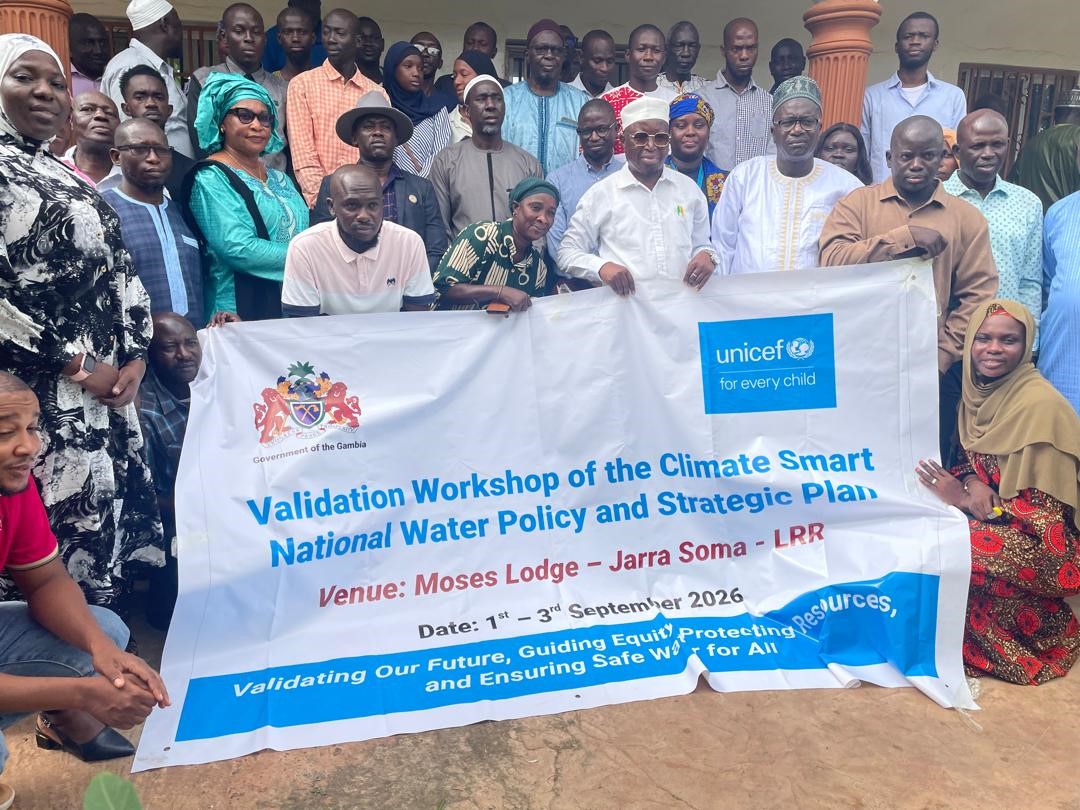
The Ministry of Fisheries, Water Resources and National Assembly Matters has begun a three-day validation workshop for the National Water Policy 2026-2035 and the Water Resources Strategic Plan 2026-2030.
The workshop, organised by the Department of Water Resources (DWR) with funding from UNICEF, is being held at Mosses Lodge in Soma, Lower River Region, from September 1st to 3rd.
Declaring the workshop open, Permanent Secretary at the Ministry, Buba Sanyang, said the participation of stakeholders demonstrated their shared commitment to safeguarding water resources and ensuring that their management contributes to sustainable development, climate resilience, public health, food security, environmental protection and inclusive economic growth.
He said water was central to the country’s development, supporting households, agriculture, livestock, fisheries, energy, industry, ecosystems and communities.
However, Sanyang noted that water resources were increasingly being affected by climate variability and climate change, including changing rainfall patterns, droughts, floods, saltwater intrusion, catchment degradation, pollution and growing demand resulting from population growth and expanding economic activities.
“These challenges call for a new way of planning, investing, coordinating and managing water resources,” he said, adding that the climate-smart National Water Policy and Strategic Plan should help the country move beyond a business-as-usual approach.
Sanyang said the policy and strategic plan were not merely technical documents but national frameworks for action aimed at strengthening institutions, clarifying roles and responsibilities, improving coordination across sectors, mobilizing investment, enhancing monitoring and accountability, and aligning water management with national priorities and international commitments.
He cited the Sustainable Development Goals and climate adaptation objectives as among the international commitments that should inform the country’s water management efforts.
The Permanent Secretary said the validation exercise would give stakeholders an opportunity to review the proposed policy direction, determine whether the documents adequately respond to national realities, identify remaining gaps and build broad ownership for their implementation.
He reaffirmed the ministry’s commitment to protecting water resources, strengthening resilience to climate impacts and promoting sustainable access to safe and reliable water for all.
Sanyang stressed that the success of the policy and strategic plan would depend not only on their adoption but also on sustained collaboration, commitment and accountability during implementation.
“On behalf of my Honourable Minister, the staff of my ministry and, by extension, the Government of The Gambia, I express my special thanks to UNICEF and all partners for supporting this validation process,” he said.
Other speakers at the opening ceremony included UNICEF WASH Officer Amie Sarr, Lower River Region Governor Seedy Lamin Bah and Director of Water Resources Foday Conteh.
The opening ceremony was chaired by Deputy Permanent Secretary-Technical at the Ministry of Fisheries, Water Resources and National Assembly Matters, Fanta BS Manneh.
About The Author