By Jankay Kujabi
The Department of Parks and Wildlife Management (DPWM), under the Ministry of Environment, Climate Change and Natural Resources, on Thursday launched the LIFE Godwit Project, a major conservation initiative aimed at protecting migratory waterbirds and restoring critical wetland ecosystems.
The seven-year project, valued at 15 million euros, seeks to strengthen the conservation and sustainable management of wetlands, promote bird-friendly agricultural practices, and safeguard important breeding and wintering habitats along the migratory flyway.
The initiative focuses particularly on the Black-tailed Godwit, a migratory bird species whose population has declined by about 40 percent over the past three decades due to habitat loss, agricultural expansion and increasing predation.
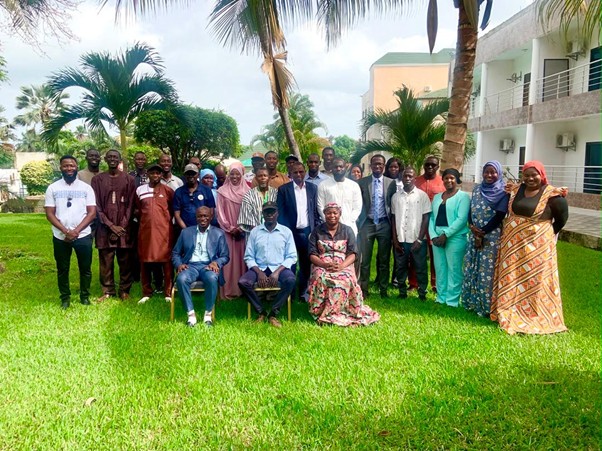
The launch brought together conservation partners from The Gambia, Germany, the Netherlands and Portugal, as well as government officials, researchers, environmental experts and community representatives.
Speaking at the event, Master of Ceremony Binta Sambou highlighted the ecological and economic importance of migratory birds, noting their contribution to pollination, seed dispersal, natural pest control, tourism and agricultural sustainability.
She stressed that protecting migratory species requires collective action among governments, conservation organisations, scientists, farmers and local communities.
In an interview with PANA, Nuha Jammeh, a senior officer at the Department of Parks and Wildlife Management, said the project would focus on raising public awareness, rehabilitating abandoned rice fields and strengthening community involvement in wetland conservation.
“One of the key activities is to enlighten people and raise awareness among communities. Another is to ensure that abandoned rice fields are rehabilitated to support community livelihoods,” Jammeh explained.
She added that the project would help communities understand the importance of the Black-tailed Godwit and the connection between the survival of migratory species and human wellbeing.
The LIFE Godwit Project is also expected to contribute to The Gambia’s obligations under major international environmental agreements, including the Convention on Biological Diversity, the Convention on Migratory Species and the Ramsar Convention on Wetlands.
Stakeholders at the launch called for stronger cooperation between governments, conservation partners, scientists, farmers and local communities to ensure the long-term survival of migratory birds and the protection of ecosystems that support both wildlife and human livelihoods.
About The Author