By Haddy Touray
Heads of State and Government of the Economic Community of West African States (ECOWAS) have signed the Intergovernmental Agreement (IGA) for the Nigeria-Morocco African Atlantic Gas Pipeline (AAGP), marking a major step towards the implementation of the regional energy project.
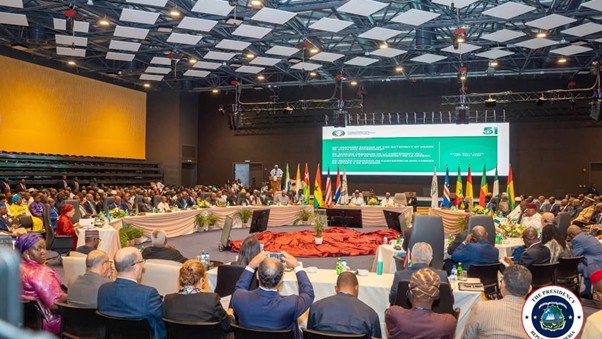
The agreement was signed on Sunday during the 69th Ordinary Summit of ECOWAS in Freetown and formally endorses the project by ECOWAS member states.
The pipeline initiative was launched by King Mohammed VI of Morocco and the late former Nigerian President Muhammadu Buhari and continues to receive the backing of Nigerian President Bola Ahmed Tinubu.
Speaking during the summit, Liberian President Joseph Boakai described the project as a major milestone for regional integration and economic development in West Africa.
“This project is not merely an energy initiative. It is a transformative investment in the collective future of the region,” Boakai said.
Togo’s Minister of Foreign Affairs, Robert Dussey, said the project would strengthen regional integration while improving connectivity between ECOWAS member states and countries in the Sahel.
The Gambia’s Minister of Foreign Affairs, International Cooperation and Gambians Abroad, Sering Modou Njie, welcomed the signing of the agreement and reaffirmed his country’s support for the initiative.
“We are honoured to participate in the signing ceremony of the Intergovernmental Agreement on the African Atlantic Gas Pipeline project, which stretches from Nigeria to Morocco, connecting ECOWAS member states,” Njie said on the sidelines of the summit.
He described the project as an important regional initiative and said it would contribute significantly to the development aspirations of participating countries.
“We welcome this development because our West African countries will benefit from this commendable project,” he said.
Njie also congratulated the governments and peoples of Morocco and Nigeria for advancing the initiative, noting that improved energy infrastructure remains essential for the region’s economic development.
The African Atlantic Gas Pipeline is expected to extend nearly 6,900 kilometres along a hybrid offshore and onshore route at an estimated cost of US$25 billion.
The pipeline is projected to transport up to 30 billion cubic metres of natural gas annually. Part of the supply is expected to serve markets in Morocco and Europe through the existing Morocco-Spain gas pipeline, while the remainder will supply West African countries.
The agreement also provides for the establishment of a project company in Casablanca and a Higher Pipeline Authority in Abuja to oversee implementation and preparations for the project’s Final Investment Decision.
The final intergovernmental framework is expected to be completed with the signing of a separate agreement by Morocco and Mauritania during a future ceremony in Morocco.
Beyond energy supply, the project is expected to promote regional economic integration, support electricity generation, industrialisation and facilitate the development of natural gas resources across West Africa.
According to project officials, the main engineering, environmental and technical studies have been completed, paving the way for the next phase of implementation.
About The Author