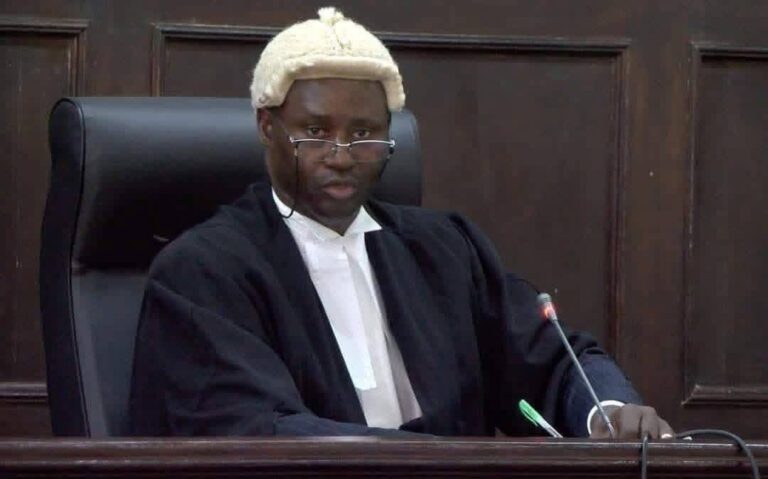
The re-arrest of Ousainou Bojang and his sister, Amie Bojang, at the gate of Mile 2 Prison, moments after their acquittal and discharge by the Banjul High Court, is deeply troubling. Justice Ebrima Jaiteh’s decision to clear the siblings of charges related to the Sukuta-Jabang Traffic Light shooting should have marked the end of a long and harrowing chapter. Instead, the paramilitary intervention casts a shadow over the integrity of the legal system and the rule of law in The Gambia.
Ousainou and Amie spent two years behind bars awaiting trial, only to be vindicated by a court of law. Their immediate re-arrest raises serious questions about the balance between state power and individual rights, as well as the independence of the judiciary. If acquittal by the High Court is insufficient to guarantee freedom, what assurances do ordinary Gambians have that justice is more than a procedural formality?
The public and media witnessed this unsettling episode firsthand, a stark reminder that transparency in law enforcement is not just desirable—it is essential. While the Gambia Police Force’s Public Relations Officer, Modou Musa Sissawo, promised further clarification, the lack of immediate accountability only fuels mistrust and concern.
This incident underscores a broader issue: the delicate line between maintaining public order and respecting citizens’ legal rights. The Bojang siblings’ ordeal is more than a personal tragedy; it is a litmus test for the Gambia’s commitment to the principles of justice and human dignity. For the rule of law to truly prevail, the state must ensure that court verdicts are respected and that freedom won in a courtroom is not undone by arbitrary enforcement.
The eyes of the nation—and the world—are on The Gambia. How the authorities proceed will speak volumes about the country’s dedication to justice, fairness, and human rights. Anything less than transparency and accountability risks eroding public confidence in the very institutions meant to uphold the law.
About The Author