By: Haddy Touray
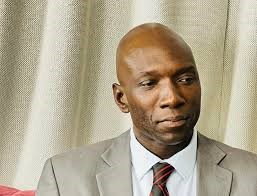
Dr. Ousman Gajigo, senior member of the Gambia For All party, has criticized Minister of Finance Seedy Keita’s recent assurances that the country’s growing debt is justified, calling into question the effectiveness of government investments in the electricity sector.
Minister Keita had argued that the rising debt is the result of strategic investments in productive sectors, citing electricity as a prime example. Gajigo, however, described the sector as “a case study in how a government can spend enormous sums while delivering little of lasting value.”
“There is a fundamental distinction between expenditure and investment,” Gajigo said. “Investment produces returns such as lower costs, greater capacity, and improved efficiency. Expenditure without strategic purpose simply transfers money from the public purse to someone else’s pocket.”
Under the Barrow administration, the electricity distribution network has been extended to connect new rural households. While this expansion appears commendable, Gajigo argued that connecting more homes to a grid that cannot meet existing demand is not progress but the expansion of a problem.
Domestic electricity generation in The Gambia has reportedly declined under the current administration, with the country importing between 50 and 80 megawatts of electricity to meet the needs of households already connected to the grid. Gajigo said that expanding distribution without addressing this generation deficit constitutes “institutional negligence dressed up as development.”
The government’s seven-year contract with the Turkish firm Karpowership has drawn particular criticism. Since 2017, Gambia has paid over $200 million for 30 megawatts of electricity – an amount far below national requirements. Gajigo noted that the same funds could have financed a 200-megawatt power plant, creating a permanent national asset, lowering costs, and reducing dependency on imported electricity.
“Instead, the money was paid to a foreign company for temporary power,” he said. “When the contract ended, the country had nothing to show for it – no infrastructure, no capacity, no progress. The debt remained; the darkness returned.”
Gajigo warned that continued reliance on imported electricity exacerbates the trade deficit, puts pressure on the dalasi, and increases NAWEC’s operating losses, creating a cycle of debt accumulation.
“The billions in debt accumulated in the electricity sector were avoidable,” he said. “They are the direct consequence of a government that chose to rent power rather than build capacity, expanded distribution without addressing generation, and allowed a foreign company to extract over $200 million from the national treasury with nothing lasting in return.”
He concluded that Minister Keita’s claims of strategic investment are contradicted by the sector’s performance, warning that “when public officials mistake activity for achievement and expenditure for investment, the public pays the price in higher electricity bills, a weaker currency, and a debt burden that will constrain public finances for years to come.”
About The Author