
By Yunus S. Saliu
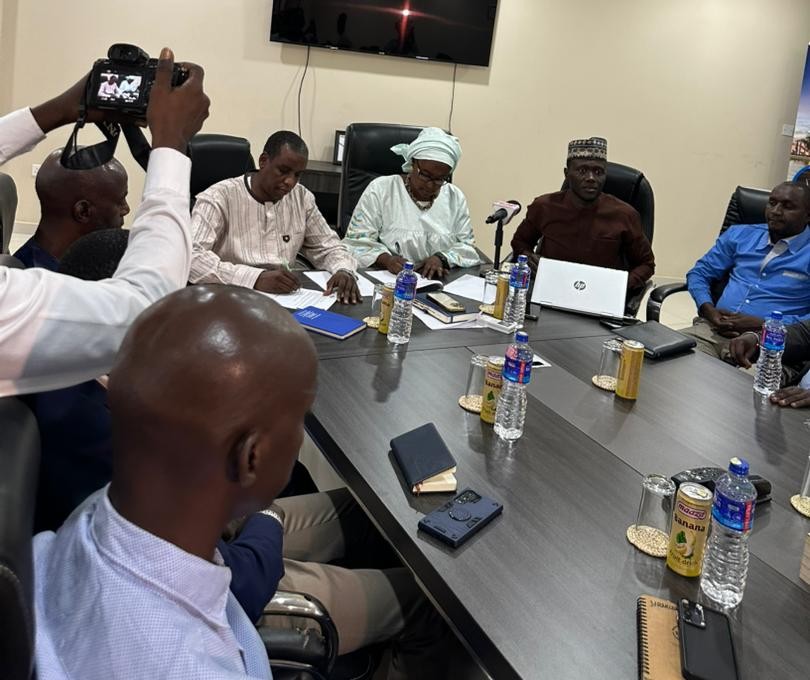
The Gambia Tourism Board (GTBoard) and the Department of Geology have signed a Memorandum of Understanding (MoU) aimed at strengthening cooperation in the management of resources within the Tourism Development Area (TDA) and preventing conflicts between tourism and mining activities.
The framework agreement seeks to improve coordination between the two institutions, whose mandates overlap in areas where tourism development and mineral resources coexist. Officials said the initiative would help safeguard land designated for tourism projects while ensuring the sustainable management of natural resources.
Speaking at the signing ceremony, officials noted that the GTBoard is responsible for managing the TDA, while the Department of Geology regulates mineral resources within the area. They said closer collaboration was necessary to prevent tourism-designated land from being allocated for mining activities.
The agreement was developed following weeks of consultations and technical discussions involving the two institutions and their respective ministries.
The Director General of the Gambia Tourism Board, Ida Jeng Njie, described the signing as a major milestone and the first formal agreement between the GTBoard and the Department of Geology.
“Our gem, which is the TDA, is where your gem is. We share the same resource, and as government institutions, we must ensure that investors are provided with a conducive environment,” she said.
Jeng Njie said the agreement would strengthen investor confidence and simplify administrative procedures. She disclosed that a joint committee would be established to serve as a one-stop platform for investors, reducing the need to seek approvals and information from multiple institutions.
She commended the Ministries of Tourism, Arts and Culture, and Petroleum, Energy and Mines for facilitating the initiative, describing the partnership as a model for inter-agency cooperation.
The Director of the Department of Geology, Alieu Jawo, welcomed the agreement and praised the collaboration between the two institutions during its development.
He acknowledged that in the past, mining licences and tourism allocations were sometimes processed independently without adequate consultation.
“In The Gambia, most of our mineral deposits are located along the coast, which is also prime land for tourism development. Therefore, managing these resources in a win-win situation is very important,” Jawo said.
He added that the agreement would ensure both institutions remain informed about each other’s activities and jointly plan the management of coastal resources.
Senior government officials and technical staff from both ministries attended the ceremony. They commended the teams involved for finalising the framework agreement within a short period and expressed confidence in its successful implementation.
About the Author