

By Isatou Sarr
The State has filed a 17-ground amended notice of appeal challenging the acquittal of Ousainou Bojang and his sister Amie Bojang by the High Court, seeking to overturn the judgment and secure convictions.
The appeal, signed by Director of Public Prosecutions A.M. Yusuf on 29 April 2026, challenges the entire judgment delivered by Justice Ebrima Jaiteh on 30 March 2026.
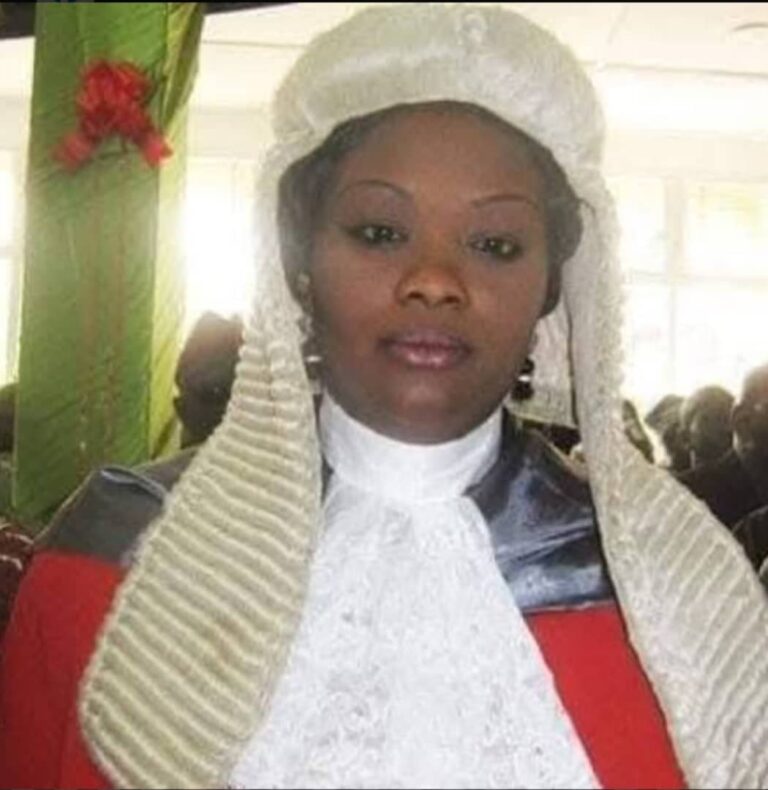
The matter is now expected to be heard by a three-member panel of the Court of Appeal comprising: Justice N. Salla-Wadda, Justice B.V.P. Mahoney and Justice A. Saho-Ceesay.
Proceedings remain pending as the court considers the State’s application for leave to regularize its filing.
The state is asking the appellate court to set aside Justice Jaiteh’s decision and substitute it with convictions and sentences commensurate with the offences charged.
A key issue in the appeal concerns the treatment of confessional evidence. The prosecution argues that the trial judge erred by requiring corroboration of Ousainou Bojang’s cautionary statement, identified as Exhibit P6, which had been admitted into evidence following a voir dire.
According to the state, a direct and voluntary confession is capable of sustaining a conviction without corroboration. It contends that Bojang’s subsequent retraction during his defence was an afterthought and did not diminish the evidential value of the statement.
The prosecution further argues that the trial judge failed to evaluate the confession alongside the testimony of prosecution witnesses, including PW3 and PW13, resulting in what it describes as a selective assessment of the evidence.
On the issue of alibi, the state submits that the judge erred in attaching weight to a defence raised for the first time during the trial. It argues that an alibi should be presented at the earliest opportunity to allow investigators sufficient time to verify it.
The appeal maintains that accepting the late alibi resulted in a miscarriage of justice in light of what the prosecution describes as compelling evidence linking Bojang to the offence.
The state also challenges the court’s treatment of identification evidence. It argues that reliance on the principles established in R v Turnbull imposed an unnecessary burden, maintaining that Bojang’s identity had already been established through confessional statements and witness testimony.
Another ground of appeal concerns Bojang’s departure from the country shortly after the incident. The prosecution argues that the trial judge failed to give sufficient weight to his flight, which it describes as circumstantial evidence consistent with consciousness of guilt.
The state further disputes findings relating to the weapon allegedly used in the offence, arguing that prosecution witnesses consistently identified it as a pistol and that ballistic evidence supported that description.
Several grounds challenge the admission of digital and documentary exhibits tendered by the defence.
The prosecution argues that Exhibit D38, an audio recording downloaded from Kerr Fatou Online Media, lacked the necessary evidential foundation because the witness who produced it had no direct knowledge of its origin or authenticity.
It also challenges Exhibit D37, a WhatsApp printout generated from a computer, arguing that it constituted secondary evidence because the original device was not tendered before the court.
Regarding Exhibits D16 and D36, consisting of Africell call records, the State argues that similarities in timestamps and markings on the documents raise concerns requiring further scrutiny.
The appeal further contends that the trial judge assessed individual pieces of prosecution evidence in isolation rather than considering their cumulative effect when determining whether the State had established its case.
The State also challenges Amie Bojang’s acquittal on the charge of being an accessory after the fact. It argues that the judge failed to properly evaluate evidence alleging that she facilitated Ousainou Bojang’s departure to Senegal following the incident.
In its final ground, the State argues that the judgment is unreasonable and unsupported by the totality of the evidence presented during the trial.
The prosecution has reserved the right to file additional grounds of appeal upon receipt of the complete trial record.
About the Author