
By: Isatou Sarr
The Kanifing Magistrates’ Court has reserved ruling on a “no-case to answer” submission in the trial involving three members of the Gambia Association for Legal Advocacy (GALA), after both defence and prosecution presented sharply divided arguments.
The presiding magistrate, Sallah Mbye will now make a ruling on the “no-case-to-answer” submission on June 18th, 2026.
It can be recalled that the accused persons: Kemo Fatty, Alieu Bah, and Omar Camara are charged with unlawful assembly and common nuisance over an incident that occurred on 15 September 2025 at the National Audit Office.
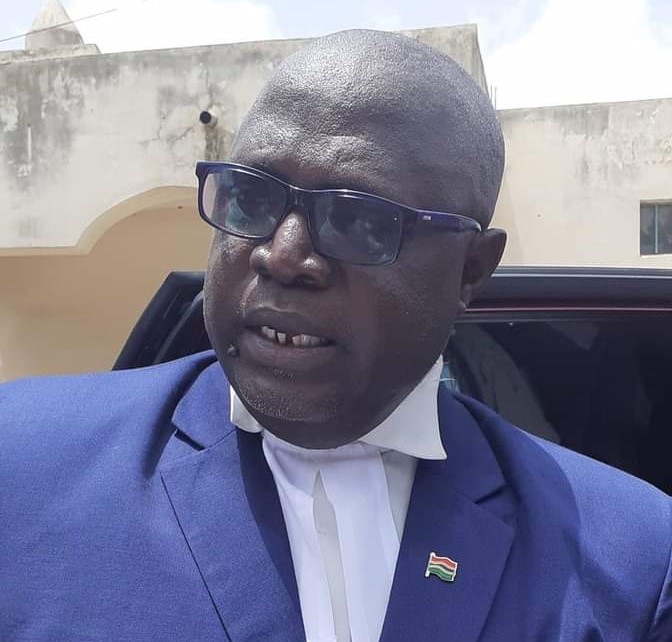
Defence Counsel L.S. Camara urged the court to dismiss the charges, arguing that the prosecution had failed to establish the essential elements of the offences. He maintained that there was no evidence of criminal intent or any unlawful assembly, insisting the prosecution’s case was insufficient to require the accused to enter a defence.
Camara told the court that witnesses did not demonstrate any act or intent that amounted to a protest or unlawful gathering, adding that the accused were instead present to hold a press briefing in a public space. He further argued that the legal thresholds under both the Criminal Code and relevant authorities had not been met.
He cited several legal precedents, including international and local case law, to support his submission that where evidence was weak or unreliable, the court should not require the accused to be put on their defence.
However, Commissioner Sanneh, representing the Inspector General of Police, opposed the application, insisting that the prosecution had established a prima facie case. He argued that witness testimonies, all from police officers, confirmed that the accused gathered without permission and caused disruption at the premises.
According to the prosecution, the situation escalated into disorder, prompting police intervention and the use of crowd control measures. Sanneh maintained that the conduct of the accused met the legal definition of unlawful assembly and common nuisance under the Criminal Code.
During proceedings, the defence raised objections over aspects of the prosecution’s submissions, which the court verified against the record.
The prosecution also relied on provisions of the Public Order Act and constitutional limitations on assembly rights, arguing that the actions of the accused fell within regulated public activity requiring prior authorisation.
After hearing both sides, Principal Magistrate Sallah Mbye adjourned the case to 18 June 2026, when a ruling will be delivered on whether the accused will be discharged or required to open their defence.
About the Author