
Korka Jallow
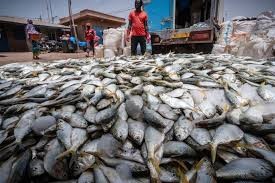
Fish scarcity in The Gambia has reached critical levels resulting in rising prices and growing concerns over food security.
The scarcity is driven by a combination of industrial overfishing, operations of foreign trawlers, fishmeal production, and environmental pressures.
The shortage has significantly affected local markets, where fish remains a major source of protein. Artisanal fishers report declining catches, while vendors say supply has become increasingly inconsistent and expensive.
In a fishing coastal town of Tanji, fishmonger Ablie Faye, a Senegalese national, says local fishers are struggling to compete with industrial vessels. He expressed concern over the use of large-scale fishing nets, which he said do not distinguish between small and mature fish, contributing to stock depletion.
At another town of Jambajelly, fish vendor Fatou Jallow described worsening business conditions, noting that reduced supply has pushed up the price of fish baskets, leaving many customers unable to afford them. She called for improved storage facilities and stronger support to stabilise the market.
Officials from the fisheries sector, including Sedia Drammeh at the fisheries department, attributed the situation to multiple factors, including climate change, illegal, unreported and unregulated (IUU) fishing, and agreements involving fishmeal factories operating along the coast.
He noted that efforts are on-going to address sustainability concerns through monitoring and regulatory frameworks, though challenges persist.
The scarcity has also raised broader concerns about livelihoods, with artisanal fishers reporting income losses and communities increasingly dependent on imported alternatives.
Fish remains a staple food in The Gambia, and stakeholders continue to call for stronger enforcement of fisheries regulations and sustainable management of marine resources.
About the Author