
By Yunus S Saliu
The National Centre for Arts and Culture (NCAC) has launched a 12-week field exercise in the Central River Region (CRR) to inventory and document The Gambia’s intangible cultural heritage, officials said Tuesday.
The exercise, currently underway in communities across the North and South Bank of CRR, is part of a national project supported by UNESCO through International Assistance under the 2003 Convention for the Safeguarding of Intangible Cultural Heritage.
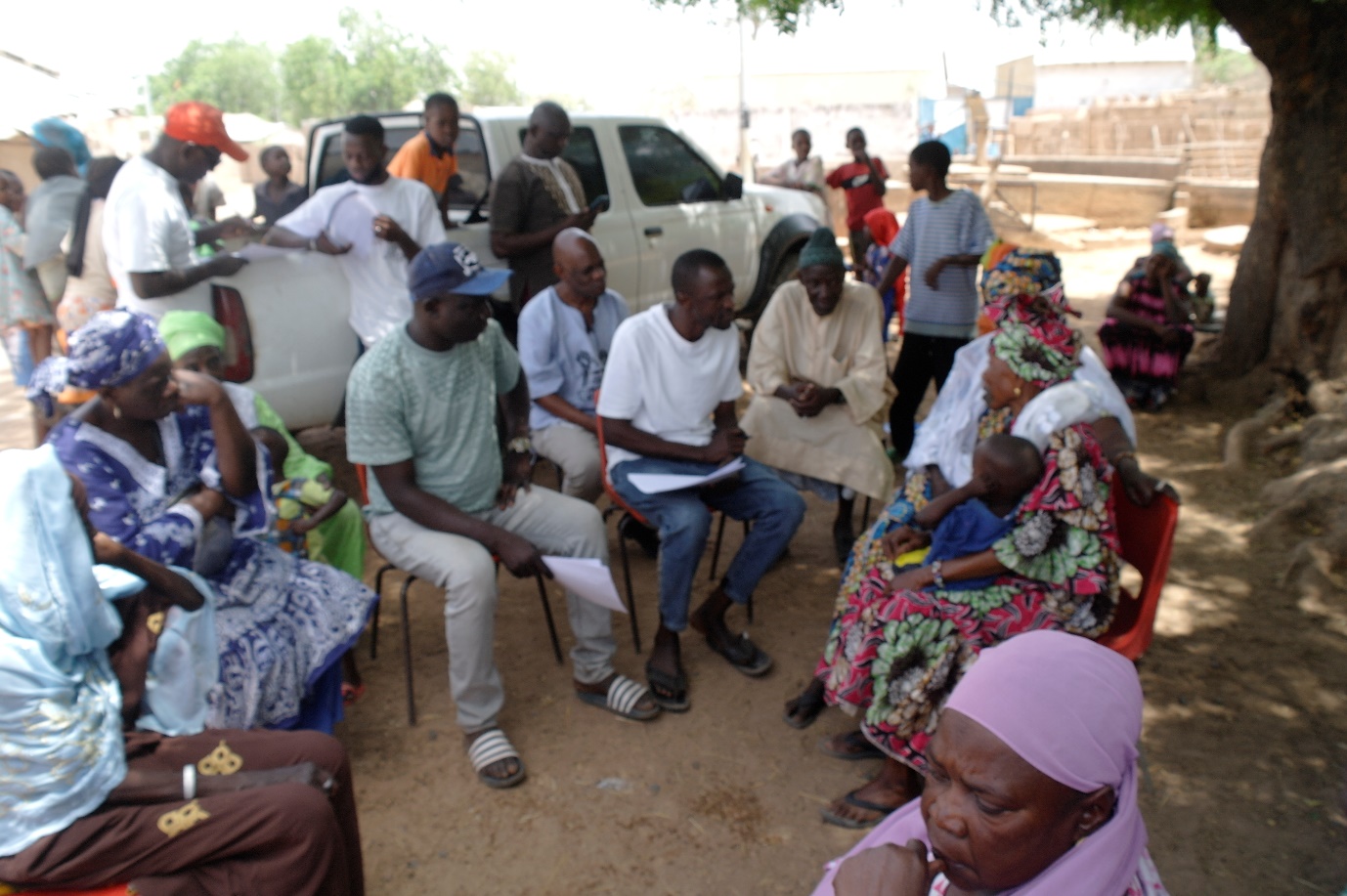
Speaking at the launch in Njau village in Upper Saloum, NCAC Director General Hassoum Ceesay said the project aims to identify, record and safeguard cultural practices central to the identity and livelihoods of local communities.
He said 30 communities have been selected for the current phase, each identifying three cultural elements considered vital to its heritage.
“In total, this exercise will document 90 elements of intangible cultural heritage from 30 communities,” Ceesay said.
He explained that intangible cultural heritage includes oral traditions, rituals, ceremonies, folklore, traditional knowledge, languages and social practices deeply rooted in daily life.
According to him, the initiative builds on a pilot phase conducted in 2023 and 2024, during which 30 cultural elements were inventoried, including pottery making, local salt production, preparation of the traditional Wolof dish cherreh, textile production and other indigenous skills.
Following the success of the pilot, UNESCO encouraged the NCAC to expand the programme to cover more communities and safeguard traditions of cultural, social and economic significance.
Participating communities include Njau, Wassu, Balanghar, Panchang, Janjanbureh and Nianija, among others.
Ceesay said the selection of cultural elements was community-led through consultations involving elders, women, youth and local leaders.
“The communities identified the aspects of their heritage they consider most important and in need of urgent protection,” he said, adding that submissions were later reviewed and validated through follow-up consultations.
He said chiefs, village heads and councillors were sensitised ahead of the exercise, while two representatives were selected from each community to support coordination.
“These representatives serve as a bridge between NCAC and the communities, helping to identify key resource persons and facilitate fieldwork,” Ceesay added.
He said field teams are documenting the selected elements through video, audio interviews and photography, with knowledge holders demonstrating practices in their original settings.
Examples include traditional healing methods, women-led craft practices, ceremonies and other indigenous knowledge systems.
Ceesay highlighted the significant role of women in preserving cultural heritage, noting that many of the identified elements are female-centred.
He said the exercise forms part of NCAC’s mandate to protect and preserve The Gambia’s cultural heritage.
“Proper documentation through text, photography and video is crucial for the survival of intangible cultural heritage,” he said.
The NCAC is expected to extend similar documentation exercises to other parts of the country.
About the Author