
By Haruna Kuyateh
The Department of Livestock Services (DLS) under the Ministry of Agriculture, Food Security and Livestock, in collaboration with the National Livestock Owners Association (NaLAO) and the Regional Livestock Office in Kerewan, has called on communities in the North Bank Region (NBR) to take full ownership of livestock watering facilities.
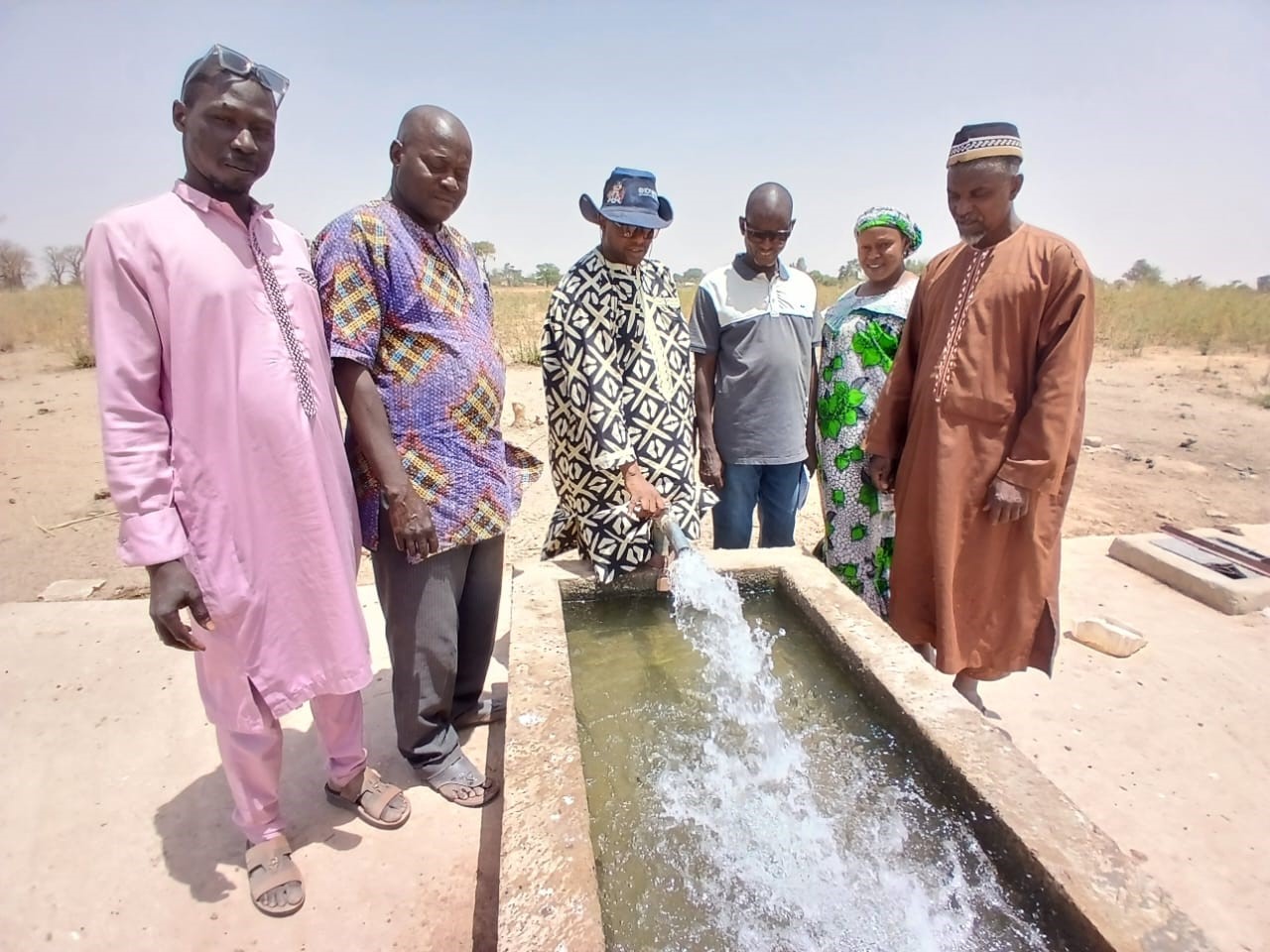
The call was made during a monitoring visit to livestock drinking points and grazing areas established under the FAO Peace Building Fund and the Adapting Agriculture to Climate Change Project (AACP).
The visit aimed to assess community participation in the management of five livestock watering points, as well as to brief the Governor’s Office on achievements and challenges encountered. The exercise forms part of a nationwide tour during which the team is engaging farmers on ownership and sustainability of the projects.
Speaking to journalists at the Governor’s Office in Kerewan, Deputy Director General for Animal Production at DLS, Emanuel W. Mendy, said the monitoring mission was necessary to evaluate the impact of the projects on livestock production and community empowerment.
He urged water management committees overseeing the facilities to be proactive, ensure accountability, and enforce regular payment by livestock owners to sustain the boreholes.
Mr. Mendy also stressed the importance of community participation, noting that farmers must demonstrate commitment to the proper operation and maintenance of the facilities to improve livestock health and productivity.
He specifically called on communities in Pakau Njogu in Upper Nuimi and Sambajaje in Jokadou to strengthen management of the water points.
The DLS official thanked President Adama Barrow and the Minister of Agriculture, Dr. Demba Sabally, for prioritising livestock development and supporting initiatives that promote food security and peacebuilding.
However, he expressed concern over lapses by some water management committees, citing failure by farmers to pay for services as a major challenge affecting sustainability.
“Community ownership is key, and this is why committees were trained and agreements signed with local and regional authorities,” he added.
President of NaLAO, Ebrima O. Jallow, also urged beneficiary communities to meet expectations and ensure the sustainability of the facilities, noting the significant financial investment made.
He called on crop farmers to respect designated livestock grazing areas to avoid conflicts and promote peaceful coexistence.
Mr. Jallow further commended the Governor of NBR for plans to conduct a regional tour to sensitise farmers against encroachment on cattle tracks.
For his part, Deputy Governor of NBR, Dembo Samateh, praised the efforts of DLS and NaLAO in promoting livestock and small ruminant production.
He assured that the Governor’s Office would continue to support initiatives aimed at ensuring community commitment to the sustainability of livestock infrastructure.
About the Author