

By: Isatou Sarr
The High Court has overturned the conviction and sentence of Lamin Sanneh, ruling that serious procedural errors during his trial at the Kanifing Magistrates’ Court denied him a fair hearing, in violation of his constitutional rights.
Delivering judgment on Wednesday, April 1, 2026, Justice S.K. Jobarteh declared the entire trial a nullity, describing the handling of proceedings by the lower court as a “grave procedural irregularity.”
Sanneh had been convicted in 2025 on charges of rape and indecent assault. The Magistrates’ Court sentenced him to six years imprisonment with hard labour on the rape count and one year for indecent assault.
He was also fined D25,000, with a default sentence of two years imprisonment, and ordered to pay D100,000 in compensation to the victim, with an additional two-year default term
However, the High Court found that the trial process was fundamentally flawed, particularly in the way a voir dire—a trial-within-a-trial used to determine the admissibility of a cautionary statement was conducted.
Court records show that after a new Magistrate took over the case in March 2025, proceedings took an irregular turn.
The court foreclosed the prosecution from cross-examining during the voir dire due to their absence. More critically, the Magistrate went on to foreclose the entire matter and adjourned for judgment before the defence had even begun presenting its case, both in the voir dire and the main trial.
Despite being reminded by defence counsel on May 8, 2025, that the accused had not yet testified, the Magistrate proceeded to deliver judgment the same day, convicting and sentencing Sanneh.
In her ruling, Justice Jobarteh stressed that a voir dire is a limited and separate proceeding, and should not be conflated with the substantive trial. She held that by evaluating the evidence and entering judgment without allowing the accused to present his defence, the Magistrate breached a fundamental principle of criminal justice.
“The denial of the right to present a defence is a denial of justice itself,” she stated, underscoring that the right to a fair hearing is protected under Section 24 of the 1997 Constitution.
The judge further pointed to multiple lapses, including the failure of the trial court to distinguish between the admissibility hearing and the main trial, and the wrongful foreclosure of the defence.
Although the State acknowledged that procedural errors had occurred, it opposed an outright acquittal. Justice Jobarteh agreed, noting the gravity of the allegations and emphasizing that justice must balance the interests of the accused, the victim, and the wider society.
Consequently, the High Court set aside the conviction and sentence, and ordered that the case be retried before a different Magistrate at the Kanifing Magistrates’ Court.
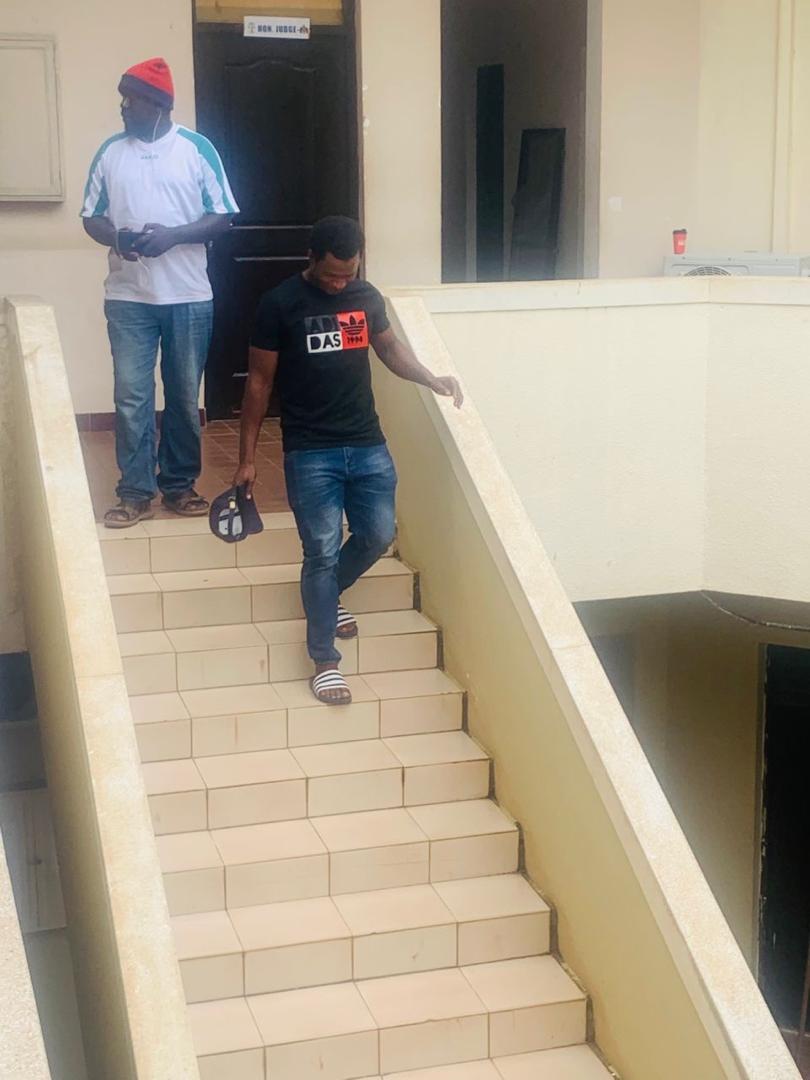
Sanneh was granted bail in the sum of D100,000 with one Gambian surety.
The court further directed that if the State or the Inspector General of Police fails to proceed with the retrial within one month, the bail conditions will lapse.
The ruling effectively resets the case, placing it back before the lower court for a fresh hearing, this time in accordance with due process and constitutional safeguards.