
By Isatou Sarr
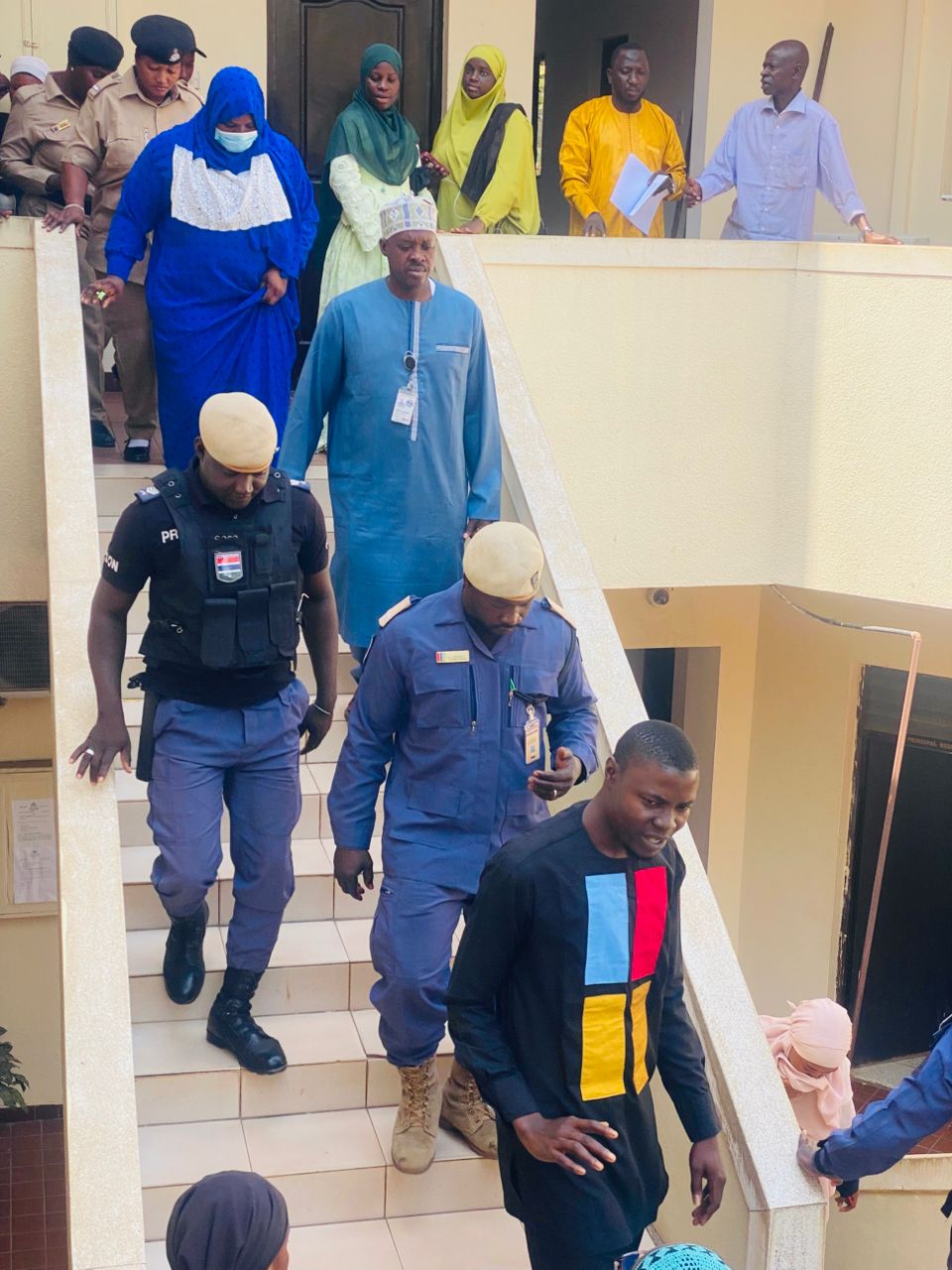
The Banjul High Court has ordered the State to file and serve its written brief within 14 days in the case of The State versus Ousainou Bojang and Amie Bojang.
When the matter came up for adoption of written briefs on Friday, the Director of Public Prosecutions (DPP) informed the court that the state was still within time to file its brief, arguing that it had been served with the defense brief “recently”. No specific date of service was disclosed.
The prosecution maintained that it was entitled to the full 28 days earlier granted by the court.
Counsel for the defense, Mr. A. Sillah, submitted that as the prosecuting authority, the state ought to be fully conversant with its evidence and legal position and should not require additional time before filing its address.
In his ruling, Justice Ebrima Jaiteh emphasized that the preparation and exchange of written briefs are intended to promote a fair and efficient determination of cases and not to cause delays in the delivery of judgments.
“Justice delayed, especially in criminal cases, has consequences not only for the accused but also for victims, witnesses and the public’s confidence in the justice system,” he said.
The judge noted that the filing of written addresses is governed by the High Court Practice Direction of 2013. Direction 1(5) provides that where written addresses are ordered, they shall be filed within 28 days of the conclusion of the hearing, with each party taking a maximum of 14 days to file and serve the opposing party.
Justice Jaiteh recalled that the hearing in the case concluded on Dec. 16, 2025. Due to delays in the preparation of the records of proceedings and the Court’s Audio Transcription (CAT) process, the court had exercised its discretion to grant 28 days, which was already an enlargement beyond the 14 days contemplated for each party under the Practice Direction.
However, the court held that since the defense had submitted its brief and the State Law Office had received it and was preparing its response, it was fair and necessary to revise the timeline to prevent further delay.
Accordingly, the earlier 28-day period was varied. The State was ordered to file and serve its written brief within 14 days, by March 12, 2026.
The defense was granted four days thereafter, until March 17, 2026, to file any reply strictly on points of law.
The court further directed that the briefs already filed and those to be filed within the newly ordered period shall be deemed duly adopted without the need for oral adoption.
The matter was adjourned to March 30, 2026, at 10 a.m. for judgment.
Justice Jaiteh warned that no application for further extension of time would be entertained and directed all parties to file and exchange their respective lists of authorities on or before March 17, 2026.
He reiterated that adherence to procedural timelines is fundamental to the right to a fair hearing within a reasonable time and to the efficient administration of justice.
About the Author