

By: Fatou krubally
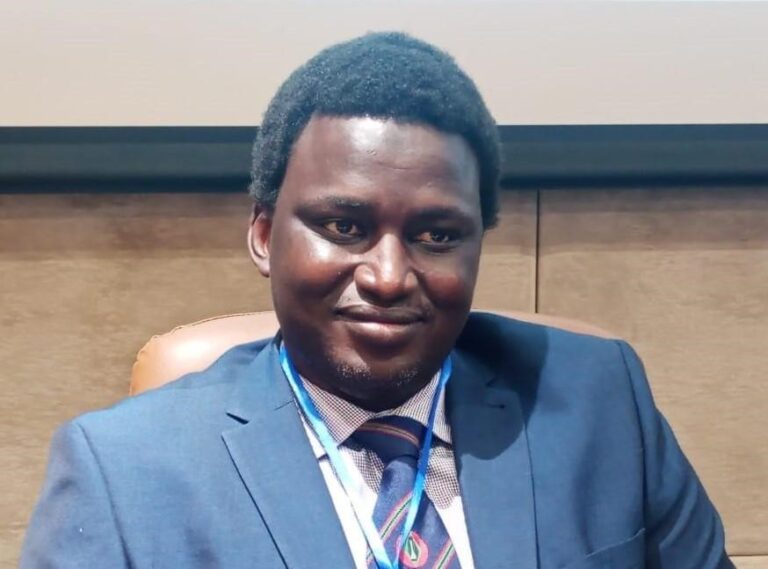
Professor Sidat Yaffa Monday announced his intention to contest The Gambia’s 2026 presidential election, unveiling a newly-formed political platform, the Gambia Movement (GM), which he said aimed to improve the living conditions of ordinary Gambians.
The declaration was made at a press briefing held at the Gambia Christian Council compound along MDI Road in Kanifing, where the movement also outlined its vision and leadership.
Addressing journalists, Professor Yaffa said his decision to enter frontline politics was influenced by his upbringing in rural Gambia, long years of academic service and sustained political activism.
Born in Sandu Misira in the Upper River Region, he said he spent most of his life in rural communities and witnessed firsthand the hardships and limited opportunities faced by many Gambians.
“I have seen the deficiencies in terms of quality of life among our people, including myself,” he said, adding that his education and professional experience, acquired both locally and in the United States, placed a responsibility on him to serve the underprivileged.
Professor Yaffa said his leadership journey began early, noting that he held various student leadership positions from primary school through his doctoral studies in the United States.
He also recalled his role in political activism between 2014 and 2016, during which he and four others — Dr. Moro Krubally, former Vice President Fatoumatta Tambajang, the late Foday Nyabally and Hon. James Gomez — formed an underground group known as Concerned Citizens for Democracy and Governance.
According to him, the group played a key role in efforts that later contributed to the formation of the 2016 opposition coalition, which led to the defeat of the former government.
Although he supported and voted for President Adama Barrow in the 2016 elections, Professor Yaffa said persisting governance challenges motivated him to seek a more direct role in national leadership.
After serving at the University of The Gambia for 16 years, he described his move into politics as a continuation of public service. He disclosed that the Gambia Movement has begun submitting its registration documents to the Independent Electoral Commission (IEC).
Professor Yaffa said the movement is open to alliances ahead of the elections, revealing that discussions have been initiated with five political parties, though he declined to name them. He said any future coalition would be guided by a formal written agreement to ensure accountability.
Conceived in July 2018, the Gambia Movement presents itself as an inclusive political platform that rejects discrimination based on ethnicity, gender, religion, education, profession, disability or economic status.
The party said its priorities include peace and security, food and nutrition security, affordable healthcare and quality education, while promoting issue-based politics and discouraging personal attacks on political opponents.
The press briefing marked the movement’s first official engagement with the media as it prepares to participate in national politics ahead of the 2026 elections.
About the Author