

By Yunus S. Saliu
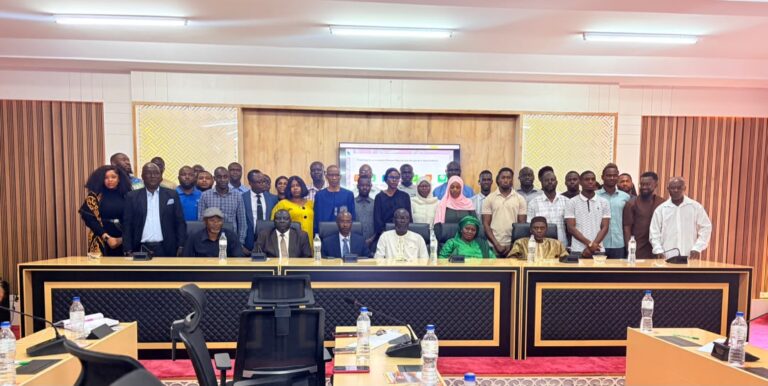
Vice President Muhammed BS Jallow on Wednesday officially launched the book History of Public Health in The Gambia, authored by the late Alhagie Dawooda MB Jagne, a distinguished public health professional born in May 1935 and who passed away in July 2021. The event took place at the Sir Dawda Kairaba Jawara International Conference Centre in Bijilo.
Speaking at the ceremony, VP Jallow described the launch as more than a formal book unveiling, noting that it provided an opportunity for national reflection on The Gambia’s public health development and paid tribute to a patriotic Gambian dedicated to service, scholarship, and national development.
The Vice President conveyed greetings from President Adama Barrow and thanked the organisers, the academic community, and the Jagne family for preserving a work he described as an important contribution to the country’s heritage.
He said the late Jagne’s work documented the evolution of public health in The Gambia, tracing the foundations of the health system, key policy decisions, challenges faced, and the resilience of health professionals and institutions over the years.
“Public health remains a cornerstone of national development, closely linked to productivity, education, poverty reduction, and social cohesion,” VP Jallow said. “A nation’s progress is ultimately measured by the health and dignity of its people.”
The Vice President highlighted ongoing government reforms in the health sector under national development frameworks, including the National Health Development Plan. He said these reforms aim to achieve universal health coverage, strengthen primary health care, improve maternal, newborn, child, and adolescent health, and enhance disease prevention and surveillance systems.
VP Jallow added that the initiatives are supported by investments in workforce development, expansion of infrastructure, digital health systems, and health financing reforms, including steps toward a sustainable national health insurance scheme. He noted that the efforts align with the Recovery-Focused National Development Plan, African Union Agenda 2063, and the Sustainable Development Goals.
He emphasized that Jagne’s book is relevant for informing present and future policy decisions, noting that sustainable reforms require lessons from historical experience. He extended condolences and gratitude to the Jagne family, praising the late scholar’s patriotism and academic rigor.
Also speaking at the launch, Minister of Health Honourable Momodou Lamin Samateh described Jagne as the chief architect of The Gambia’s modern public health system. He recalled that Jagne’s return to the country in 1964 marked a turning point, laying the foundation for a structured public health framework.

Minister Samateh highlighted Jagne’s role in initiating formal training for public health officers, which later led to the establishment of the School of Public Health. He said the government is building on this legacy by strengthening public health institutions to meet current and emerging challenges.
He outlined ongoing reforms to enhance the work of public health and environmental health officers, including expanded responsibilities, improved standards, and stricter inspections of public facilities. The Minister said 330 frontline and intermediate surveillance officers have been trained under the Field Epidemiology Training Programme, enhancing disease surveillance and response. 
He also announced that a national clinical waste management centre is now operational, handling waste from health facilities nationwide.
The launch concluded with calls for sustained investment in training, policies, and infrastructure, with speakers expressing confidence that Jagne’s vision will continue to guide The Gambia toward a resilient and responsive public health system.
The event was attended by ministers, permanent secretaries, directors, elders, religious leaders, Ministry of Health officials, public health students, and members of the Jagne family.
About the Author