

By: Fatou Krubally
The Minister of Environment Rohey John-Manjang, has told the National Assembly that government is stepping up efforts to rehabilitate degraded sand mining sites and promote cleaner energy sources to reduce deforestation.
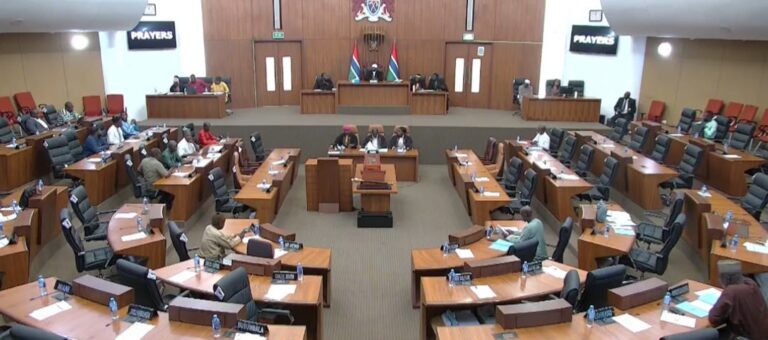
Mrs Manjang who is also the Minister of Climate Change and Natural Resources was speaking during a parliamentary question-and-answer session on Wednesday.
She says the National Environment Agency (NEA) is enforcing stricter post-mining restoration measures across the country. These include backfilling mined areas with native materials, reshaping dunes, replanting vegetation, and monitoring for erosion and drainage issues.
“We are doing as much as we can within our capacity and financial muscles,” she said, citing restoration activities in Banjul, Senegambia, Gunjur, and Kartong.
She clarified that while the NEA enforces environmental safeguards, mining licences fall under the Geology Department of the Ministry of Petroleum and Energy. Nevertheless, she says the Environment Ministry collaborates with other sectors to ensure compliance with the Environmental Impact Assessment (EIA) regulations under the NEMA 1997 Act.
On long-term solutions, she highlighted efforts to strengthen legal enforcement, increase technical capacity, and adopt nature-based methods to build resilience in vulnerable coastal communities.
Turning to energy, the minister says her ministry is also leading a campaign to phase out charcoal in favour of clean and efficient alternatives. “We are implementing the National Clean Cooking Energy Action Plan, which promotes improved stoves, biomass briquettes, and wider LPG use,” she told lawmakers.
She cited ongoing initiatives such as Green of Gambia and Green Waste Innovation, youth-led projects that convert agricultural waste into clean fuel. Additionally, the ministry is partnering with the petroleum sector on LPG distribution and biogas pilots in local communities.
One such programme, led by DelAgua, has distributed 100 efficient cookstoves that reduce firewood use by up to 70% and support carbon credit earnings for the country.
Pressed on which initiatives were government-funded, Minister John-Manjang explained that all interventions coordinated through the state even if implemented by NGOs are considered government-led.
She concluded by urging for more investment, public education, and inter-agency collaboration to achieve long-term environmental protection and climate sustainability.
About the Author