The call by President Adama Barrow for the opposition United Democratic Party (UDP) to focus on policies rather than confrontation raises an important issue about the conduct of political campaigns in The Gambia as the country approaches the December 2026 presidential election.
Political competition is an essential feature of democracy. Opposition parties have every right to criticise the government, mobilise supporters and demand political change. Equally, the president and his party must be prepared to face criticism without interpreting every protest or hostile slogan as an attempt to provoke violence.
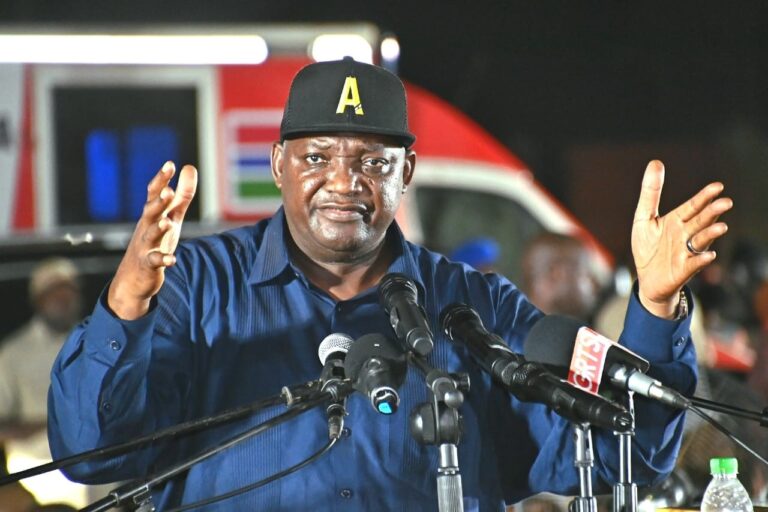
President Barrow, speaking during his Meet-the-People Tour, accused UDP supporters of attempting to disrupt his engagements. He also referred to an alleged altercation between supporters of the two camps in Manduar. These allegations underline the need for restraint, although claims of wrongdoing should be properly investigated rather than accepted without scrutiny.
Political parties must recognise that their supporters’ conduct can influence the atmosphere surrounding an election. Provocative slogans, intimidation, physical assaults and attempts to obstruct rival campaigns have no place in a democratic society. Political disagreements must be resolved through dialogue, lawful protest and the ballot box.
However, the responsibility for peaceful campaigning does not rest with the opposition alone. The governing party must also ensure that its supporters respect political opponents and their right to campaign freely. Security agencies must act impartially, protecting all parties without favouritism.
President Barrow is right to emphasise that the decision on who governs The Gambia belongs to its citizens. That principle must guide every political actor, regardless of party affiliation or ambition.
With the election approaching, leaders should demonstrate restraint through their words and actions. The electorate deserves substantive debate on employment, education, healthcare, economic opportunities and public accountability, rather than political confrontation.
Ultimately, democracy is strengthened not by silencing opponents but by allowing competing ideas to be tested peacefully. All parties must respect the voters, uphold the law and ensure that the coming election is determined by citizens’ choices, not intimidation or violence.
About The Author