By: Isatou Sarr
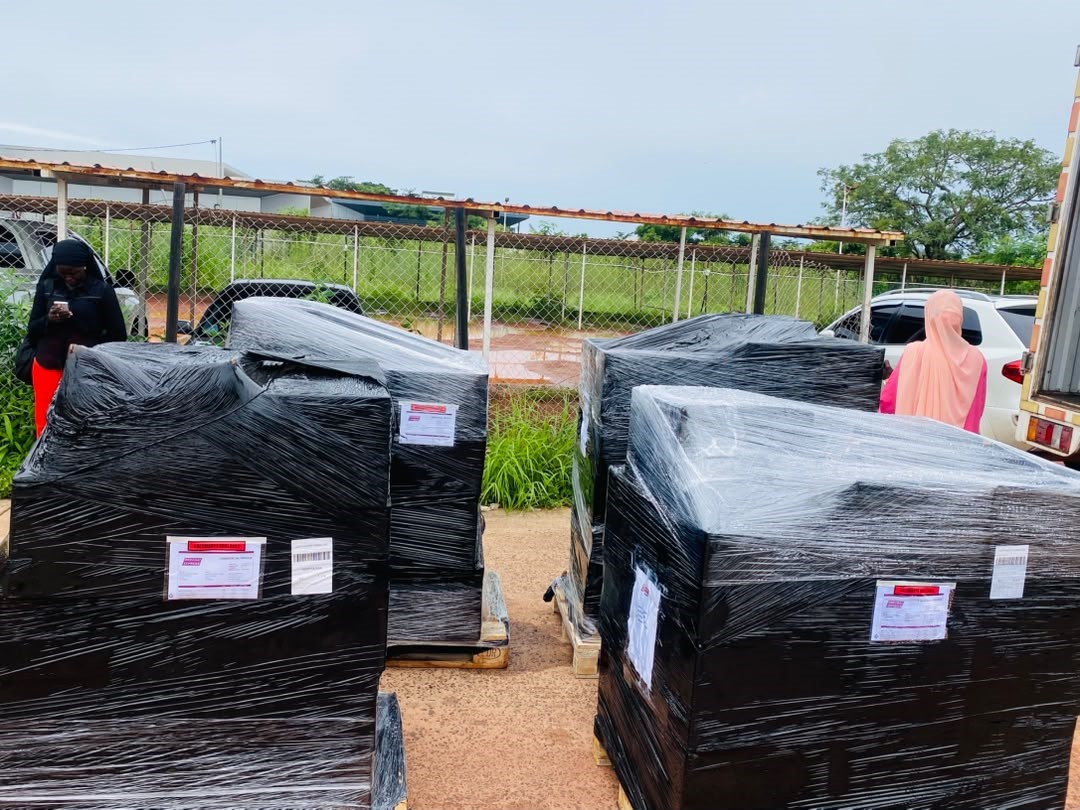
A consignment of medicines and other medical supplies has arrived in The Gambia as part of the Ministry of Health’s annual procurement programme.
The consignment arrived at Banjul International Airport on 8 October and was received by health authorities. The supplies are intended for use across public health facilities in the country.
Speaking to journalists at the Central Medical Store in Kotu, Dr Njundu Jatta, a clinical pharmacist at the National Pharmaceutical Services of the Ministry of Health, said the medicines were procured by the government for the public health sector.
He said most of the medicines in the latest consignment were sourced from the European Union, noting that The Gambia has over the years obtained medicines from countries including India and Ghana.
According to Dr Jatta, the decision to expand sourcing to the European Union was partly influenced by challenges in obtaining certain medicines.
He explained that the latest supplies form part of the annual procurement of essential medicines and medical consumables.
He said the procurement process begins after the Ministry quantifies the medicines and supplies required for the year. This year’s quantification process started around February and March, with contracts signed in March, while deliveries began in April.
However, Dr Jatta said delays in delivery can sometimes affect the procurement process.
“Delivery sometimes can take unexpected turns, causing a lot of delays,” he said, adding that some of the medicines received had been expected in the country earlier.
He said the government’s objective is to ensure that patients can obtain the medicines they require at public health facilities after being diagnosed and prescribed treatment, without necessarily having to purchase them from private pharmacies.
Dr Jatta acknowledged that it may not always be possible for every medicine to be available, but said efforts are being made to provide medicines required for different health conditions.
Meanwhile, Essa Camara, Director of Pharmaceutical Services, appealed to patients to pay the required consultation fees when accessing services at public health facilities.
He said the fees are small but contribute to the functioning of the health system and help government in its efforts to procure medicines.
Camara said failure by some people to pay consultation fees because they expect to receive services through relatives could affect the sustainability of the system.
He urged members of the public to contribute the small consultation fee required when they seek services at health facilities.
Musa Camara, Deputy Permanent Secretary Technical at the Ministry of Health, said government budgets for different sectors, including health, and uses the allocated funds to procure medicines, drugs and other supplies.
He also urged members of the public to improve their health-seeking behaviour by seeking medical attention promptly when they fall sick.
He encouraged people to visit the nearest health facility where they can receive the appropriate care.
About The Author