By Kemo Kanyi
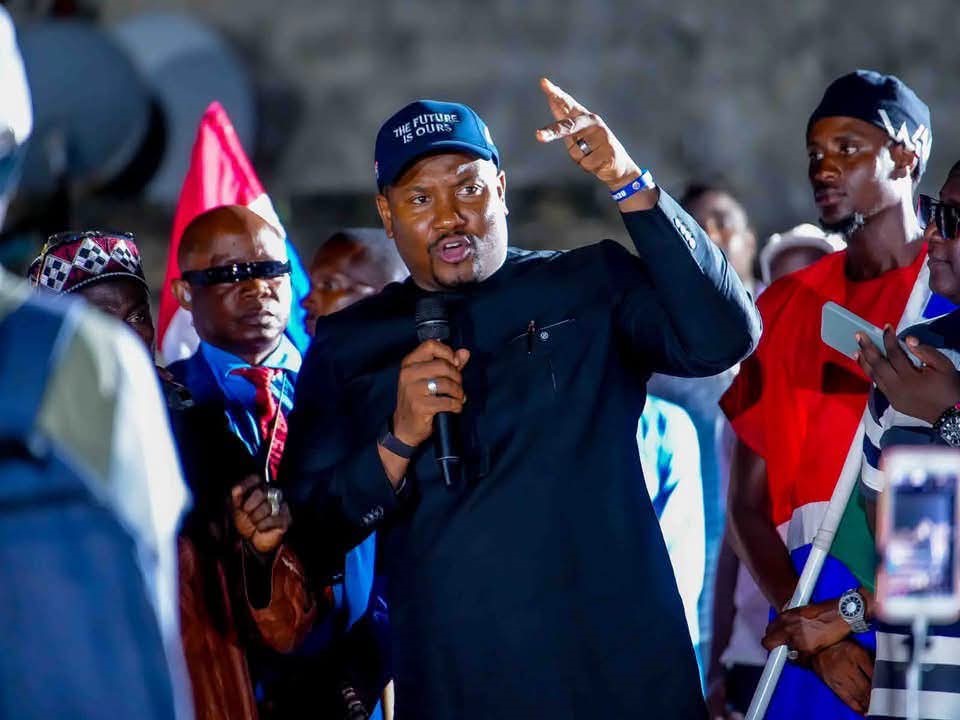
UNITE Party leader Talib Ahmed Bensouda has dismissed allegations that his party is considering an alliance with the ruling National People’s Party (NPP) ahead of The Gambia’s 5 December presidential election.
Bensouda described the allegation as unfounded, saying such an alliance would not happen.
He was speaking at a political rally in Baddibu Salikene on Wednesday, where he also referred to the “Blackout Barrow” slogan recently adopted by his political campaign.
“Our struggle is not driven by position. We are not chasing prosperity. We don’t just want to be noticed in the political arena. Our struggle is driven by the interests of citizens, especially the underprivileged,” he told supporters.
Bensouda said term limits had become an important issue in Africa and accused President Adama Barrow of seeking to remain in power beyond two terms.
He recalled Barrow’s previous criticism of former President Yahya Jammeh over the use of state resources and remaining in office for an extended period.
Bensouda also called on President Barrow to reflect on his previous statements concerning term limits and to uphold what he described as his earlier commitment to limiting presidential tenure.
He said The Gambia should work towards a political environment in which former presidents can continue to live peacefully in the country after leaving office, arguing that this should be guided by the national interest.
The UNITE leader said his party’s principles included patriotism, restoring national integrity, accountability and transparency.
He urged citizens to focus on addressing national challenges rather than engaging in what he described as petty political disputes.
Bensouda also warned against tribal politics, saying ethnic divisions could deepen mistrust among citizens living in communities with people from different backgrounds.
He said adherence to these principles could contribute to development and restore confidence among young Gambians, particularly by creating opportunities that would encourage them to remain in the country rather than undertake dangerous irregular migration journeys.
About The Author