By Binta Jaiteh
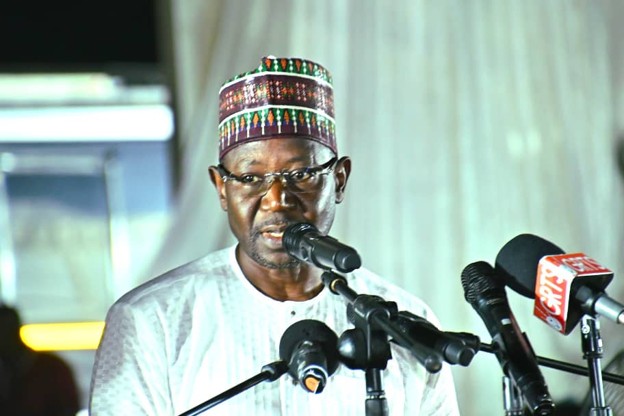
The Minister of Agriculture, Demba Sabally, has said the GIRAV Project is expected to enhance agricultural production, as well as improve preservation and processing capacities, with the aim of reducing food imports, particularly in poultry and horticulture.
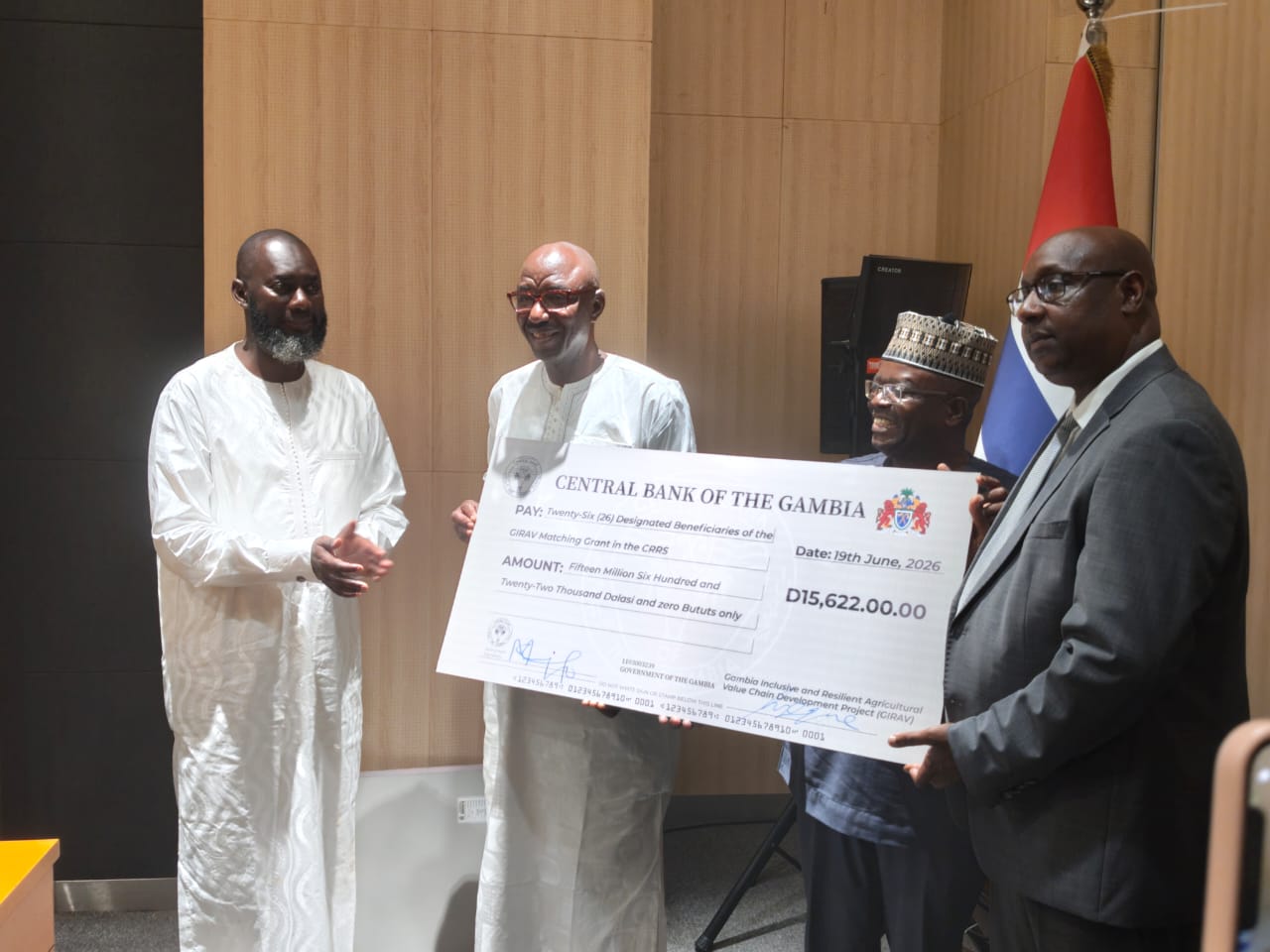
He made the remarks during the second round of the GIRAV Project Matching Grant Window, where he also highlighted the project’s potential to create employment and income-generating opportunities, especially for women and young people.
Minister Sabally said 214 applicants have been selected to benefit from the matching grant scheme, comprising 188 individual applicants and 26 groups, following approval by the National Technical Evaluation Committee.
He said the total value of the current awards stands at about US$2.1 million, equivalent to over D156 million, with the GIRAV Project providing 80 percent of the funding while beneficiaries contribute 20 percent. He added that the beneficiaries’ contribution is being facilitated through microfinance institutions under existing agreements.
Describing the ceremony as the outcome of a rigorous selection process that began with sensitisation, the minister said over D100 million is being disbursed to the selected individuals and groups across the country.
He further noted that the GIRAV Project has so far awarded more than US$3.9 million to 19 SMEs, US$1.2 million to 74 groups, and US$2.5 million to 312 individuals, supporting agricultural transformation nationwide.
According to him, the Kawral Agro-pastoral group in the Central River Region stands out as a success story, with women engaged in poultry production now supplying eggs within and beyond their communities. He said the group has also accessed additional financing from microfinance institutions, reflecting improved financial inclusion and collaboration.
Minister Sabally explained that the matching grants are designed to support competitively selected micro-projects in agricultural production, processing, marketing, and related services for individuals, groups, and SMEs across targeted value chains.
The Coordinator of the Central Projects Coordination Unit (CPCU) and GIRAV at the Ministry of Agriculture, Mamour Alieu Jagne, congratulated the beneficiaries and urged them to ensure effective implementation of their projects to maintain public trust.
Speaking on behalf of the World Bank, Franline Mutahakana said the World Bank Board has approved a total of US$108 million for the GIRAV Project, including an additional US$68 million approved in April 2024.
She said the project aims to strengthen inclusive and resilient agricultural value chains, supporting smallholder farmers and agribusinesses in their transition from subsistence to market-oriented agriculture.
Mutahakana noted that GIRAV has supported more than 53,000 farmers in adopting climate-smart technologies and improved food security for over 426,000 people through the distribution of improved seed varieties via digital platforms.
She added that the 2026 seed programme has already been launched, with 250 tonnes of improved seeds procured for distribution.
She further stressed that access to finance remains critical for agricultural transformation, enabling investment in irrigation, equipment, storage, processing, and market expansion to build a more productive and resilient sector.
About The Author