
By: Haddy Touray
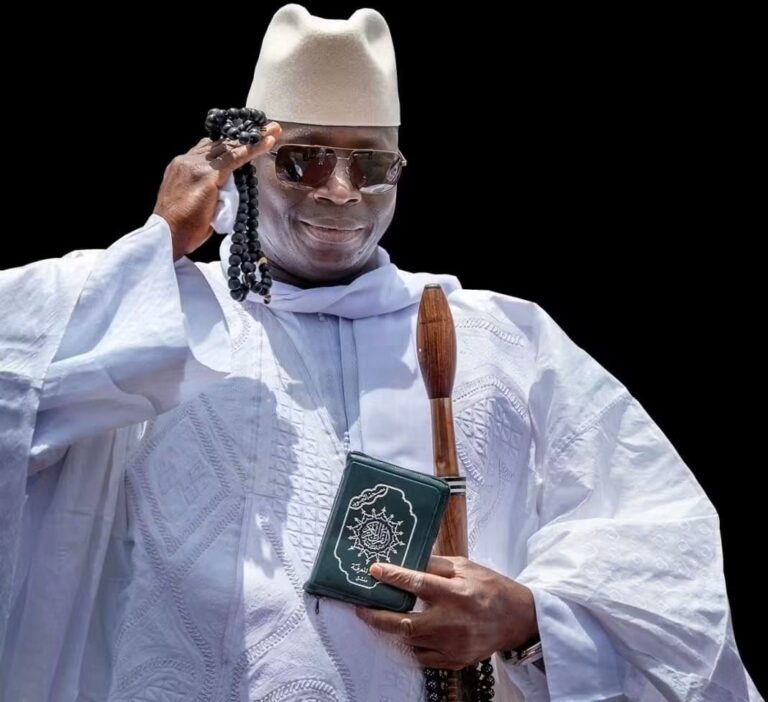
Presidential spokesperson Ebrima G. Sankareh has stated that President Adama Barrow is not corrupt, a claim he said he could affirm “on the Holy Qur’an” during an appearance on Coffee Time with Peter Gomez.
His remarks have drawn public attention amid ongoing debates on governance, transparency, and accountability in The Gambia.
Madi Jobarteh, a human rights activist and founder of the Edward Francis Small Centre for Rights and Justice (EFSCRJ), has raised questions over transparency in government since the early years of the Barrow administration.
He said that in 2017, 57 vehicles were distributed to National Assembly members, with the source and terms of acquisition not publicly disclosed.
He also stated that in 2018, US$750,000 intended for government use was reportedly deposited into an account linked to the First Lady from Chinese sources. The matter has not been fully clarified publicly.
President Barrow has previously acknowledged providing financial support to National Assembly members in what he described as “brown envelopes” to secure political objectives.
He has also stated that his residence in Mankamang Kunda was constructed through donations from friends. Section 222 of the Constitution regulates state assets and property use.
The president’s declared salary is 6 million dalasi annually. He has also made personal donations to communities and individuals, although there is no publicly verified disclosure of his full asset declaration.
In 2024, reports indicated that land initially allocated for the construction of the Chief Justice’s residence was reassigned for presidential use by the Minister of Lands, Hamat Bah, a decision that drew criticism from some observers citing provisions of the Lands Act.
Under Section 223 of the Constitution, public officials are required to declare assets. However, declarations submitted during elections are not subject to independent verification for accuracy or completeness.
Investigative reports by media organisations have alleged possible financial irregularities involving individuals linked to government institutions, including claims reported by The Republic concerning the president’s nephew. These allegations have not resulted in formal convictions.
Reports from the National Audit Office and parliamentary committees have previously identified cases of financial mismanagement in public institutions. Some officials named in such reports have remained in office or been reassigned.
The government has defended its governance record, citing reforms including the Access to Information Act. However, civil society groups and journalists have raised concerns over delays in access to public records, including contracts and concession agreements.
President Barrow has previously described corruption as “as old as mankind” while also expressing support for anti-corruption efforts.
Sankareh’s comments come amid continued public debate in The Gambia over governance standards and accountability in public office.
About The Author