By Sheriff Musa Sherif
A developing dispute between The Gambia’s Independent Electoral Commission (IEC) The Gambia) and the Unite Movement for Change (UMC)) has placed the country’s electoral laws, political transition pathways, and enforcement mechanisms under close public scrutiny. At the heart of the tension is a fundamental question: when does a political movement become a political party in the eyes of the law—and what activities are permitted before that threshold is formally crossed?
The controversy erupted after IEC Chairman Joseph Colley issued a strong warning to unregistered political movements, cautioning them against conducting congresses, using party symbols, selecting candidates, or soliciting campaign funds. According to Colley, such activities are strictly reserved for political parties that have completed registration under the Elections Act 2025 and relevant constitutional provisions.
The warning was not merely advisory. It signaled a more assertive enforcement posture by the IEC, which stated it would begin working more closely with the Inter-Party Committee (IPC) and the police to ensure compliance. Colley also outlined possible enforcement measures, including issuing public notices, escalating matters to the Attorney General’s Chambers, and seeking court orders to halt unauthorized political activity.
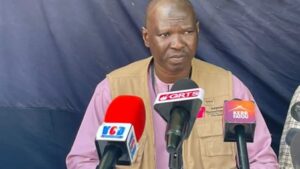
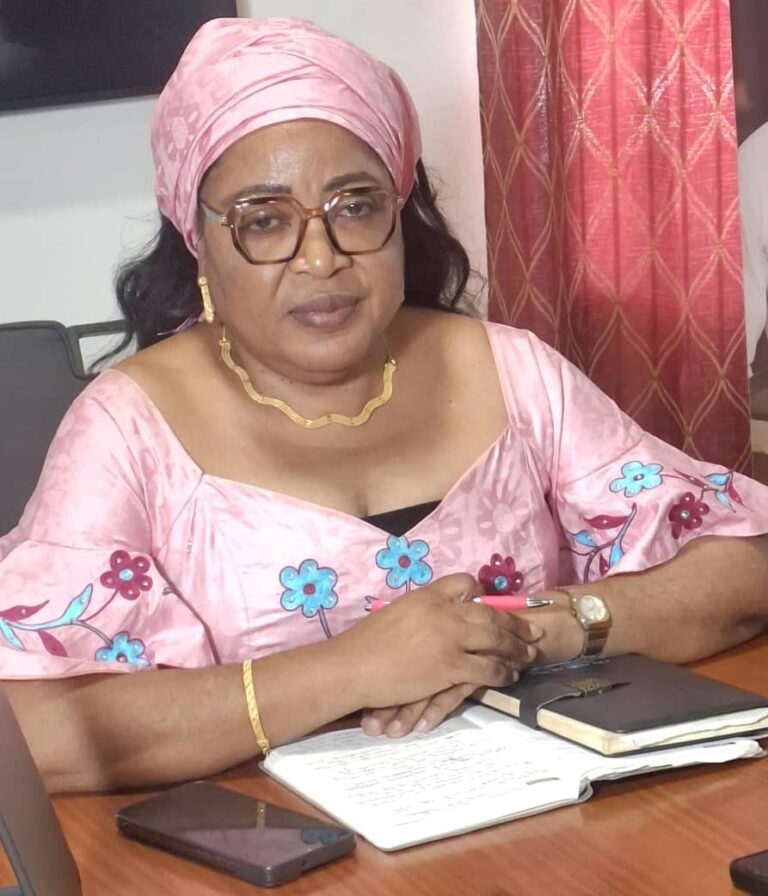
IEC Chairman Joseph Colley
Legal Framework and IEC’s Position
The IEC’s argument rests on a combination of the 1997 Constitution and the Elections Act 2025, particularly Section 105 and related provisions that define who can operate as a political party. According to Colley, these laws are clear: only registered political parties are permitted to engage in formal political competition activities such as fielding candidates or raising campaign funds.
But beyond the surface restriction, the IEC’s concern is structural. Registration, Colley explained, is not a simple administrative step. It is a regulatory process designed to ensure transparency, accountability, and institutional discipline among political actors. Registered parties must open their financial records to scrutiny, adhere to IPC codes of conduct, and submit to auditing procedures intended to safeguard electoral integrity.
Colley also drew a distinction between legal registration as an organization and recognition as a political party. Some groups, he noted, operate as NGOs or associations registered through the Attorney General’s Chambers. While such registration grants legal personality, it does not confer political rights such as sponsoring candidates, accessing state media airtime, or enjoying electoral protections afforded to registered parties.
This distinction lies at the core of the current dispute. The IEC is effectively drawing a legal boundary between civic association and political competition—a boundary that some emerging movements appear to be testing or crossing.
Rising Concern Over “Premature Politicking”
The IEC Chairman’s remarks reflect a broader concern about what he described as a “worrying trend” in the political space: groups acting like fully formed political parties before completing legal registration. According to Colley, these movements are holding congresses, displaying symbols and colours, and even identifying potential candidates for future elections.
From the IEC’s perspective, such activity undermines regulatory order. It risks creating parallel political structures outside the formal oversight system, which could weaken enforcement mechanisms and blur accountability lines. More importantly, Colley argued, it could distort fairness in political competition by allowing some groups to gain advantages without meeting legal obligations.
He emphasized that equal application of the law is essential to maintaining public trust. If some groups are allowed to bypass rules while others comply fully, he warned, confidence in the electoral process could erode.
The IEC has therefore urged citizens to report suspected violations and indicated that the matter would be raised at the next Inter-Party Committee meeting. This suggests the issue is not isolated but is being treated as a systemic governance challenge.
UMC’s Defiant Political Posture
In contrast to the IEC’s cautious and regulatory tone, the Unite Movement for Change has adopted a firm and openly defiant position. Speaking in an interview with Eye Africa TV, UMC spokesperson Kemo Bojang dismissed the concerns raised by the electoral body and insisted that the movement’s political trajectory is irreversible.
“Our plan A is to register Unite as a political party, and plan B is that Unite will be a registered political party,” Bojang stated, framing registration not as a conditional process but as an expected outcome.
Bojang’s remarks reflect a broader political messaging strategy that positions UMC not as a tentative applicant but as an emerging political force already entitled to recognition. He rejected the notion that the IEC or any other institution could permanently block the movement’s registration, arguing instead that administrative processes may delay—but cannot deny—its political future.
“Nobody has the right to stop Unite. They can delay, but they cannot deny us the opportunity to become a political party,” he said.
This framing transforms the issue from a regulatory matter into a question of political rights and democratic inclusion. In doing so, UMC is effectively challenging not only the IEC’s interpretation of the law but also the broader gatekeeping role of electoral institutions.
A Clash of Interpretation, Not Just Compliance
At its core, the dispute is not simply about whether UMC held a congress or organized a rally. It is about competing interpretations of when political expression becomes regulated political competition.
For the IEC, the line is clear: political organization must remain within civic bounds until formal registration is complete. For UMC, political organization is an inherent democratic right that exists independently of bureaucratic approval, even if full participation in elections requires registration.
This divergence reflects a common tension in emerging democracies: the balance between maintaining orderly electoral systems and allowing open political mobilization. Strict enforcement can prevent abuse and preserve institutional credibility, but excessive restriction risks being perceived as gatekeeping or suppression of political pluralism.
Implications for The Gambia’s Political Landscape
The timing of the dispute adds further significance. The IEC has already launched its 2026 Supplementary Voter Registration exercise, running from April 8 to May 21. This process is a critical preparatory step ahead of future elections, and any instability in the political environment during this period could have broader implications.
If enforcement actions escalate, they may set a precedent for how emerging political movements are treated going forward. Conversely, if unregistered groups continue to operate without consequences, it could weaken the authority of the IEC and blur the legal distinction between registered and unregistered actors.
There is also a broader institutional question at play: how effectively can the IEC, IPC, and law enforcement coordinate to regulate political activity without appearing politically biased? The IEC’s announcement that it will work more closely with these bodies suggests an effort to strengthen enforcement capacity, but it also places those institutions under greater public scrutiny.
Between Regulation and Political Evolution
The current standoff highlights a transitional moment in The Gambia’s democratic development. As new movements like UMC seek entry into formal politics, they are testing the limits of the regulatory framework that governs political competition.
For the IEC, the challenge is maintaining consistency and legal integrity in a rapidly evolving political environment. For UMC and similar movements, the challenge is navigating institutional requirements while sustaining political momentum and public visibility.
Whether this dispute results in legal clarification, political compromise, or prolonged confrontation will likely shape not only the fate of the Unite Movement for Change, but also the broader rules of engagement for political participation in The Gambia.
What is clear is that both sides are now firmly positioned. The IEC is signaling stricter enforcement of electoral law, while UMC is asserting its political legitimacy with increasing confidence. The outcome of this tension will help define where the boundary lies between political aspiration and legal recognition in one of West Africa’s most closely watched democratic systems.
About The Author