
By Yunus S. Saliu
The Independent Electoral Commission (IEC) on Thursday began a two-day training workshop aimed at combating fake news and misinformation in the electoral process, ahead of the supplementary voter registration scheduled for April 2026.
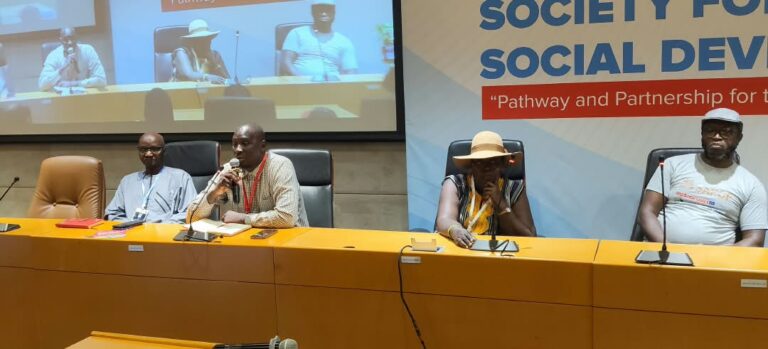
The workshop, held from 26 to 27 February at the Sir Dawda Kairaba Jawara International Conference Centre in Bijilo, brought together representatives of political parties, civil society organisations, the media, security services, the Inter-Party Committee and development partners, including the United Nations Development Programme (UNDP).
Speaking at the opening ceremony, IEC Chairman Joseph Colley underscored the critical role of stakeholders in safeguarding the integrity of the electoral process. He said the training would enhance participants’ ability to distinguish accurate information from misinformation, particularly across mass and digital media platforms.
Colley reaffirmed the Commission’s commitment to providing timely, accurate and relevant information to the public and electoral stakeholders. He noted that both traditional and digital communication channels have been made available to ensure wide access to official information through direct engagement and online platforms.
He described the Commission’s website and social media platforms as official and reliable sources of information.
“As we prepare to conduct a supplementary registration of voters in a few months, it is crucial to promote knowledge-sharing on how to dispel fake news,” he said.
The IEC chairman disclosed that the Commission had recently faced misinformation campaigns, including false online claims that it was recruiting staff through unofficial channels and conducting secret voter registrations. He said the claims were unfounded and were debunked through official IEC press releases and independent fact-checking organisations.
Addressing concerns about the registration of political parties, Colley said the Commission has no intention of unjustifiably barring any individual or group from exercising their political rights.
“The Commission has no cause to unjustifiably bar any person or group from exercising their political rights, including the right to vote, to be voted for and to political affiliation,” he stated, adding that The Gambia is a multiparty democracy where aspiring political parties and candidates would be registered or nominated once they meet all legal requirements.
Colley expressed appreciation to the Government of The Gambia for supporting the Commission’s mandate and fostering an open political environment. He also thanked development partners, particularly UNDP, for funding the training and supporting similar initiatives.
Other speakers at the ceremony included IEC Deputy Chairman Cherno M. Jallow and Sainey Ceesay, Director of Governance at UNDP. Presentations were delivered by Isatou Keita, President of the Gambia Press Union (GPU), Dr Adama Touray, Mariama Danso, and Demba Kandeh of the University of The Gambia (UTG).
The sessions focused on the dynamics and context of fake news, its sources and motivations, methods of identifying misinformation, key actors involved in its dissemination, and its impact on the electoral process.
About The Author