By Isatou Sarr
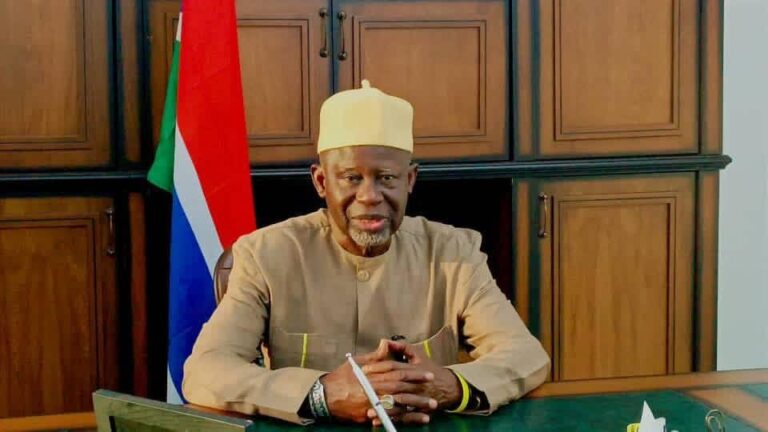
The Patriotic Alliance for System Transformation, Emancipation through Functionalism (PASTEF The Gambia) has hailed Hon. Halifa Sallah’s decision to step aside from partisan leadership as a significant national moment, describing it as a transition to a broader role of national relevance rather than an end to his public service.
In a statement released Monday, the party said Sallah’s move represents “a profound shift from partisan leadership to a higher plane of national representation,” highlighting his sacrifices, integrity, and unwavering commitment to shaping The Gambia’s political landscape beyond party lines.
PASTEF Public Relations Officer Mayorro Sidibeh emphasized Sallah’s four-decade-long association with principled politics, intellectual rigour, and dedication to the socio-economic advancement of the country.
“Sallah is stepping down as Secretary General of the People’s Democratic Organisation for Independence and Socialism (PDOIS), a position he has held since the party’s founding in 1986,” Sidibeh noted. “As he steps aside, the nation pauses not to bid farewell, but to acknowledge the ascent of a statesman whose relevance now transcends partisan boundaries.”
The statement recalled Sallah’s extensive involvement in democratic struggles, including his role as a spokesperson and his contributions to the 2016 Coalition that ended 22 years of dictatorship during a tense political period. It described him as one of the architects of modern Gambian democracy.
PASTEF further highlighted Sallah’s advocacy for justice, accountability, transparent governance, and equitable socio-economic development, noting that his consistency and resilience guided during challenging periods in the country’s political history.
The party described his decision to step aside as a deliberate act of statesmanship aimed at generational renewal, emphasizing that political power should be treated as a trust, not an entitlement.
“Today, The Gambia needs him more than ever, not as a party leader, but as a beacon of national importance, a moral compass, and a voice of reason in national transformation and institutional reform,” Sidibeh said.
He added that the country owes Sallah a debt of gratitude for decades of sacrifice, his opposition to oppression, and his role in shaping the political consciousness of many Gambians.
PASTEF concluded that while Sallah is leaving formal partisan leadership, his voice and experience will remain central to national development, with his contributions permanently woven into the country’s history.
About The Author