
GUEST OF THE WEEK
WITH BINTA JAITEH
“Sanyang Calls for Leadership Change Ahead of 2026 Elections”
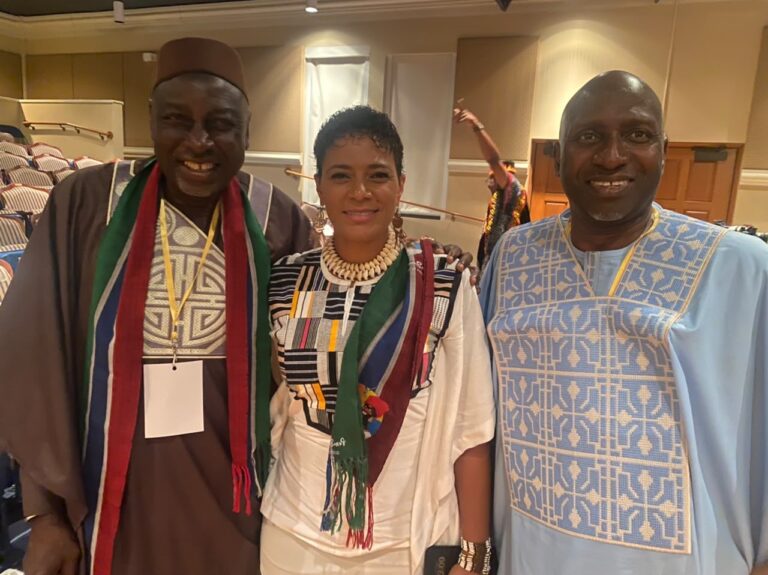
This week’s guest is Hon. Yaya Menteng Sanyang, Member of the National Assembly for Latri Kunda Sabiji. Sanyang, a teacher-turned-politician, civil engineer, lawyer, and former consultant for the World Bank and IFAD, spoke to The Voice newspaper on politics, economics, migration, corruption, security, and the upcoming elections.
What do you think is the solution to Gambia’s problems?
A. The solution lies in voting out the current president in the upcoming 2026 elections. Beyond leadership change, there is a critical need for attitudinal change among all citizens. Honesty, integrity, and prioritizing national development while avoiding waste of public resources are essential for the country’s progress.
Do we need a change in government or in the system?
A. I believe that changing leadership is key. Governance revolves around the government, so both leadership and systems are interconnected. Strong leadership is essential for national development.
What is the solution to the country’s economic hardships?
A. The government must prioritize the welfare of citizens by creating more job opportunities and enabling the private sector to invest. The Central Bank should reduce interest rates to allow youth access to loans, boosting economic activity. Additionally, the Ministry of Agriculture should implement farm settlement schemes to encourage youth involvement in farming and combat hunger.
Should parliament play a stronger oversight role to hold corrupt officials accountable?
A. Parliament should be a critical institution for making laws that support good governance. Unfortunately, partisan politics has weakened its effectiveness. Parliament must adopt bold measures and operate independently to hold the government accountable.
What causes irregular migration?
A. Poverty and lack of employment opportunities for youth are the main drivers. The rate of irregular migration is alarming. Without addressing youth unemployment, it will be difficult to reduce migration, as many young people feel hopeless about opportunities in the country.
Can opposition parties defeat President Barrow without a coalition?
A. Opposition parties need to unite to avoid repeating past mistakes. Genuine partnerships are essential to encourage more parties to work toward change.
What is your view on the upcoming elections?
A. Gambians should vote wisely, keeping development above ethnicity. Political parties should establish term limits for leadership positions, as it is undemocratic for one individual to lead a party for multiple election cycles.
How would you describe the current political landscape?
A. The political environment is toxic. Politics should be based on principles, not character assassination. Much remains to be addressed in the country.
What advice would you give the government regarding corruption?
A. Fighting corruption is essential for national development. High corruption rates undermine progress. Audit queries and reports should be taken seriously, as ignoring them could impact the government’s credibility and electoral prospects.
Many say Talib was quick to leave the UDP. Your reaction?
A. Talib left at the right time. He responded to the call of Gambians, who want him to lead. The country is at a critical juncture, and he is the right candidate for the 2026 presidential elections.
Can the United Movement for Change (UMC) succeed in the upcoming elections?
A. Gambians need change, which the UMC can deliver. The movement has strong chances, and even the National People’s Party has felt threatened by its formation.
How would you rate the country’s security sector?
A. Gambia remains one of the least secure countries in West Africa. Security reforms promised since 2016 have not been implemented due to a lack of political will. Incidents in Foni, including drone strikes and foreign incursions, are preventing children from attending school. Urgent reform of the security sector is needed.
How do you assess the health sector?
A. The country is facing a public health crisis due to corruption and inefficiency under the current administration. The government’s failure to address health challenges highlights the need for leadership change to improve public services.
About The Author