with Fatou Krubally
Woman, Voice and Vision: Ndey Secka-Sallah and the Politics of Disability
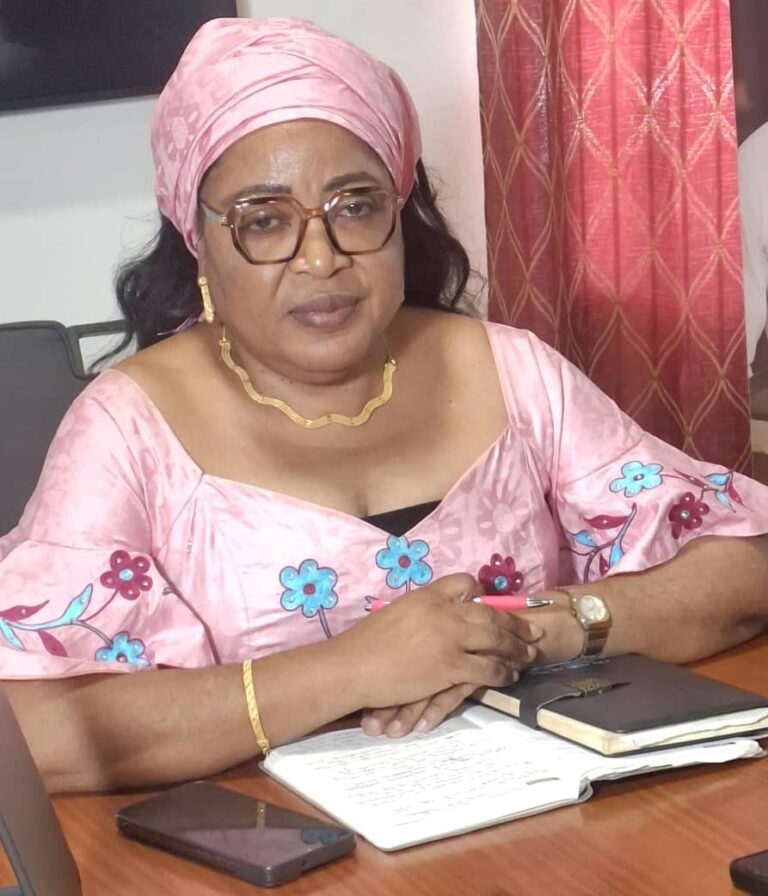
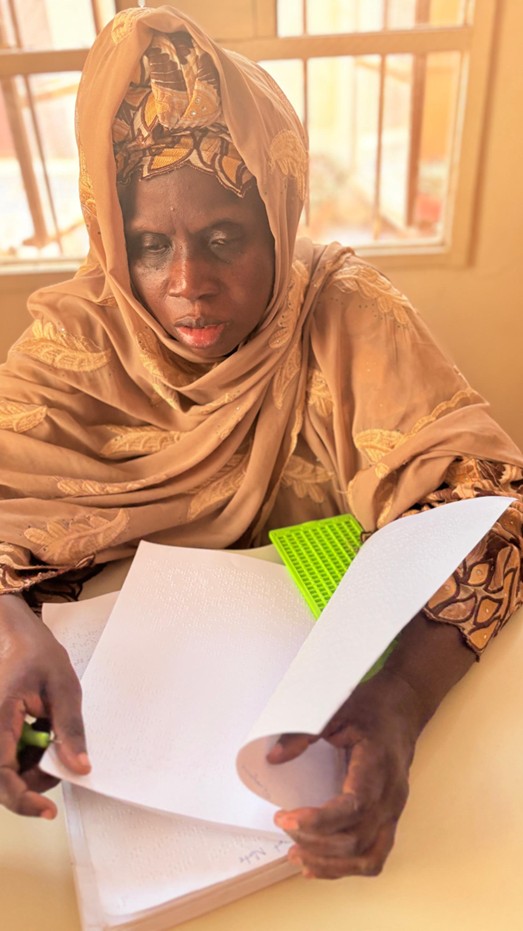
This week on Women Affairs, we feature Ndey Yassin Secka-Sallah, widely known as Aunty Ndey, a woman whose life story challenges societal perceptions of disability, leadership, and womanhood in The Gambia.
Her appointment to the National Assembly marked a historic moment: she became the first visually impaired woman in the country’s legislature, and only the second visually impaired person ever to sit in the Assembly.
Born in Banjul, Aunty Ndey grew up in an era when disability was poorly understood and largely ignored. “We were not included. There were no plans, no budget, nothing for persons with disabilities. We were seen as beggars,” she recalls. Opportunities for visually impaired children were almost nonexistent until the School for the Blind opened in the early 1970s, where she was among the first students enrolled.
Access to education was a daily challenge. Learning materials were scarce, assistive devices were limited, and progress depended on goodwill. “People had to read documents for me. That was how difficult it was,” she says. Despite these obstacles, she mastered Braille using rudimentary tools such as the slate and stylus, long before modern assistive technology was available.
Her determination earned her a scholarship to study in the United Kingdom, where she pursued Braille technology, business administration, and English language studies, aiming to strengthen her voice in a world that often refused to listen. “If you go to England, you must be good in English,” she notes.
Upon returning to The Gambia, Aunty Ndey joined the Department of Social Welfare, rising from secretary to assistant social welfare officer. She later joined the Gambia Radio and Television Services (GRTS), where she became a senior programme producer. “Broadcasting is about listening,” she explains. “And I am a good listener.”
Her career unfolded against a backdrop of discrimination. From the lack of basic accessibility to daily dangers on the streets, including cyclists knocking away her white cane, she experienced exclusion firsthand. “It happens more times than I can count,” she says.
These experiences shaped her advocacy. While in the National Assembly, she championed disability rights, advocating for the passage of the Disability Act. After President Adama Barrow signed the law, she welcomed it as progress but warned that implementation remains key. “What is the use of a law if nothing is implemented? Inclusion must follow legislation,” she said.
Aunty Ndey stresses the importance of representation. She worries that without voices at the table, disability issues risk being ignored. “Nothing for us without us,” she insists, a principle instilled in her by one of her mentors, Hon. Halifa Sallah, who treated visually impaired students with dignity rather than pity.
Her upbringing reinforced this philosophy. Her parents emphasized discipline, independence, and responsibility. “They never hid me away. They prepared me for life,” she recalls. Today, she advises parents and society that “disability does not mean inability. If you hide a child at home, you are destroying their future.”
She also highlights access to education, particularly Braille materials. “Technology is no longer expensive,” she argues. “If you can print normally, you can print in Braille.”
Aunty Ndey’s story is one of quiet defiance rather than self-pity. “I am not working for an individual,” she says. “I am working for my country. I want to leave a good legacy.”
Her life stands as a reminder that women with disabilities are not mere symbols. They are leaders, professionals, mothers, and advocates deserving of inclusion, representation, and respect. “We are not beggars. We are part of this society. And when we are included, everyone benefits,” she concludes.
About The Author