
By: Fatou Krubally
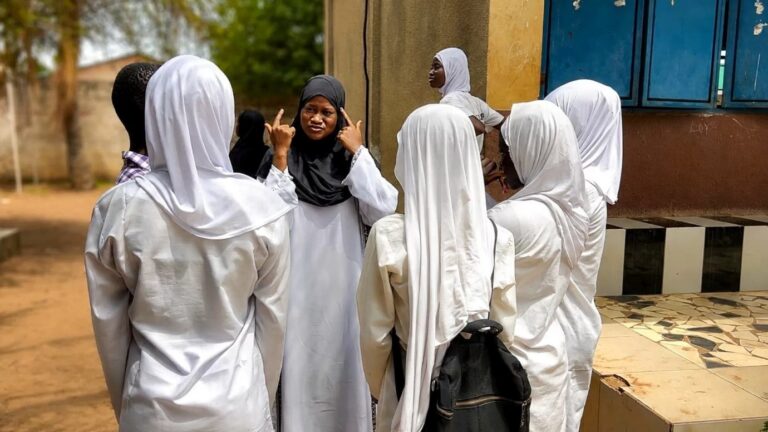
A €1.117 million European Union-funded project aimed at transforming access to education for children with disabilities in The Gambia was officially launched on Wednesday at the Sir Dawda Kairaba Jawara International Conference Centre, bringing together government officials, development partners, disability advocates and educators.
The 30-month initiative, titled “Disability Inclusive Pathways: Empowering Children with Disabilities Through Education, Technology and Play,” is being implemented by Catholic Relief Services (CRS) in partnership with the Gambia Federation of the Disabled (GFD), the National Organisation for Disables and Orphans (NODO), and Special Olympics The Gambia.
It will run from March 2025 to August 2027 and targets 12 schools across the Kanifing Municipality, West Coast Region and North Bank Region.
Speaking at the launch, CRS Country Manager Dr Amulai Touray said the project was born out of evidence gathered during a 2024 gender assessment, which revealed persistent challenges confronting children with disabilities, including stigma, limited physical access to schools, lack of assistive devices, and insufficient teacher capacity.
He disclosed that CRS has also committed a 15 percent cost share to complement the EU funding.
“This project places children with disabilities, both girls and boys, at the centre. It is a product of shared vision between the Government of The Gambia, the European Union and implementing partners,” Dr Touray said, adding that early results were already emerging.
According to CRS, 60 teachers and 30 school administrators have already been trained in inclusive education practices, while nationwide awareness caravans conducted late last year reached more than 33 communities. In one Upper River Region community, elders confirmed the registration of 117 children with disabilities following the outreach.
Chairman of the Gambia Federation of the Disabled, Muhammed Krubally, described the project as a significant milestone for persons with disabilities, noting that it aligns with the Persons with Disabilities Act of 2021 and international frameworks such as the UN Convention on the Rights of Persons with Disabilities.
“For the first time, we are seeing a coordinated investment that recognises disability inclusion as a rights issue, not charity,” Krubally said, while calling for sustained political will and adequate budgetary allocations to ensure long-term impact.
Permanent Secretary at the Ministry of Gender, Children and Social Welfare, Illo Jallow, who represented the minister, reaffirmed government’s commitment to implementing disability-related legislation and strengthening collaboration with partners.
Minister of Basic and Secondary Education, Dr Habibatou Drammeh, said the project complements national education policies and described inclusive education as a constitutional and moral obligation.
She revealed that 133 assistive devices will be deployed under the initiative and highlighted ongoing efforts to strengthen teacher capacity and improve school infrastructure.
European Union Ambassador to The Gambia, Immaculada Roca Cortes, said the €1.1 million investment reflects the EU’s commitment to ensuring that “leave no one behind” is translated from principle into practice.
“Disability is not inability. What limits children are the barriers society puts in place,” Ambassador Cortes said, urging stronger action to turn policies into tangible benefits for families and schools.
The project is expected to directly benefit over 13,000 people and indirectly reach more than 93,000, marking one of the most significant recent investments in disability-inclusive education in The Gambia.
About The Author