

By Fatou Krubally
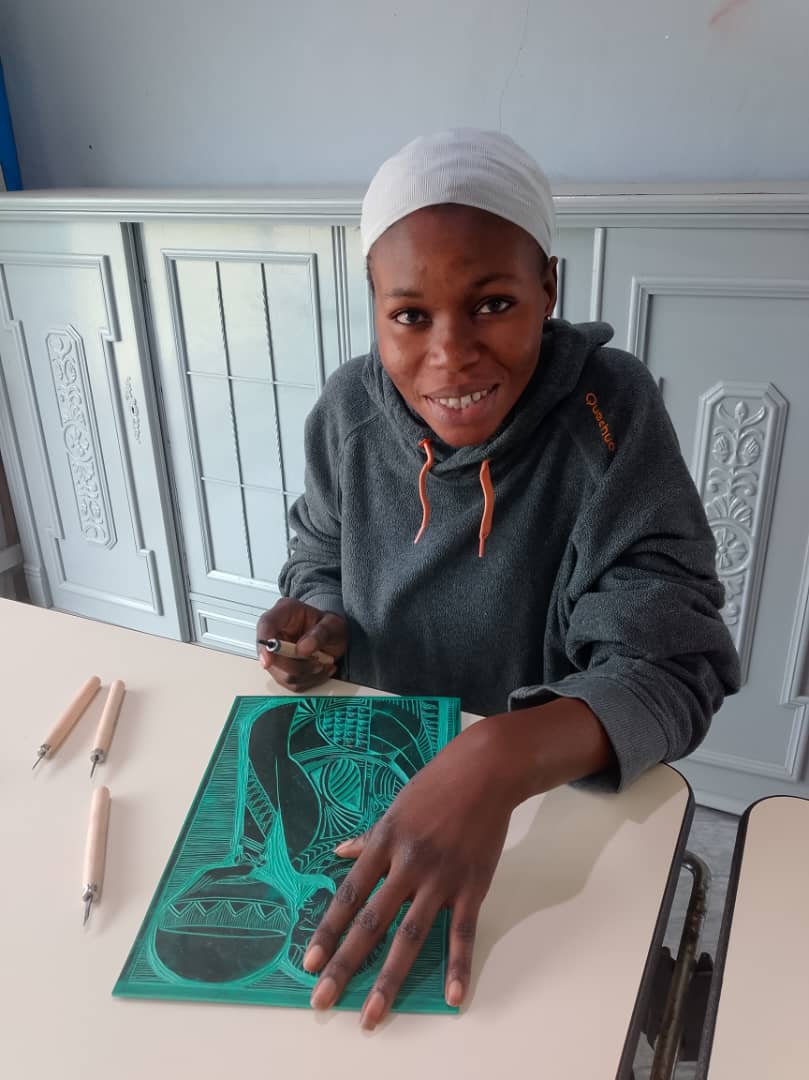
A young Gambian artist has expressed determination to revive the nearly forgotten art of lino and wood carving relief printing with support from Art27.
Anna Isatou Bah, a member of Art27, says she is committed to restoring the traditional art form in The Gambia, where it has largely disappeared due to the high cost of materials and limited institutional support.
Relief printing through lino and wood carving was introduced during British colonial rule around 1860 but gradually faded over the years. Today, only traces of the technique remain in batik fabric printing, while artistic paper printing has become rare.
Artists say the cost of essential materials such as wooden carving blocks, lino cutting mats and specialised relief inks has made it difficult for practitioners to sustain the craft.
Art27, an artists’ collective, is working to reverse that trend by training, supporting and empowering young creatives to develop sustainable artistic careers.
Through the initiative, Bah received training from visiting professionals from the United Kingdom and continues to refine her skills with guidance from Ferenc Donderer, founder of Art27.
With the organisation’s support, she is expected to showcase a collection of her lino-cut prints at an exhibition scheduled for late 2026.
Bah now leads the carving section of Art27, a role she hopes will help revive interest in the craft among young artists.
“Our search for the last group of lino cutters in Kafountine, Senegal, led to a dead end. The group had disbanded and the equipment was left to gather dust in a small hut,” she said, highlighting the risk of the technique disappearing entirely.
Meanwhile, Donderer says plans are underway to further strengthen the country’s visual arts sector.
He announces that Art27 intends to establish a permanent art gallery in The Gambia by 2026 to provide Gambian and African artists with a dedicated space to exhibit their work.
The initiative is expected to boost the country’s growing creative industry by offering artists greater exposure and opportunities to develop their skills.