
By Yunus S Saliu
The Ndemban National Trauma Centre at the Edward Francis Small Teaching Hospital (EFSTH) has introduced the Integrated Interagency Triage Tool (IITT), a new emergency assessment system aimed at improving patient care and reducing waiting times in critical situations.
The system, developed by the World Health Organization for use in low- and middle-income countries, was introduced through collaboration with Emergency Systems Development Australia.
Speaking in an interview at the trauma centre, Australian emergency specialist Holly Bannon Murphy said the initiative followed a needs assessment conducted at EFSTH last year.
Dr Murphy explained that the assessment identified gaps in the hospital’s emergency care system, particularly in triage procedures and emergency system design. She said the IITT was selected as a practical solution to help healthcare workers quickly identify and prioritize critically ill patients.
“Triage is about determining which patients need to be seen most urgently in order to save their lives,” she said.
According to her, the system categorizes patients into three groups: red for the most critical cases, yellow for urgent but not immediately life-threatening conditions, and green for patients who can safely wait.
She noted that the previous system at the hospital mainly focused on patient registration and did not follow a structured clinical assessment process, sometimes resulting in seriously ill patients waiting in line under a first-come, first-served approach.
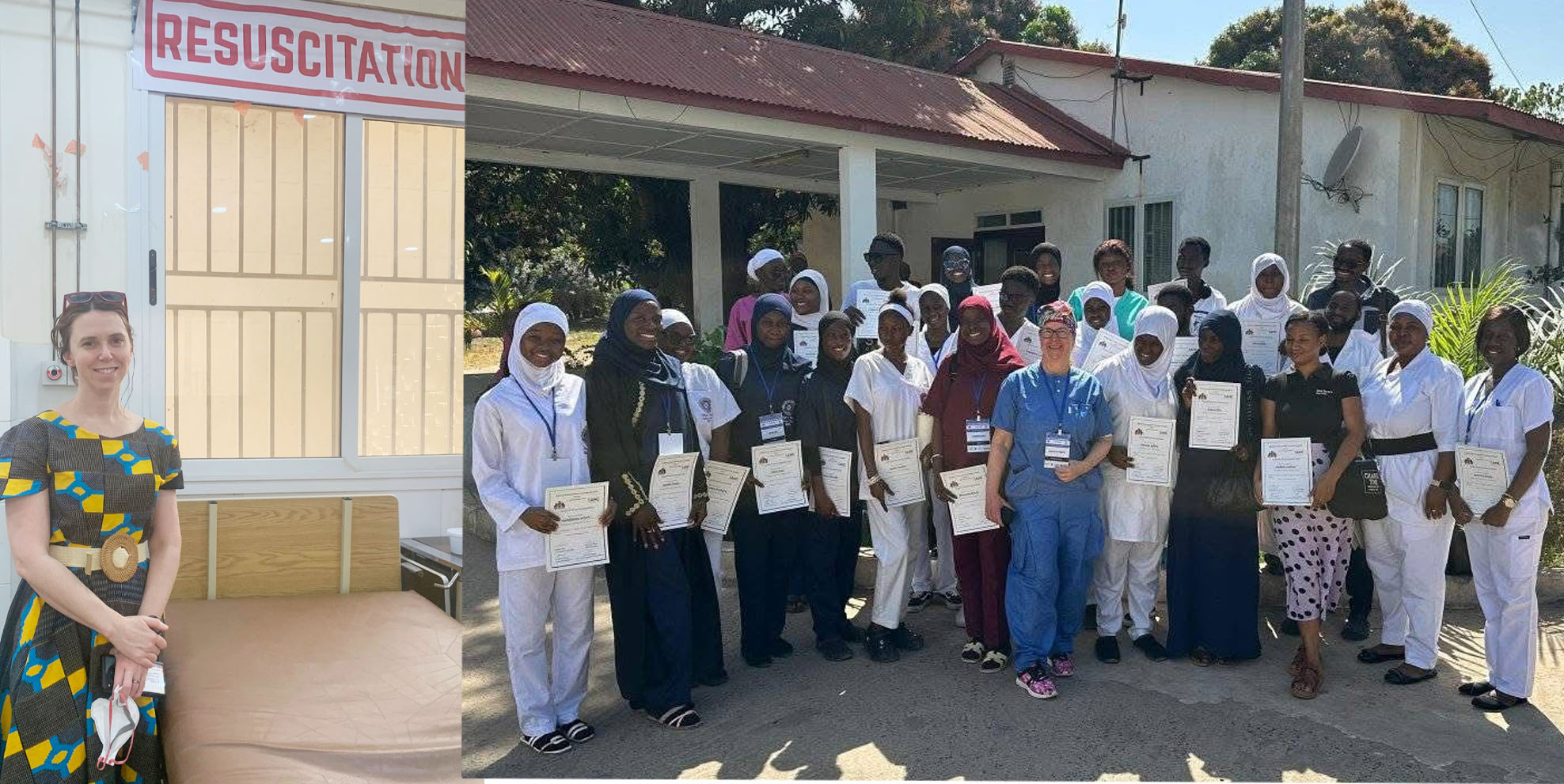
Dr Murphy added that a team of Australian emergency specialists conducted training for doctors, nurses, security personnel and orderlies at the trauma centre to ensure that all staff understand their roles in the new system.
She described the training as successful, praising the commitment of Gambian healthcare workers and stressing that local ownership is key to sustaining the programme.
The initiative also included the training of local instructors. Three Gambian healthcare workers have been certified as IITT master trainers who will help extend the training to other hospitals across the country.
A nurse in charge of the trauma emergency ward, Saikou Jatta, said the system has already improved how patients are handled at the facility.
“Previously, all patients were placed in the same area, but now we categorize them based on the severity of their condition,” he said, adding that this enables health workers to quickly identify and treat patients who require urgent care.
Departmental Matron at the centre, Fatoumata Jallow, said the new triage system has improved patient flow and reduced delays in emergency treatment.
“Patients with serious conditions such as bleeding, spinal injuries and head trauma are now attended to on time,” she said, noting that the centre receives referrals from hospitals across the country.
Despite the improvements, she said the facility still faces challenges, including the need for more staff and additional space to accommodate the growing number of patients.
Another doctor at the centre, Mami Kanteh, expressed optimism that the triage system will significantly improve patient outcomes by ensuring that the most critical cases receive immediate attention.
With trained local instructors now in place, he said there is hope that the IITT system will gradually be expanded to other health facilities across The Gambia to strengthen emergency care nationwide.
Administrator at the trauma centre, Adama Njie, described the introduction of the IITT as a major milestone in improving emergency care services at the facility.
She said the system has enhanced workflow and organization within the centre by enabling staff to quickly identify and prioritize patients according to the severity of their conditions.
Njie emphasized the importance of sustaining the system through continuous training, staff commitment and institutional support, and expressed appreciation to the Australian emergency team from Emergency Systems Development Australia for their support and collaboration with Gambian health professionals.