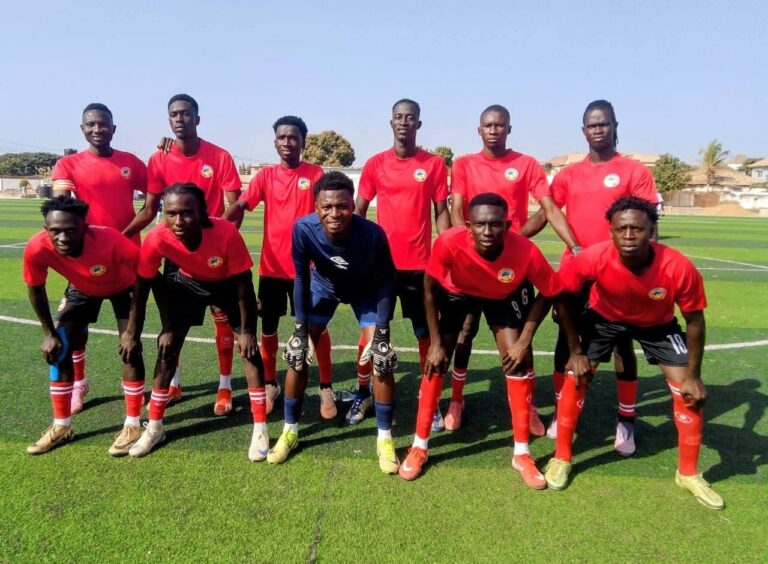

It is now more than 72 hours since the Gambia Football Federation (GFF) inaugurated a so-called stadium in Nyakoi, reportedly costing 14 million dalasi. What has been revealed is little more than a football pitch, a modest structure for dressing rooms and offices, squat toilets, and a wired perimeter fence. The surrounding grounds are bare—neither paved nor landscaped. There are no walkways, seating areas, or even basic beautification like trees or greenery. Essential stadium features—spectator pavilions, proper stands, scoreboards, lighting infrastructure—are conspicuously absent.
If this is truly a D14-million stadium, citizens are right to ask: Where did the money go?
The issue is not whether Nyakoi deserves a football facility—it does. Rural communities need quality sporting infrastructure. Youth development requires investment. Football can unify, discipline, and inspire. The problem is proportionality, transparency, and value for money.
How much was allocated, and from what sources? What were the project specifications? Who was the contractor, and was there an open bidding process? Who certified that the work was complete? Does the cost reflect the value delivered? These are fundamental questions that the GFF must answer. Autonomy cannot be used as a shield. While FIFA protects federations from political interference, autonomy does not excuse financial opacity. International governance frameworks stress accountability, auditing, and transparency. Shielding football administration from government interference does not shield it from public scrutiny.
Equally concerning is the silence from the Ministry of Youth and Sports. As the authority responsible for sports development, it cannot plausibly claim ignorance of a multi-million-dalasi project. Even if the funds came from external sources, the government has a duty to ensure infrastructure meets acceptable standards and reflects prudent financial management. The National Sports Council and National Youth Council also have oversight responsibilities. Their continued silence only deepens public suspicion.
Fourteen million dalasi is not a trivial sum. In a country grappling with youth unemployment, limited sporting facilities, and constrained public resources, every dalasi must count. If the project represents value for money, all relevant documents—procurement records, engineering assessments, and financial breakdowns—should be made public. Transparency protects institutions; silence breeds suspicion.
This is not about attacking football administrators; it is about defending institutional integrity. Publish the contract. Publish the budget. Publish the supervision reports. Allow independent engineers to assess whether the structure reflects the expenditure. Gambians are not beggars—they are citizens entitled to quality infrastructure and responsible stewardship of resources.
If those responsible believe the Nyakoi facility reflects D14 million in value, they owe the nation a clear, documented explanation. Failure to provide one is not mere negligence—it is a dereliction of duty to the youth in whose name the project was executed and a betrayal of public trust.
Until transparency is provided, questions will persist, and rightly so.
About the Author