
By Yunus S. Saliu
The Ministry of Health, in partnership with key development agencies, officially launched The Gambia National Food-Based Dietary Guidelines (FBDGs) 2023, a strategic policy tool aimed at improving nutrition, strengthening food systems, and enhancing the health and well-being of Gambians.
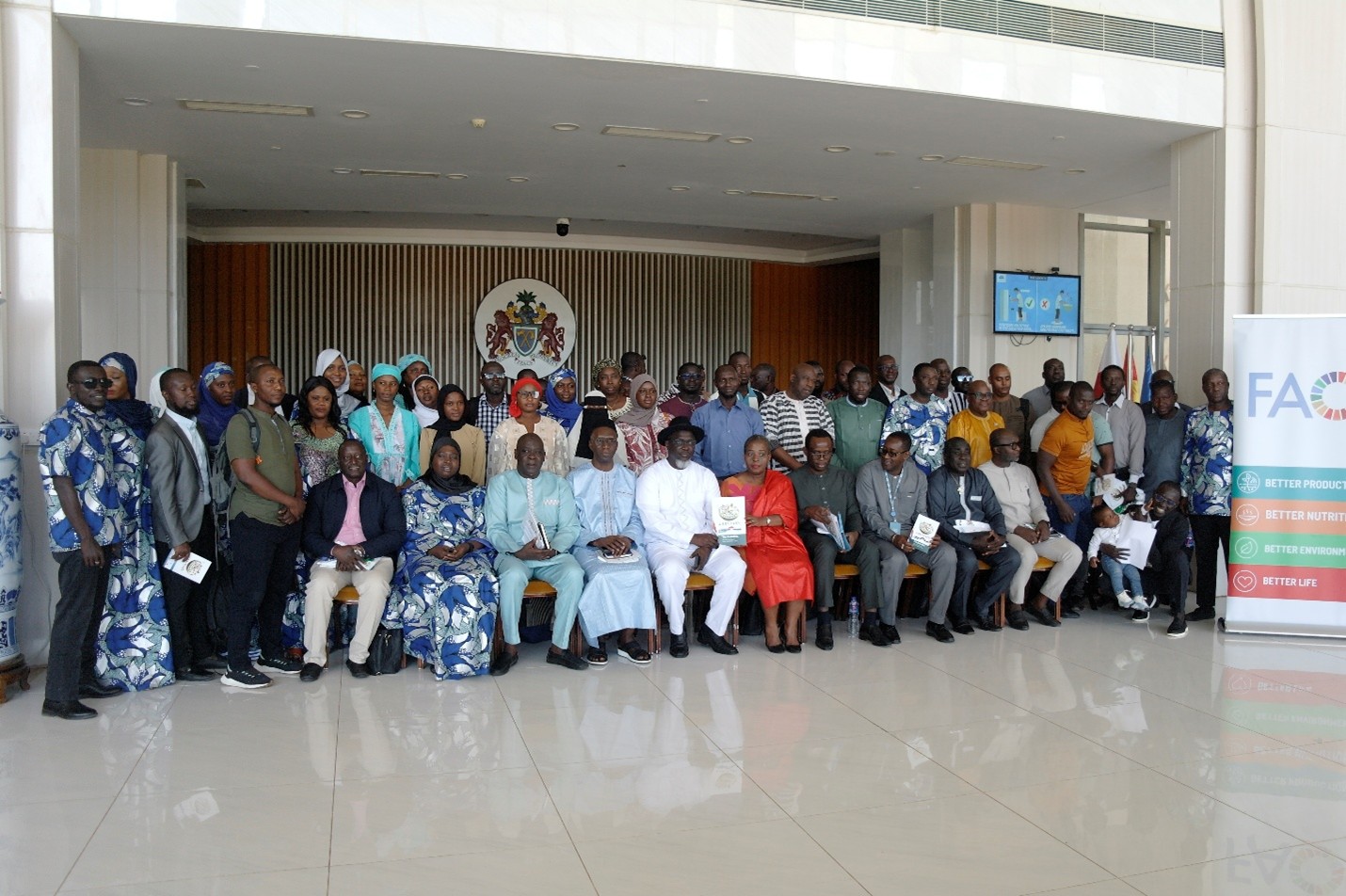
The launch, organized by the School of Health and Nutrition Unit under the Ministry’s Directorate of Health Promotion and Education with support from the Food and Agriculture Organization (FAO), took place at the Sir Dawda Kairaba Jawara International Conference Centre in Bijilo.
Speaking on behalf of the Health Minister, Permanent Secretary Dr. Yusupha Touray described the guidelines as a science-based and culturally appropriate tool to address malnutrition in all its forms. He said the launch reflects the government’s commitment, under President Adama Barrow, to place nutrition at the centre of national development.
“The Gambia faces a triple burden of malnutrition – undernutrition, micronutrient deficiencies, and the rising prevalence of overweight, obesity, and diet-related non-communicable diseases. These challenges undermine human capital, education, workforce productivity, and economic growth,” Dr. Touray said.
He added that the guidelines promote dietary diversity using locally available foods, encourage consumption of fruits, vegetables, whole grains, legumes, and appropriate animal-source foods, while limiting salt, sugar, and unhealthy fats. The guidelines were developed through a rigorous, inclusive, and evidence-based process involving government institutions, academia, civil society, the private sector, communities, and technical partners, with support from FAO and the World Food Programme (WFP).
Dr. Touray called on all stakeholders, including development partners, civil society, the private sector, media, and communities, to translate the guidelines into sustainable action.
United Nations Resident Coordinator in The Gambia, Mandisa Mashologu, praised the Ministry for its inclusive approach and stressed the urgency of coordinated action against malnutrition. She said the guidelines align with the 2030 Agenda for Sustainable Development, supporting efforts to end hunger, reduce maternal mortality, prevent non-communicable diseases, and promote healthy lives.
FAO Country Representative Dr. Mustapha Ceesay highlighted FAO’s support in developing the guidelines through a USD 20 million Technical Cooperation Program, which provided capacity building, training workshops, technical consultations, and equipment for a multi-sectoral working group.
National Nutrition Agency Director Mr. Malang Fofana outlined the country’s nutrition situation, noting improvements in stunting, wasting, anaemia, and exclusive breastfeeding, but rising levels of overweight, obesity, and diet-related diseases. He warned that changing lifestyles and increased consumption of processed foods pose a “time bomb” if not addressed, and said the FBDGs offer practical, culturally appropriate advice to guide policy, programs, and public education.
About the Author