

By: Fatou Krubally
The International Monetary Fund (IMF) on Thursday warned that The Gambia’s economic stability remains fragile, citing foreign exchange pressures, inflation risks, and weak domestic revenue mobilization despite recent policy gains.
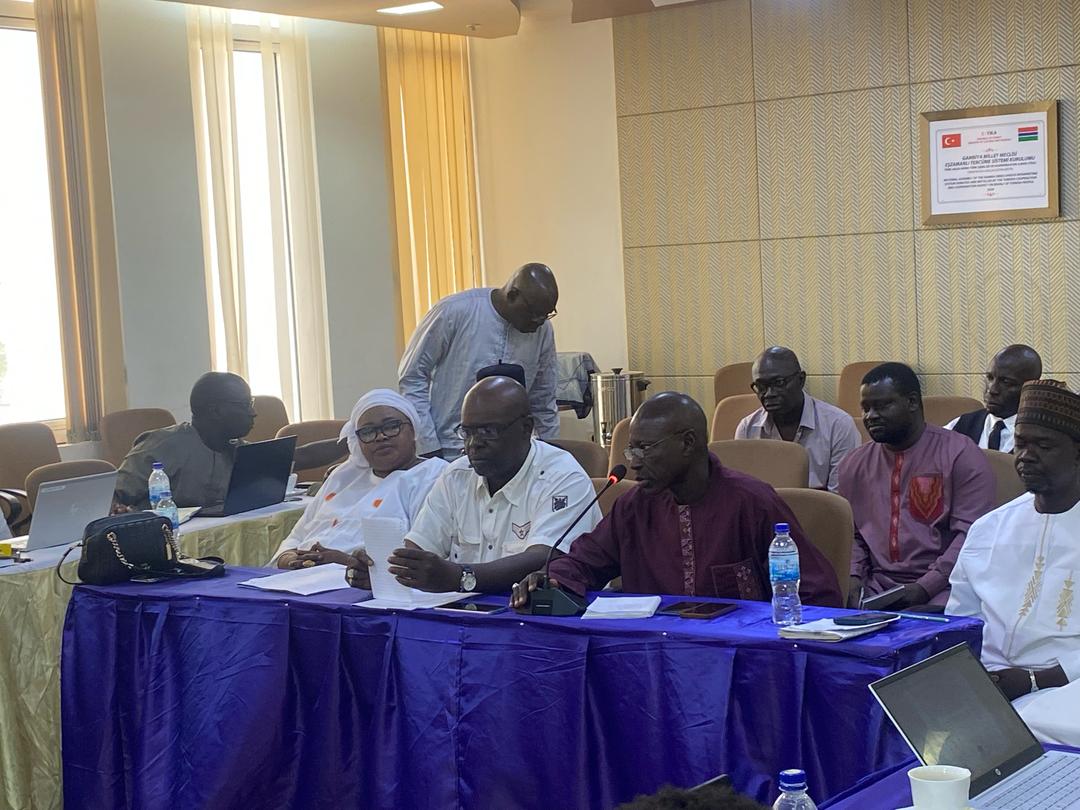
The warning was delivered by IMF Economist Bernard Mendy during a presentation on economic policy challenges facing Sub-Saharan Africa and The Gambia, held at the Sir Dawda Kairaba Jawara International Conference Centre in Bijilo.
Mendy said The Gambia maintained a tight monetary policy stance between October 2024 and October 2025 before recently cutting its monetary policy rate by 100 basis points to 16 percent. He noted that while the policy space in the region is beginning to open, easing monetary policy too quickly could be counterproductive for countries facing persistent inflation and exchange rate pressures.
“It is our considered view that foreign exchange pressures, coupled with term premium risks, argue for a more cautious approach,” he said, adding that countries where inflation remains above target should maintain tight monetary conditions to avoid de-anchoring expectations.
Mendy stressed the need to safeguard the independence of the Central Bank, particularly in the face of commodity price shocks, shallow financial markets, and pressures linked to electoral cycles. He warned against monetary financing and renewed fiscal dominance, including quasi-fiscal operations, saying these could undermine policy credibility.
On public finances, the IMF economist said boosting domestic revenue remains critical for creating fiscal space, restoring buffers, and supporting development. While acknowledging improvements in The Gambia’s tax revenue performance between 2022 and 2024, Mendy said the country still lags behind the regional average in domestic tax collection.
He explained that although The Gambia’s overall revenue envelope has benefited from official development assistance, tax revenue continues to perform below Sub-Saharan African averages and most other regions globally.
“There is significant scope to address this gap,” Mendy said, pointing to limited capacity, governance challenges, and public perceptions of corruption as key constraints.
He said tax administration reforms must include protecting revenue institutions from political interference, expanding taxpayer registration, and moving toward e-filing, e-payment, e-invoicing, and real-time reporting. He also called for rationalising what he described as “costly and opaque” tax expenditures, including exemptions and remissions, which he said account for about 2.9 percent of GDP in The Gambia.
Mendy noted recent reforms, including revisions to the GIPF Act and efforts to introduce property taxes, but cautioned that reforms would only succeed with broad public consultation, transparency, and trust-building between tax authorities and taxpayers.
He also warned that reforms must be accompanied by impact assessments to protect vulnerable groups, citing past policy failures in the region where reforms triggered public backlash.
The presentation concluded with a call for improved debt management to reduce borrowing costs and support economic stability.