
By: Nicholas Bass
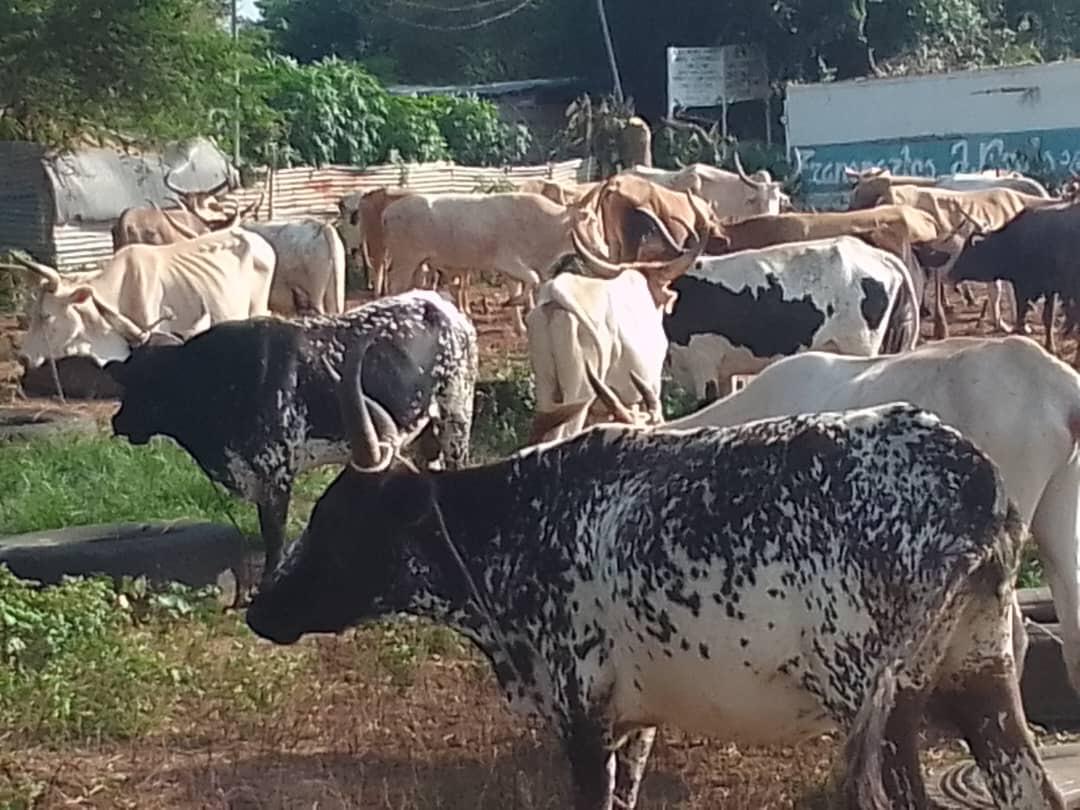
Business owners at Abuko Central Abattoir have attributed the rising cost of meat in The Gambia to the high exchange rate of the CFA to the Gambian Dalasi.
Speaking to this Medium, Babucarr Dem, a native of Kubariko Village and livestock trader, explained that the exchange rate of 1,000 CFA to D650 forces sellers to price their livestock higher to maintain profitability. He said transporting livestock from Senegal is costly, and these expenses are reflected in the selling price of sheep. “If you buy livestock from Senegal at an expensive cost, it will be difficult to sell them at a cheaper price; it is not favorable for business,” he stated.
Mr. Dem noted that few local farmers rear large numbers of livestock, requiring him to travel to Senegal to purchase animals for his clients. Similarly, fellow trader Ceesay argued that the CFA exchange rate has been historically regulated under former President Jammeh’s administration and suggested that the current government should provide clarity on the currency’s status. “The exchange rate is unstable, sometimes standing at D640, D650, or even D625, which affects prices in the market,” he said.
Sheikh Tijan Suwareh, a cow trader, echoed these concerns, attributing high meat prices to the falling Gambian Dalasi. While acknowledging that President Barrow’s administration does not interfere with livestock businesses, Suwareh called for a reduction in checkpoint inspections to ease operations for traders.
Cowskin business operators also voiced challenges. Isaha Ceesay, chairlady of a cow skin enterprise, noted that while cow prices have increased, cow skin prices have remained relatively stable. Preparing cowskin for sale, she explained, is labor-intensive, often starting at 4 a.m., yet profits are limited. She appealed to the government for support, saying the business is essential for her survival.
Yai Kinteh, another cowskin trader from Kunkujang Keitaya, shared that her business allows her to pay her children’s school fees and build a home, but profits are not guaranteed. She urged Gambians to be patient and value honest labor, emphasizing that working for a living is noble despite challenges.
About the Author