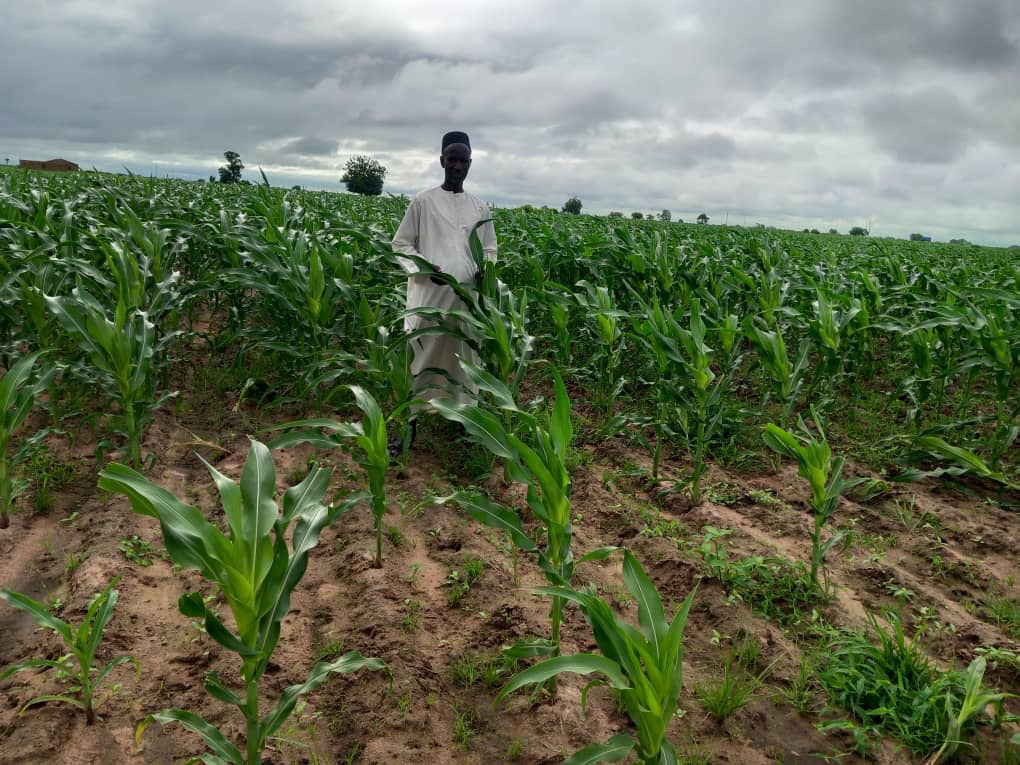


By: Haruna Kuyateh
In a major boost to agricultural mechanization in The Gambia, a prominent farmer from Maka Farafenni in the Upper Badibou District has commended President Adama Barrow and the government for partnering with Youna Microfinance Services to provide tractors to farming communities across the country.
The initiative is aimed at supporting farmers to scale up food production, reduce post-harvest losses, and promote food self-sufficiency. A total of 180 tractors were recently launched under this scheme in a ceremony presided over by President Barrow.
Speaking to The Voice in Maka Farafenni, Alagie Touray, a well-known farmer in the North Bank Region, described this as “timely and commendable,” noting that the provision of tractors will significantly enhance farmers’ capacity to increase production and productivity.
“This initiative is a game-changer for rural farmers,” Touray said. “We used to rely on foreign-owned tractors, which often led to delays in ploughing and sowing due to cross-border issues. In a single rainy season, over D500,000 was spent on foreign tractor services. That was clearly unsustainable.”
Touray emphasized that the partnership with Youna Microfinance has brought hope to many smallholder farmers, particularly those in remote areas. He highlighted that the arrangement would not only support timely ploughing and harvesting but also ease the transportation of farm produce during both peak and off-season periods.
He called on all beneficiaries of the tractor scheme to honour their financial commitments and agreements with Youna Microfinance.
“When farmers repay loans and follow through on agreements, it creates a positive track record and encourages more support from government and development partners,” he said.
He thanked the government and ongoing agricultural projects for the timely provision of high-quality seeds, fertilizers, and other essential inputs, which are now more accessible to rural farmers.
The government’s mechanization drive, in partnership with financial institutions like Youna, is part of a broader strategy to ensure food security, reduce dependency on food imports, and empower rural farming communities.